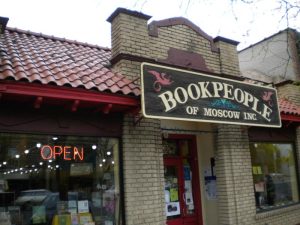
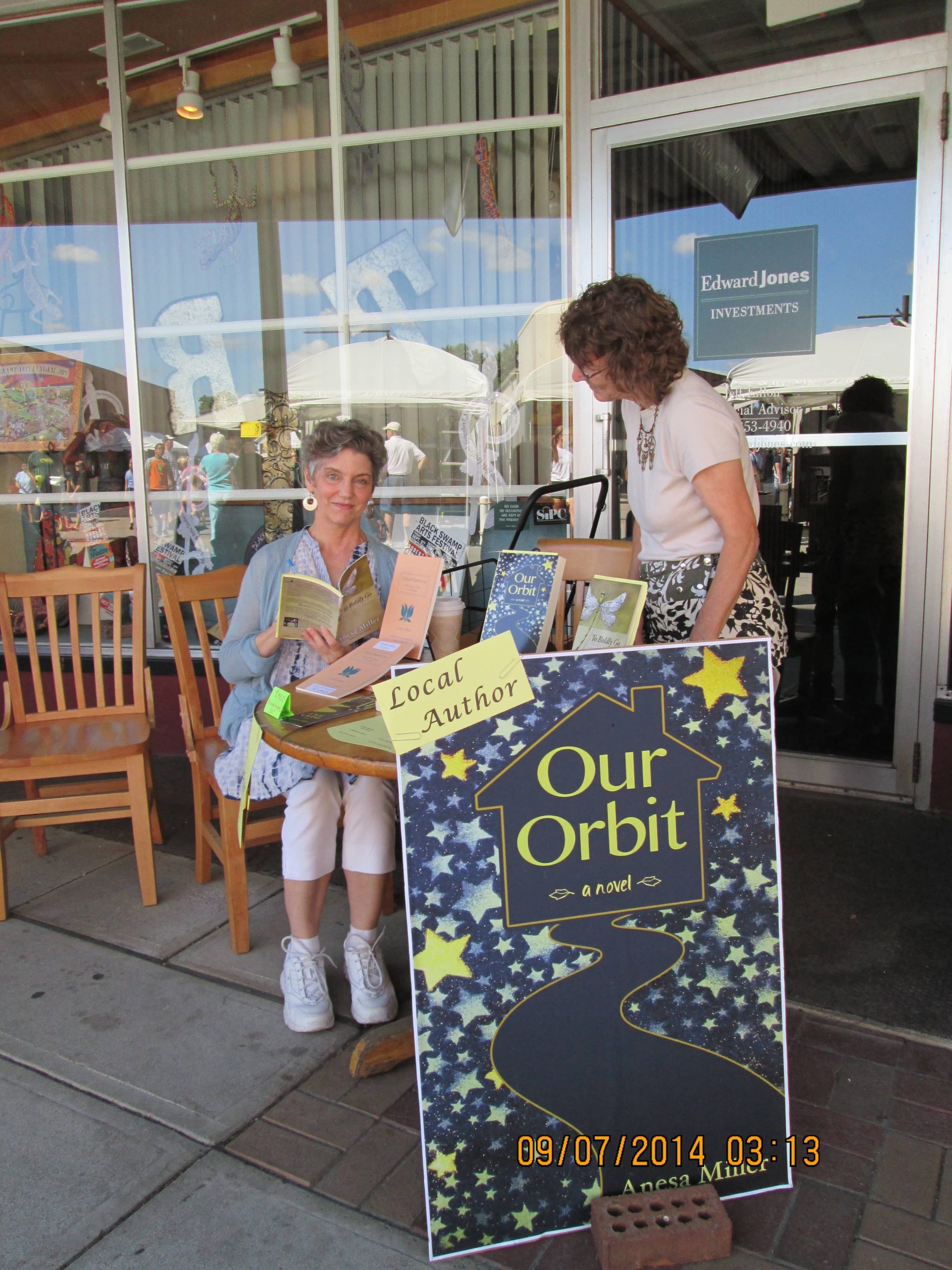
“Local Author Saturday” — Reading at BookPeople of Moscow (Idaho, that is!)
U of Idaho MFA Alum
Anesa Miller
Will read from
her new novel
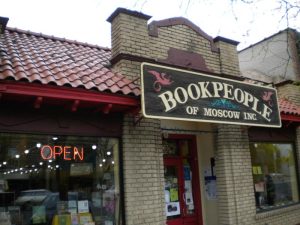
at BookPeople
of Moscow
Saturday, 10/18, 2014
1:30 PM
521 S. Main St.
Moscow, Idaho

Anesa Miller
Will read from
her new novel
at BookPeople
of Moscow
Saturday, 10/18, 2014
1:30 PM
521 S. Main St.
Moscow, Idaho


Many thanks to the following book bloggers who’ve agreed to provide honest reviews and shed the light of their attention on my newly launched novel. Please stop by to view these lovely blogs, check out their thoughts and comments—
October 8th KDH Reviews
October 9th Book Fidelity
October 10th my name is Sage
October 12th My Book Fairy
October 13th Devoted Mommy of 3
October 15th Live Interview @10am PST on Blog Talk Radio
October 16th The Gal in the Blue Mask
October 17th Reading to Distraction
October 19th Any Excuse to Read
October 22nd Hogwash
October 24th Shelf Pleasure
October 26th The Book Adventures of Emily
October 30th Glad For My 3
November 3rd Beagle Book Space
November 3rd FictionZeal
November 4th Feed Me In Books
November 5th Making My Mark
Special thanks to KDH Reviews for the very first post of the tour, which is UP TODAY! And many thanks also to the inimitable Sage Adderley for her organizational genius.

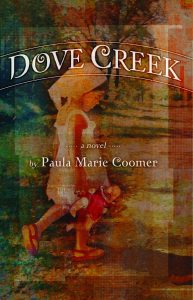
When Anesa Miller asked me to write about book publication—specifically hybrid presses vs. traditional publication/self-publishing—I realized that somewhere along the line I had begun to think this way. That is to say, I consider hybrid presses (I have recently learned that this is also called “third-way” publishing) to be the one and only road to publication and have lumped traditional presses and self-publishing in the same bucket: the one marked “Things I Don’t Want to Do.” In the case of traditional publishing, small presses are so overwhelmed by submissions that you can spend up a year sitting on your thumbs waiting for a response to queries and submissions. And it seems you have to be a blueblood to get noticed in New York. As for self-publishing, first of all, who has the money? And secondly—no. Just, no. Not for me. Might have been fine for Hank Thoreau and Jimmy Joyce, but I’m simply not that organized.
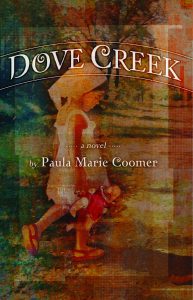
I was lucky enough to find Booktrope—or Booktrope found me; it’s still pretty magical, the way that all happened—at just the moment I had given up on finding a publisher for my novel Dove Creek. That poor book had been through the mill. Depending on how you counted it, 10+ years and 14 drafts. Forty-six rejections by agents and small presses. Tossed to the back of the closet in the early light of the 21st century only to be extracted in 2007, when a local indie-radio producer asked whether I had anything of book length that might work for serialized broadcast. In that form, Dove Creek had already had a nice run by the time I met up with Ken Shear and Booktrope, with thousands of episodes downloaded and no sign of stopping.
Ken had this new thing going, this idea about how books should be published. It involved merging old traditions with new technology. Manuscripts carefully vetted for craft and storytelling. Agents welcome but not necessary. No capital outlay from the author. Other tasks accomplished via independent contractors—and only the best and the brightest—for editing, design, and marketing. Making good use of print-on-demand to keep overhead down. Meanwhile, supporting authors to go out and do what they do perhaps second best—because the writing is always first—meeting the public, by offering brick and mortar stores decent discounts and providing authors deep discounts so that signings and readings are affordable.
What sets Booktrope’s community aside, however, is that it is a community. There are hundreds of us—authors, editors, artists, designers, marketing folks—all full of the belief that books still matter, that good stories are meant to be shared, and that you change the world one syllable at a time. Thanks to technology, the Internet, we come together in a rather large central web space called Teamtrope, the techno-equivalent of someone’s back patio, where book deals are made and work plans tweaked and where we hold our collective breath while waiting for that first glimpse of a book’s cover. There are places to chat with other authors when you feel the need for support, places where you can see how your book is selling, rooms for training for all the production folks, for tracking that production, and all of it transparent and visible to the author. Books are created by equally-invested teams which means, except for a few paid employees, compensation comes primarily in the form of royalty shares—which means it’s in everyone’s best interest to take part in promoting books they’ve been involved with, but it also means divvying up the loot with people who matter to you when your book makes it big.
All this aside, perhaps Booktrope’s defining characteristic is their commitment to marketing and their heavy online presence. When Dove Creek came out (Booktrope’s first literary novel), all titles were available for reading in an online library. Ken’s theory was that people would read the first few pages of a book and then make the decision to buy. His theory was backed by such well-known authors as Neil Gaiman, whose video attesting to the advantages of giving away your work is featured on Booktrope’s website. All this turned out to be true. People sampled books and then bought them. With nearly three hundred books on the market, Booktrope no longer maintains its reading library, but this philosophy of giving first is ingrained in all of us as we are reminded not to hawk our books, but to give of ourselves by reaching out to people first, making our work available on free-reader sites such as Wattpad, keeping up with our own websites where we write about our lives and daily insights, in short, making shared humanity our first mission. “Book sales will come,” they tell us. And they do. Quite a number of Booktrope books have won awards or reached bestseller status, mine included.
In the end, selling books is also about making money—everybody has to pay rent—and since making money in our world is deeply connected to image, Booktrope is also deeply devoted to their image as a publisher committed to fine craft and the furtherance of their belief that readers don’t want Pablum, don’t want their prose diluted. From chick lit to sci-fi to erotica to literary prose to poetry, quality of writing and storytelling comes first. Most Booktrope authors are professional people, schooled at the graduate level and beyond. Many are academics. And you only have to cruise through the catalog to see that just in case a Booktrope book is ever judged by its cover that cover is going to make an unforgettable first impression.
Do I regret the fact that I somehow, after twenty years of trying, missed the boat to New York publishing? Not really, even if I did once envision myself as the next Irma Bombeck. In fact, a number of Booktrope authors have previously been published by the big dogs, and they all have the same thing to say: publishing with Booktrope is a much better experience; the support for authordom is invaluable; books never go out of print, and they are never remaindered—you’ll never see yourself in the ninety percent off bin. Not to mention the fact that New York seems to be asleep. None of us really knows what that crowd is thinking—or up to. To my experience, they are about the business of stealing postage, since none of my SASE’s ever come back.
It’s funny. Booktrope set out to do something legacy publishing (another way of saying traditional publishing) has never done—except in a very few cases—and that is to nurture authors in such a way as to promote creativity and productivity. So, the more books an author has on Booktrope’s list, the better. In this way, they are making authors into “legacies.” From what I was always told, the only thing harder than getting a first book published is getting a second book published. The hybrid philosophy is just the opposite. You also never hear the words, “We don’t know how we’d market it.” Instead you hear, “What are all the ways we can market this book?” The philosophy as I have experienced it with my “hybrid” press has been as much a merging of principles as processes, and unequivocal: give thrice as much as you ask for, and never seek a final answer; rather, always be working in anticipation of a new question, which is, invariably, “What will you be writing next?”
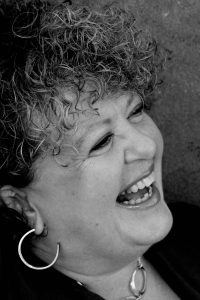 Paula Marie Coomer, the daughter of many generations of Kentucky mountain people, lived most of her childhood in the industrial Ohio River town of New Albany, Indiana, dreaming of New York City and the glamour of the creative—art, literature, the theatre. A vision gleaned from the pages of magazines and catalogs. What she chose instead was a Westward-bound, vagabond life of part-time jobs and rootlessness until, in her early 20s, she began craving an education and made her way to a community college in Oregon, ostensibly to study writing. It took nearly 20 more years and a career in nursing before all the built-up stories and poems began making their way to the page. Those stories have appeared in many journals, anthologies, and publications, including Gargoyle, Knock, and the acclaimed Northwest Edge series from Portland’s Chiasmus Press. Ms. Coomer has been nominated twice for the Pushcart Prize, was the 2006 Writer-in-Residence for Fishtrap, Oregon’s much-loved advocacy program for literature in the West, and is the author of an array of books including Blue Moon Vegetarian, Dove Creek, and Nurses Who Love English. Ms. Coomer lives near the mouth of Hell’s Canyon in southeast Washington State and teaches English at Washington State University. www.paulamariecoomer.com


In spite of my struggle with Kirkus Reviews (read here), I ultimately decided to take what I could get and hereby publish their comments on my novel OUR ORBIT. The offending spoiler has been removed, so please read without fear!
More gratifying are the very un-snarky, and entirely unpaid, remarks from The Midwest Book Review, also included below.
The Midwest Book Review OUR ORBIT—
A deftly woven, complex and compelling novel, “Our Orbit” showcases the literary work of an imaginative and skilled author able to craft memorable characters, whose lives and circumstances will hold the reader’s total attention from beginning to end. Thought-provoking entertainment, “Our Orbit” by Anesa Miller is wholeheartedly recommended for personal reading lists and community library Contemporary Fiction collections.
Kirkus Reviews comments on OUR ORBIT—
A foster family deals with culture clashes after taking in a motherless girl whose militia-wannabe father has been jailed.
In the Appalachian corner of Ohio, 9-year-old Miriam Winslow’s mother dies in a car crash. Not long after, her father is arrested on tax nonpayment and weapons charges. The family’s trailer is seized, and Miriam must enter foster care (her older brother and sister live with others). Deanne and Rick Fletcher already have young children; though they can’t afford another baby, they have room for a foster child. They’d been hoping for an infant, but as Rick says, “If there’s an immediate need, we should help out. Right?” That’s what the Fletchers are like. Despite warnings about the Winslows, long known as “a ragged bunch by any standard…the kind with no ambition” or, to get to “the gist of the matter: trashy,” the Fletchers aim for patient reasonableness. When Miriam’s angry, self-righteous older brother, Josh, threatens her new family, they will be further challenged to put their faith into action.
Miller (To Boldly Go, 2013, etc.) employs deft characterization to make the Winslows and Fletchers three-dimensional. Deanne, recalling a childhood memory whose undercurrents she only now begins to grasp, wonders, “Do we ever know what’s really going on?” Rejecting simplistic stereotypes, from “trashy” to “homophobic,” Miller invites readers to probe beyond immediate impressions. She also takes a realistic view of limitations; when Deanne’s mother softens toward her [estranged] brother, “You could tell these plans had come from arduous soul-searching. But it seemed a bit soon for applause. Indeed, no sooner did Mom’s eyes finally meet Deanne’s than her look hardened.” This realism is also evident in Miriam’s older sister Rachelle, a troubled girl who cuts herself. She doesn’t get better all at once; instead, she learns hope slowly, in glimpses: “But now, here came a new thought: if she wanted to, she could talk to Mrs. Fletcher about all that.” Josh’s slow burn is also well-handled; Miller does a fine job of showing just how his frustration builds and seeks a target.
A compassionate, thoughtful narrative about hard-won self-realizations.
~ ~ ~ ~
Through 4th of July, 2015 – Join a great GIVEAWAY to celebrate my new novel! Many prizes – gift cards, crafts & a signed copy of OUR ORBIT, finalist for “Best Regional Fiction” Click here to join !
~ ~ ~ ~
Many thanks for visiting my blog today! Please browse the website and let me know if you like what you see, or if you have suggestions. You can reach me by leaving a comment in the box below or by clicking the Contact link at upper right (or just click here). Consider subscribing to my blog or newsletter. And stop by again soon!