by anesamiller_wuhi6k | Aug 3, 2015 | Blog, Writing & Publishing

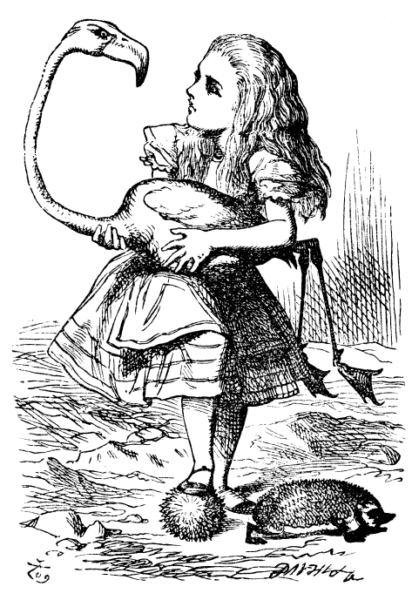
Illustration from AAIW by John Tenniel
I’m grateful to friend and author Marnie Cate for inspiring this post and hosting it on her lovely website a few weeks ago. When I first visited Marnie’s site, I noticed that her work concerns magic and the paranormal. I had to admit off the bat that, by contrast, I am primarily drawn to realism. However, I do NOT claim to have any better grasp of “reality” than writers of other genres. To me, realism in fiction basically means that, “Things may get weird, but no supernatural forces will be blamed.”
I’m not sure when the realist bug bit me so hard. Earlier in life, my favorite books were The Chronicles of Narnia, The Fellowship of the Ring, and Alice in Wonderland. A long detour through Russian literature may have done it (which is why I call myself a “recovering academic”). The 19th-century Russian novels of Tolstoy, Turgenev, and Dostoevsky are often classed as a “golden age of realism.”
Nonetheless, I love flashbacks, dream sequences, and the mysteries of nature—these can all be excellent elements in fiction, in my opinion. In fact, there is one key element in my new novel, Our Orbit, that doesn’t fit the realist mold.
One of the main characters in my novel is a young girl named Miriam, who has the misfortune of witnessing her father’s arrest by a SWAT team. Terrified, she hides under her parents’ bed, expecting US Marshals to come for her next. Of course, she does not understand that they will take her not to jail but to a foster home. Nonetheless, while she trembles in hiding, something strange takes place —
…the light switch clicked by the door of Daddy’s bedroom. Miriam tried to sink into the floor. Light reached for her under the edge of the sheet. …she saw dark boots in the doorway.
“Hey,” said the man’s voice. “You playing hide-and-seek in here? You can come out now, okay?”
He sounded young. Not so mean as the others. Miriam snuffled, wiped her face on her sleeve. She knew it would tell him she was under the bed.
His knees crackled when he bent down. “Come on,” he said, almost beside her now. “Don’t be so scared. We’re not here to hurt you.”
The miracle wasn’t that his voice sounded kind. The miracle was that his voice called up another, a voice Miriam had been the last person on earth to hear. Her daddy had said many times, “Miriam was with her when she died.” And Isaac said, “You know, Miriam, you were the last person to talk to Momma alive.” So now she heard her mother again, almost like the breath of someone sleeping beside you in a warm bed on a winter night—
Now is a time to be very brave. This man is not going to harm a child, I promise you that much. And no more bad things will happen tonight. You will go to a good and safe place.
Things may get weird, but no supernatural forces will be blamed…
Throughout the conflicts that develop in the story, Miriam continues to hear the voice of her deceased mother. I think it becomes clear that this is a source of comfort and guidance for her, almost as if her mother were still there. When my beta readers considered these episodes, a few said that I should explicitly clarify whether Miriam’s own psychology was causing this voice, or if it was intended to be a paranormal phenomenon.

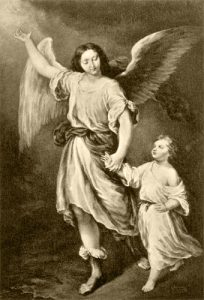
Guardian angel….
Like most writers, I think, I was reluctant to ‘cut and dry’ the mystery. The question of whether the spirit of Miriam’s mother literally speaks to her in times of trouble remains open. In my opinion, the story lends itself a bit more to one interpretation than the other, but I hope readers will find the meaning that speaks to them.
~ ~ ~ ~

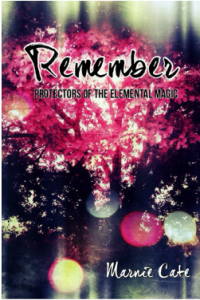
Visit author Marnie Cate and connect with her on Facebook, on Twitter, and Goodreads. Find her book, Remember, Protectors of the Elemental Magic on Amazon.
~ ~ ~ ~
Thank you for visiting my blog today! Please check out the rest of the website and let me know if you like what you see, or if you have suggestions. You can reach me by leaving a comment in the box below or by clicking the Contact link at upper right (or just click here). Consider subscribing to my blog or newsletter. And stop by again soon!
by anesamiller_wuhi6k | Jul 27, 2015 | Blog, Writing & Publishing
Many thanks to Dawn Brazil, an author and all-round great person, who not only provided the inspiration for this post but also shared it first on her blog, Dawn Brazil’s Brilliant Babbles about Books —

When I first visited Dawn’s website several weeks ago, I was impressed with her use of music: music video clips, playlists, and more. It made me realize what a special source of inspiration music offers for all the arts and for life, overall. We can turn to it any time to refresh our mood or energize our creativity. Songs that we love and melodies we remember from long ago yield rich imagery for many writers.
I took a look back at my novel, Our Orbit, and noticed that music plays an important part in the story.
The first instance comes in the opening scene. It’s just a small point, but I think it helps to reveal the main character. Miriam Winslow is a girl of nine, the youngest child of a close-knit working-class family. Before the plot takes off with Miriam’s forced removal from her home and placement in foster care, I wanted to give a glimpse of how her intimate family members knew her. Rather than spend a lot of space of this, I tried to choose a telling detail. Miriam’s feeling for music helped me out—
(As Miriam’s mother, Emaline, drives through a snowstorm to pick up an older daughter, they bypass the turn for their home at Friendly Village Mobile Home Park.)
Emaline suppressed a sigh. Instead of slowing for the turn, she tapped the horn and called out, “Hold the fort, Friendly!”
“Friendly, holding steady—” sang little Miriam from the back seat, quick to answer the cue in this family routine of forgotten origin, homage to the home where Emaline arrived as a bride half her life ago.
In this short passage, my aim was to show that Miriam is a happy child who enjoys melody and is not shy about sharing her voice. She expresses loyalty to her family by singing a “ditty” they invented for fun before she was born. As the story goes on, readers will learn that Miriam’s older brothers and sister have largely given up such family rituals as they began to deal with mainstream culture at school and among their peers. Miriam is the one who keeps family traditions alive, and she will bring them to her new foster family.
As a motif in our writing, music can play a wonderful role in revealing cultural differences between groups of people. Our Orbit explores these differences on a small, local scale: Miriam’s birth family and her foster family have a great deal in common, and yet they belong to separate groups with limited contact. Both families have lived in the same Ohio county for generations. They are of the same race and similar heritage from northern Europe. And both families are Protestant Christians of weekly church-going habits. Even so, the barriers between them are economic class and educational background.

When Miriam first attends church with her foster family, she is awed by the large building, bright chandeliers, and long hallways for Sunday school classes and meeting rooms. People are more dressed up than she is accustomed to, and all their clothes are new and brightly colored. But it is Miriam’s reaction to the music at this big, new church that makes clear to readers: She grew up on the other side of the tracks.
While Miriam ran up the church steps…she heard a choir strike up a song inside. Sounded like a hundred people! Across the bright lobby…you could see the flash of white-and-gold robes as the singers stepped left, right, back, front, clapping their hands on each move. A rock band with guitars and drums was playing along. Tambourines rattled…
This must be the hugest church in town, Miriam thought, All we have back at Holy Redeemer is one little piano. And even with every person singing, there were only a few dozen voices…
Miriam’s home church was a small, “backwoods” congregation without paid professionals to direct a choir or play instruments. Although she soon comes to appreciate the music at her foster family’s prosperous church, her first impression is mixed. Based on her experience, the “loud, peppy music” seems more like a performance than a call to worship. More like a “dance party” than an occasion to repent one’s sins.
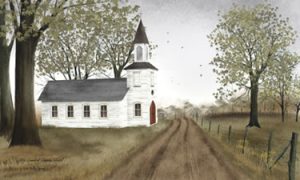
 (When Miriam’s foster father, Rick, takes her back to visit her home church, Holy Redeemer Tabernacle, we see the tradition through his eyes.)
[It was] a tiny white-washed church on Key Ridge, south of town… The piano’s tinny chords rang out… There was no choir director and no hymnals, but harmony swelled from two to four parts. The voices were strong for such an elderly crowd—
To Canaan’s land I’m on my way,
Where the soul of man never dies,
And my darkest nights will turn to day,
Where the soul of man never dies…
People embraced. Some laughed, others wiped away tears…
Here is a list of a few songs that played in my head as I worked on Our Orbit. I’ve hunted up those I could find on YouTube to give an impression of how they sound. Some of the hymns are quoted in the book (as in the scene above), while others served more to set a mood for my writing.
“The Soul of Man Never Dies” performed by Tony Rice and Ricky Skaggs. From the DVD “Legends of Flatpicking Guitar.”
“There is a Balm in Gilead” performed by Mahalia Jackson.
“The Stable Song” performed by Gregory Alan Isakov.
And to close on a happy note, here is “Dreams” performed by the Cranberries. This is the favorite song of Miriam’s teenage sister Rachelle. It becomes embarrassing to Rachelle when her friends make fun of the band because they are Irish and “talk funny.” So we see that Rachelle’s musical taste is a bit more open-minded than some of the people around her!
~ ~ ~ ~

Visit Dawn Brazil at her blog, Brilliant Babbles About Books.
Connect with Dawn on Facebook, on Twitter, on Goodreads, Pinterest, and on Amazon.
~ ~ ~ ~
Thank you for visiting my blog today! Please check out the rest of the website and let me know if you like what you see, or if you have suggestions. You can reach me by leaving a comment in the box below or by clicking the Contact link at upper right (or just click here). Consider subscribing to my blog or newsletter. And stop by again soon!
by anesamiller_wuhi6k | Jul 23, 2015 | Blog, Series: Drawer no more!, Writing & Publishing
This post by friend and author Anne Leigh Parrish first appeared on Women Writers, Women’s Books on December 15, 2014. Thanks for sharing, Anne!
 As the fiction editor for Eclectica Magazine, it’s been both a privilege and pleasure to read story submissions. Finding the handful of pieces that take my breath away is what it’s all about. The good ones shine through, those that are brilliant positively sparkle.
That said, it’s too bad that so many stories that come my way miss the mark. These are usually decently written, no obvious grammatical errors, no huge prose clunkers. What they fail to do is hold my interest and make me care about the outcome. I see the same mistakes over and over. I thought I’d make a list of these, as a sort of guide to aspiring authors.
~ Not telling a story.
So many writers don’t seem to know what a story is, and isn’t. A story is not a nice description of how things are. It’s not a sensibility, or a mood. While those elements surely contribute to a story, a story itself is a narrative where there must be a change in the reader’s understanding of the events, or in the protagonist’s understanding. You leave a story seeing something you didn’t see at the outset, something that makes sense of what’s come before.
~ Trying to tell too many stories at once. In a short story, you need to figure out what the core is – the central theme, event, action, upheaval etc. All other story lines wrap around that central core, supporting it, or opposing it as a way to further illustrate what you’re driving at. Keep it simple. Don’t have too many characters, or an overly complicated plot. As you write, it’s very tempting to bring in an element that seems really interesting or colorful, but unless it fits with the whole, leave it out.
~ Characters with no inner life. A lot of stories that come through my queue feature people I couldn’t care less about, because I don’t know what makes them tick. I see what they do and where they live. I hear their conversations. But what do they feel? What do they care about? What are they most afraid of losing, or willing to fight for? If I don’t know what a character has at stake, I stop reading. So, make me care. Show me your character in a moment of crisis. She doesn’t have to act bravely or wisely, but in a way I recognize as a fellow human being.
~ Dialog that’s stiff or unnatural. Think about how people really talk to each other. They often don’t use complete sentences. Sometimes they swear. Are they cynical, sarcastic? Are they barely holding themselves together under an emotional strain? Make note of funny, strange, or colorful things you overhear people say, and find a way to work them into your fictional exchanges. One of my stories has my protagonist overhearing two strangers talking, and one says, “She’s as crazy as a box of hair.”
~ Bad pacing. Nothing kills a story faster for me than bad pacing. I give any piece about five pages, and if the action hasn’t gotten off the ground, I bail out. Equally bad is pacing that races along, skimming crucial scenes. Figure out what’s most important in your story, and spend enough time on it, but don’t drag it out. You have to keep moving.
~ Keeping the reader at arm’s length. Beginning writers tend to over-explain, as if they’re afraid that their readers won’t “get it.” Readers are asked to trust authors and suspend their disbelief; and writers must trust readers to be smart enough to fill in a few gaps for themselves. If you think you have to spell everything out, you may be assuming that your reader is pretty dumb. You need to show, not tell. Draw the reader in; let her experience what’s going on right up front, not from some cozy seat up in the balcony.
~ An ending that’s too neat. When I come to the end of a story, I like something left to my imagination. Maybe the protagonist will get the boy back, after all. Maybe she’ll get to a point where she can really move on with her life. Maybe she’ll meet someone even better. I want to decide for myself what happens. At this point, the author no longer gets to call the shots. It’s okay to leave some ambiguity and room for interpretation. You don’t need to tie everything up and have your characters live happily ever after, and in fact, it’s a lot better if you don’t.
I close with what someone once told me about the goal of fiction: “To lift us off from reality, and startle us into recognition.” Avoid mistakes, write the story only you can write, and do it brilliantly!
~ ~ ~ ~
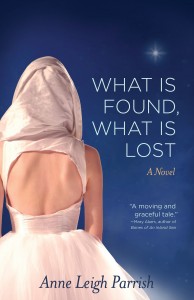
 Anne Leigh Parrish’s debut novel, What Is Found, What Is Lost, came out in October 2014 from She Writes Press. Her second story collection, Our Love Could Light The World (She Writes Press, 2013) was a finalist in both the International Book Awards and the Best Book Awards. Her first collection, All The Roads That Lead From Home (Press 53, 2011) won a silver medal in the 2012 Independent Publisher Book Awards. She is the fiction editor for the online literary magazine, Eclectica. She lives in Seattle.
Check out Anne’s debut novel What Is Found, What Is Lost.
Visit Anne’s blog and connect with her on Facebook.
Follow Anne on Twitter.
On Goodreads.
And on Pinterest.
~ ~ ~ ~
Many thanks for visiting my blog today! Please browse the website and let me know if you like what you see, or if you have suggestions. You can reach me by leaving a comment in the box below or by clicking the Contact link at upper right (or just click here). Consider subscribing to my blog or newsletter. And stop by again soon!
by anesamiller_wuhi6k | Dec 8, 2014 | Blog
In the mid-1990s (way back in my early childhood—lol), I completed a graduate program in Russian literature. To prepare for comprehensive exams, I devoted three years to reading my way through a list of novels, short stories, and poems by such luminaries as Pushkin, Tolstoy, Dostoevsky, Turgenev, and others. Once I had passed the exams and found a spare moment to think back, I came to a startling realization: it had been ages since I last read a book by a woman.
Aside from a tiny handful of poets (poetesses, as they were often called at the time), the classics of Russian literature included no women.
Of course, I loved the Russian masters just as I’ve loved and enjoyed many other books by male authors over the years. I wouldn’t dream of boycotting them, but it did seem appropriate to play a bit of catch-up by making a point of reading more books by women.
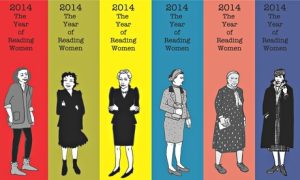
Now that 2014 has entered its final season, I want to remind readers of a special meme that aims to correct the ongoing gender imbalance among reviewers and books selected for review at major newspapers and literary magazines. Variously known as #readwomen2014 and #ayearofreadingwomen, this meme originated last January with blogger, writer, and illustrator Joanna Walsh. The purpose has been to introduce more readers to fantastic work by female authors.
The bookmarks Walsh created to promote #readwomen2014 appear above, featuring Anne Carson,Djuna Barnes, Gertrude Stein, and others. She celebrates a newer set of authors in more recent designs here. And click here to read her introduction to the project overall.
Since I’ve always been intrigued with world literature and foreign lands, I’d like to share a short list of novels I’ve enjoyed this year by women writers of diverse international heritage. All of them count English as heir native language, so these are not works in translation. From crime and intrigue to spiritual redemption, each of these books offers a thrilling glimpse into different ways of life. And, of course, each provides a wealth of reading pleasure—
A Tale for the Time Being by Ruth Ozeki
A strikingly original and evocative story. Chapters alternate between a schoolgirl’s journal, washed ashore on an island off British Columbia, and the novelist (not coincidentally named Ruth) who finds the journal and tries to discover what became of the author. Zen Buddhism, World War II history, and Japanese pop culture all come to bear on the young girl’s struggle to overcome bullying at school and mental illness in the family. A backdrop of natural disasters and the Fukushima reactor meltdown heightens the drama. In recounting dire and serious problems, the narrative voice strikes an endearing harmony of flippant and childlike tones, by turns depressive and humorous.
Americanah by Chimamanda Ngozi Adichie
This celebrated novel tells the story of a star-crossed Nigerian couple. Zed and Ifemelu are lovers as well as best friends, but the oppressive effects of corruption and organized crime drive them apart like powerful ocean currents. Ifemelu emigrates to America and finds professional success but can’t bring herself to put down roots. Back home, the friend she remembers so tenderly struggles to make a living without losing his soul. Gradually, the two resume contact as the heroine ponders a return to her troubled homeland.
The Lowland by Jumpa Lahiri
Action shifts between Calcutta and the rural campus of an unnamed university in Massachusetts as we follow the lives of two brothers, Subhash and Udayan. They are intimates and confidants until Subhash—the elder by one year—goes abroad for postgraduate education. He leaves behind a staid and traditional family profoundly challenged by the Maoist rebellion that flourished briefly in the 1960s. This movement attracts and ultimately destroys the younger brother. The novel’s social material is informative, but even if one knew all the historic details in advance, Lahiri’s narrative skill could make any tale engrossing. She favors extensive development of character and leisurely unfolding of events, yet manages to build these elements into scenes of stunning emotional power.
Kinder than Solitude by Yiyun Li
Here again is a story that spans continents. Three friends grapple with the aftermath of a mysterious death that claimed one of their friends in the prime of youth. Two emigrate to America, while the third manages to make a life in Beijing, but all are marked by doubt and a sense of dislocation. With international and psychological twists on the crime/mystery genre, Li creates a gripping intrigue and moving story. A native of China who now makes her home in the United States, Li has published several acclaimed books of fiction.
** English is so widely spoken in our day and age, there are more writers around the world working in the language than ever before. With so many unusual stories to choose from, don’t let 2014 come to a close without picking up at least one new book by a woman! (A version of this post first appeared on the lovely blog SHELF PLEASURE. I remain grateful for that opportunity!) **
by anesamiller_wuhi6k | Jul 28, 2014 | Blog, Series: Drawer no more!
Part 1
I suspect I’m not the only one who has mixed feelings about Kirkus Reviews. Specifically, their practice of charging independent authors $425 for a “book review” of 400 words or less. Many have suggested that such services are not only overpriced but also pointless for the majority of authors whose readership couldn’t care less about endorsements (or lack thereof) from an 80-year-old magazine. But I write literary fiction, which means my readers tend to count themselves among the discerning crowd, rightly or wrongly, and here Kirkus enjoys a good deal of prestige.

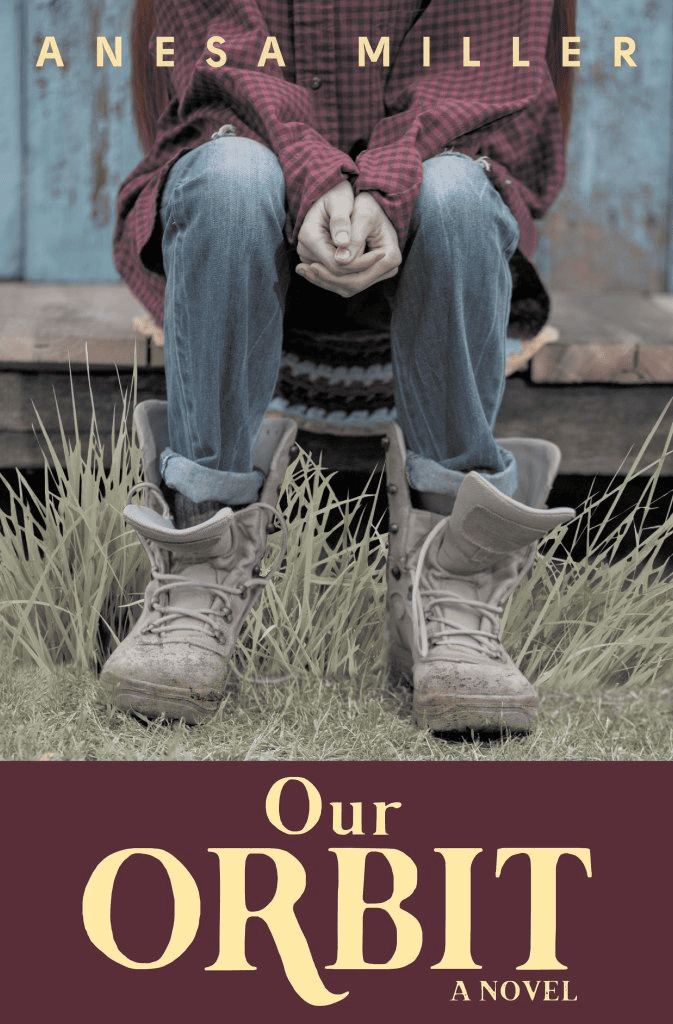
Cover design by Renee Garcia
Besides, I thought, Our Orbit is not only the culmination of many years’ work on my part. It really is a good novel! It deserves the attention of a professional. Kirkus states that their commentaries are thoughtfully penned by “librarians, business executives, journalists from national publications, PhDs in religion and literature…[and] other professional reviewers.”

What’s more, they followed me wherever I went! Not PhDs and professionals (unfortunately) but Kirkus Reviews. Their banner ads pop up at Salon.com, Poets & Writers, The NYT—every bookish site I frequent. You would almost think they were targeting me (lol—I know they were), claiming that they’d consider my book for some major award if only I bought a review. Long story just a bit shorter, I succumbed to seduction. Guess they somehow knew it’s been my lifelong dream to sell books beyond the circle of my personal acquaintance.
And surely a national-level review could only help.
~ ~ ~ ~
Through 4th of July, 2015 – Join a great GIVEAWAY to celebrate my new novel! Many prizes – gift cards, crafts & a signed copy of OUR ORBIT, finalist for “Best Regional Fiction” Click here to join !
~ ~ ~ ~
I knew that Kirkus is notorious for producing harsh reviews. But the “kill clause” put me at ease: If they panned my book, at least they offered the option of keeping it in the dark. So long as I opted not to quote any portion of the review on my website, back cover, or any public place, the review as a whole would remain unpublished forever. Of course, I would be down $425, but my book would not suffer. And since I felt confident that Our Orbit could withstand even a snarky reviewer, I chose to gamble.
So began the proverbial crap-shoot, like so many of the services on offer for writers today, which might or might not help sell a single book.
Some five weeks later, with quaking fingertips, I eagerly downloaded my very own review from Kirkus, the venerable authority. One minute later, dismay set in. That’s how long it took to read the 348 words my reviewer saw fit to devote to my novel. But wait! 89 of those were actually my words, quoted from my own book! Unnecessarily, it seemed to me: Quoted like a freshman English student dutifully includes a citation in a book report. So my review came in at just 263 original words. About a buck-80 per word.
What did they say, those precious bon mots?
Typically, for Kirkus, there was a 2-line plot summation, followed by a paragraph of more detailed plot summary. Perhaps readers look for this, but it wasn’t useful to me since I had, naturally, already created my own synopsis. Next came another brief paragraph, heavy on the above-mentioned quotations, giving yet more details on the characters
The review closed with one brief sentence—9 words—that might be worth quoting on my book cover or elsewhere. But in order to use those few words, I would have to agree for them to publish the entire review on their website, if they chose, as per the Kirkus policy.
And there’s the rub.
Because in that second paragraph detailing my characters, the reviewer decided to drop a major spoiler. If this were part of a serious discussion, I might decide the revelation was worthwhile. But instead, it was tossed off in passing, making no real point. To use any part of the review I paid for, I would have to consent to unknown numbers of potential readers encountering a spoiler that does nothing to enhance the commentary on my book.
Thanks for nothing, Kirkus!
To Kirkus or not to Kikus? Part 2
In fairness to Kirkus Reviews, I’ll readily admit that they have some fine employees. When I wrote to express my disappointment with the review I’d purchased of my novel, Our Orbit, I was surprised to encounter a very helpful young man. I assume he was young since he was working as a first-line responder to email inquiries like mine. I’ll call him Thad.
Among Thad’s helpful reminders was this: “Our reviews are required to meet a minimum word count of 250 words.” So at 348 words, my review was laden with gravy.
Point taken, Thad…although nearly 100 of those words were mine rather than the reviewer’s—quotations from Our Orbit padding the lukewarm remarks.
~ ~ ~ ~
Through 4th of July, 2015 – Join a great GIVEAWAY to celebrate my new novel! Many prizes – gift cards, crafts & a signed copy of OUR ORBIT, finalist for “Best Regional Fiction” Click here to join !
~ ~ ~ ~
Nonetheless, in spite of my jaundiced attitude, I was impressed when Thad stated that he would, “present your concerns to our editors.” After all, my primary complaint was that the review I’d bought so dearly contained a spoiler revealing a major plot point. I felt this made the whole thing unusable due to Kirkus’s policy requiring permission to publish the complete review if the buyer quotes so much as one phrase (which is, of course, the whole purpose in purchasing).
So I pricked up my ears when Thad suggested that senior editors might actually consider the issues I’d raised and offer some solution. Three weeks went by without further word. When I wrote again to ask Thad if I should expect a reply, his answer came the next day:
“The Indie Editors … have decided that we cannot alter the review. It is Kirkus Indie’s policy to only address those matters related to factual inaccuracies …
“Regarding the point about the [spoiler], very often our reviewers are not able to elaborate on each and every plot point found in a given work… However, they must inform a reader of certain points… We do understand your frustration and disappointment, but we have certain editorial guidelines that we follow.”
Do I detect a bit of circular reasoning? Kirkus reviewers cannot elaborate every plot point, but they must inform readers about certain points. And just because I withheld a plot twist until page 191, treating it as an elaborate family secret, that was apparently no reason for them to select some other point to elaborate for those demanding readers.
Hmmm…
…Much ado about very little? Are spoilers such a serious thing?
Okay, okay. As friends have assured me, I’m making much ado about very little. Are spoilers such a serious thing? Goodreads.com accommodates spoiler alerts on reader reviews, but Amazon has discontinued that practice. Even if an author objects to revealing statements in a review, Amazon will do nothing to post an alert. (Guess how I know.)
Moreover, millions of people know how such books as To Kill A Mockingbird and The Great Gatsby turn out. Or Gone Girl or The Secret History or The Hunger Games. And that does nothing to keep new readers away. So, yes—I’m overreacting. I should be so lucky as to have fans clamoring over Our Orbit, discussing the plot twists and characters, accidentally spilling the beans about what happens on page 191.
Maybe I’ll go ahead and put that brief, mildly flattering, quote from my Kirkus review on the back cover of my book. Maybe I’ll even publish it here on my blog.
If Kirkus responds by putting up the full review, complete with spoiler, in some obscure corner of their website—so much the better. If one or two people stumble upon it and find the secret—don’t tell anybody, please?
And thank you, Thad, for making an effort to talk to those scrupulous “Indie Editors” on my behalf.
~ ~ ~ ~
In the end, I decided to both quote and publish my review in full. You can read it here along with a far more gratifying (and unpaid) commentary from The Midwest Book Review.
~ ~ ~ ~
Through 4th of July, 2015 – Join a great GIVEAWAY to celebrate my new novel! Many prizes – gift cards, crafts & a signed copy of OUR ORBIT, finalist for “Best Regional Fiction” ! ! ! Click here to join !
~ ~ ~ ~
Many thanks for visiting my blog today! Please browse the website and let me know if you like what you see, or if you have suggestions. You can reach me by leaving a comment in the box below or by clicking the Contact link at upper right (or just click here). Consider subscribing to my blog or newsletter. And stop by again soon!




 (When Miriam’s foster father, Rick, takes her back to visit her home church, Holy Redeemer Tabernacle, we see the tradition through his eyes.)