
by anesamiller_wuhi6k | Jul 31, 2015 | Blog, Issues in Our Orbit -- Substance Abuse & Recovery
Today I’m honored to present information in the series Issues in OUR ORBIT: Substance Abuse & Recovery. I am grateful to romance and fantasy writer C.D. Taylor for sharing this post, which appeared on her blog on June 29, 2015. Kudos to her for coming through a challenging year —
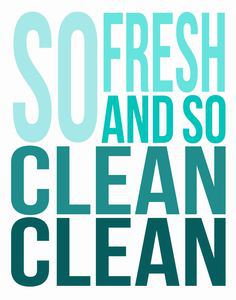
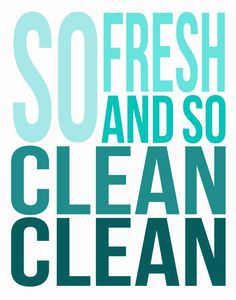
 In life we find so many instances to celebrate. Birthdays, anniversaries, graduations. We turn baked goods into balls of flaming death and wait for someone to blow saliva all over the treats so we can devour them and cheer on the recipient of our congratulations. I for one have celebrated many things. Birthdays of course are the number one on my list but this year I have something new to celebrate. Something that I never thought I’d be cheering myself on about. Sobriety. Yes, you heard me. I’m coming up on one solid year of being clean from narcotic pain killers. Some may say that isn’t something to celebrate, that I should be ashamed that I was ever in that sort of situation. Truth be told, I was ashamed. I didn’t want anyone knowing I had a problem. What would they think of me? Would they turn away from me because of my past?
The fallout I envisioned was comparable to nuclear meltdown in my life. I didn’t want or need for any of those things to happen. What changed my mind?
Secrets can only be hidden for so long. Eventually they rear their ugly head and somehow you are exposed in a negative light without being able to tell your side of the story or defend yourself. The best way to combat that was to come clean (no pun intended). You’ll notice that recently I did come clean about my problem (there’s a blog post about it).
Somehow I found healing…
Somehow I found healing in that post, like it was something I needed to do in order to close the wounds that were so ferociously ripped open by my addiction. Clicking the ‘publish’ button on that blog was one of the most nerve racking things I’ve ever done in my life. But after it was over, I sat back and thought ‘this is it. This is where I begin the new leg of my journey.’ And it was. It was a day when I put the old me into a little box and told her to behave. Believe it or not, she’s been behaving like a dream!
 One year. A lot can happen in a year. Births, deaths. In a way I was reborn and I killed off the person I was before. It feels great not having to depend on something that was literally killing me from the inside out. I wake up with a clear head and I’m always ready to face things with positivity. Life is pretty damn good.
After a whole year of being clean, I began to ponder some things about addiction. The foremost of them was the ease of actually getting pills. I never bought them off the street, but I did doctor shop and lie about something happening to the bottle I already had. Yeah, I was a shitty person. It’s okay, you’re more than welcome to call me that, it doesn’t hurt.
I found myself visiting with my regular physician today though and fired up a conversation about this topic. She was more than happy to discuss this with me, knowing my history with pills. I wanted to hear her opinion as a professional about how she toes the line in issuing narcotic pain killers. First of all, doctors are primarily compassionate people. They went into their field of study because they care about people and want to heal them. So in my mind, I would think it would be hard to turn someone down if they walked in saying they were in pain. She confirmed my suspicion.
“It is hard. There’s a line drawn between professionalism and what’s legal, compared to what I feel personally for a human being. It’s difficult to look at someone who claims they’re in pain and say ‘I’m sorry, I can’t give you this’”. “We are here to help people feel better, but in the back of your mind you have to think of the worst case scenario.” I have to agree with her on this. I am a fairly compassionate person myself. It would kill me to say no to someone who claims to be in horrible pain. I went on to ask her how she deals with something like this.
“Honestly, I don’t deal a lot in pain management. If I think they are being truthful about their pain, I refer them to a pain management specialist.” I know from firsthand experience that a pain management specialist isn’t like a regular physician. In order for you to get drugs from them, you are required to take a psych evaluation. They make you jump through so many hoops that by the time you’re done, you’ve already found a sucker doctor to give you more pills. So kudos to her for making the right call when it comes to people in pain. Point blank, if someone is in real pain, they will do what they have to in order to heal from that pain.
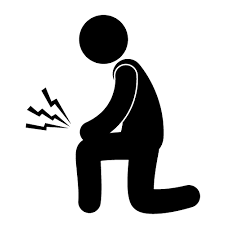
 Another topic that my doctor and I discussed was about my future. No, not my career or anything like that. It was a discussion about “what happens if you need another surgery, or even do something like break your leg?” It was a valid question. “Sure you could try to tough it out and suffer through it, but I don’t recommend that.”
No, I don’t really think I’d like to ‘suffer through’ my femur being snapped in half, if this unfortunate event ever came about. I’d want something to dull the pain for sure, who wouldn’t? I’m no martyr that’s for damn sure. To her question, though, I already had an answer ready. See, when you go through something as epic as addiction and come out alive on the other side, you always need a contingency plan. A plan B, if you will. I’ve had my plan B ready since the day I decided to give up my addiction.
If I ever meet with an unfortunate accident or require surgery, I have let my husband know he will be my ‘dealer’ for all intents and purposes. He will give me the prescribed dosage of medicine when I need it. Now, it won’t be one of those things where I’m allowed 6 pills a day and he hands them to me each morning…no, that would be stupid. Giving a recovering addict 6 pills is like giving a small child 6 Snickers Bars and expecting them to not eat every single one in 30 seconds. It’s hard to practice self-control when you have a past of addiction.
The brain of an addict will always try to revert back to past behavior.
Ask any former addict, they will tell you the same thing. Medicine will have to be dosed out individually. And I’m okay with that. I’ll need help, and I’ll ask for help. I’m not too proud to ask for help in keeping myself clean. It’s all part of the game. A game that I am winning and will continue to win.
Retraining your brain isn’t an easy task. It takes more determination than you can possibly imagine. But what’s the old saying? “Anything worth having, is worth fighting for”? Something like that I suppose. Yeah, I did this for me. Making the decision to be clean was one of the most selfish choices I’ve ever made. But instead of feeling bad about it, I feel empowered. Like I’ve slayed the dragon and I now hold its head in my fist as a trophy, a reminder of sorts.

Maybe this has opened your eyes to other types of celebrations that people do. Maybe you will read this and be judgmental about my past. But here’s the thing…I’ve spent the past year judging myself. I have beat myself up more times than I can count. Did it do any good? No. I was still the same person after my lashings. I am still standing strong and learning from my mistakes. The great thing is that I can recognize them now. I can look at things with a fresh perspective and smile because I was given a second chance. I was given the opportunity to make amends with myself and say ‘it’s okay, I messed up. But I will do better’.
Don’t be so hard on yourself for your shortcomings. Most of them are only stepping stones to get to a brighter future. The less time you spend hating yourself, the more time you have to enjoy the life you’ve been given.
Peace, Love and Pages
C.D. Taylor/Taylor Dawn
Visit C.D. Taylor on Facebook, on Twitter, and on Amazon.
~ ~ ~ ~
The links below provide information on addiction and recovery.
Visit the Harvard Help Guide
Visit SoberNation
Visit Parent Treatment Advocates
And here’s a recent article from the New York Times on teenagers discussing what might have stopped them from using drugs.
~ ~ ~ ~
Thank you for visiting my blog today! Please check out the rest of the website and let me know if you like what you see, or if you have suggestions. You can reach me by leaving a comment in the box below or by clicking the Contact link at upper right (or just click here). Consider subscribing to my blog or newsletter. And stop by again soon!
by anesamiller_wuhi6k | Apr 29, 2015 | Blog, Issues in Our Orbit -- Substance Abuse & Recovery

Learning to care for others
Substance abuse is an issue that I’ve been discussing with friends and visitors here on the blog lately. I have confronted this problem in my own life and wouldn’t wish the harm that drug abuse brings in its wake on anyone. But in the spirit of making lemonade when lemons come along, I have called upon those difficult experiences in my creative writing.
Today, a person close to me (who will remain anonymous) shares the conclusion of her story about how drugs affected her family. The first portion of her story is posted here. Scroll down for several links to resources that can be useful to those facing a similar challenge.
A Mother’s Struggle —
Frustrated by her teenage daughter’s denials and drug abuse, this mother was driven to distraction. In last week’s post, she describes “one of my most awful memories”—
…I confronted my daughter. As usual she snowed me with lies. I slapped her in the face. 3 times I slapped her. I demanded she admit what she’d done. I was that desperate. She called me abusive and ran out of the house…
So things dragged on longer than you can imagine, now a little better, now a lot worse.
One tricky thing in the situation is that my kids were in joint custody. Their father is basically a good man, he lived a few blocks away from me. The children could walk to his my house, which seemed like a great arrangement at first. But when my older girl started high school, the gap between Mom and Dad turned into something for her to slip through. She would claim she’d left a favorite sweater or outfit at Dad’s house. Had to have it today! No problem—she could walk right over and get it. But then she didn’t come back for hours. No one knew where she went.
Also her dad insisted she attend his church every Sunday, even when she was with me on the weekend. Okay—I dropped her off at church. But you guessed it, she promptly slipped out another door and ran off to meet the friends she smoked and drank with, instead of meeting her father to join the service.
When we wised up to that, I told her dad I wouldn’t force her to attend church anymore. She was not interested in religion at that time and wanted to stop attending. I thought I could show her some support and let her sleep in on Sunday when she was finally at home and quietly in bed! But the upshot: her dad showed up at my house insisting I get her up so he could drive her to church. This led to all sorts of argument and trouble.
 Probably our daughter wanted drugs in order to escape. But lack of a united front between parents is a dangerous thing. Some kids suffer in silence; others learn to use the arguments to a bad advantage.
When all this got started, it was alcohol and marijuana. Soon she added Ritalin, Adderall, and Xanax, which were sold in the halls of her school. I’m sure she tried cocaine and crack at some point. Thank God—those didn’t hold her, but at community college, she got into meth. She stuck with meth until she discovered Oxycontin. From there, it was on to heroin, which is where the progression stopped because she was addicted. Like many addicts, she tried the “geographical cure,” trying to get clean by moving away from her source of supply. She moved in and out of my house several times, but did not know how to really make a change.
She stole money and valuables from both of her parents and other relatives. Supposedly she had “financial” problems: most of the family actually believed she had run up debts due to a “shopping addiction.” Nothing worse than that! I did not believe this but could find no support and didn’t know what to do.
My daughter had become like the magical gingerbread man—
I ran away from a little old woman,
and I ran away from a little old man.
You can’t catch me—I’m the gingerbread man!
She could elude any attempt to pin her down and make her admit that help was needed.
One sunny Saturday morning, I called our local police. My daughter had left our house earlier that week, and now my husband had discovered several hundred dollars missing from his dresser. A kind and soft-spoken policeman sat on our porch and heard our sad story. He told me about something called “treatment in lieu of conviction,” available in our county. It sounded like a legal process that could spare me from setting my girl up for criminal charges while still teaching her that she was facing real consequences.
There was no guarantee that my daughter would qualify for “treatment in lieu of conviction.” It would depend on the circumstances of her apprehension, items that might be in her possession at the time, how she bahaved, and other crimes that might come to light. But it could also work as a way for setting up court-ordered rehab. I agreed to charge my daughter with theft. The policeman filed a warrant for her arrest.
 Of course, my daughter’s experience of all this was much different from mine. Once she found out that we had filed a criminal complaint, she went into hiding. She stayed at a hotel with other users and lived on the streets. I talked to many people who knew her, and some of them helped me put up flyers begging for information.
Late one night, a drug addict called my home phone. My daughter had given him the number long before, when she was living with me. This man sounded much older than my daughter. He flat-out told me that he wanted to find her so they could meet up and run some scam together for money, obviously for drugs. It was disgusting, but I heard him out. When I started crying, he said, Never mind: if he saw my daughter again, he would tell her to go home and get clean. To forget about scamming ever again.
I know that was just words of the moment that an addict may laugh about the next day. That man may be scamming still, for all I know. But I was touched and found a grain of hope in his effort to comfort me.
For me, bringing in the law was a turning point where things shifted for the better. At least we were beginning to admit the real problem. I realize that law enforcement is not always helpful to families like us. I’ve heard a few of the horror stories about young people forced to name names in some big police action and winding up in worse trouble than ever. I do believe we’re lucky that our county steers clear of those practices to a certain extent.
There were many more low points along the way. As my daughter would say later, her life was hanging by a thread. That phase went on for many months. But I refused to evade the root of the problem any longer, and I reached out for whatever help I might find. Soon enough, my ex-husband came around to my way of thinking. We used the A-word: it’s an addiction. We were still worried, more worried than ever. But waiting and hoping for our daughter to get arrested was actually a relief after all the lies and spinning wheels. For years we didn’t think our girl would ever shape up. We were afraid she wouldn’t finish high school, wouldn’t go to college or then finish college, wouldn’t stay alive long enough to mature into a real adult. But finally we found cause for hope.
~ ~ ~ ~
Anesa adds— My friend’s daughter evaded arrest for half a year. When she was finally brought to court, she was so intoxicated that her head kept dropping to her shoulder. The judge admonished her, but then he looked up and asked, “Does the defendant have family in the courtroom?”
Her two parents and one stepparent stood up. Persuaded that these elders in her life could offer enough support to give the young woman a chance, the judge ordered her into a county-run program of “treatment in lieu of conviction.” There was a condition that she must not fail a single drug test for two years of probation. After that time, although she was no longer a minor, she would have no criminal record.
Defiant at first, she went through the motions, and ran away from the treatment program twice. Then, over three months of residential rehabilitation, a true desire for recovery emerged. She spent another 15 months at a halfway house, worked a diligent program, and has now been clean and sober for seven years.

~ ~ ~ ~
Links below provide information on addiction and recovery. If you need to do additional reading, I’m offering a chance to receive $50 in free books through the month of April 2015. Click here for details.
Visit the Harvard Help Guide
Visit Parent Treatment Advocates
Visit Gabbertsite from mental health counselor Gail Gabbert
And here’s a recent article from the New York Times on teenagers discussing what might have stopped them from using drugs.
by anesamiller_wuhi6k | Apr 24, 2015 | Blog, Issues in Our Orbit -- Substance Abuse & Recovery
Substance abuse is an issue that I’ve been discussing with friends and visitors here on the blog lately. I have confronted this problem in my own life and wouldn’t wish the harm that drug abuse brings in its wake on anyone. But in the spirit of making lemonade when lemons come along, I have called upon those difficult experiences in my creative writing.
Today, a person close to me (who will remain anonymous) has agreed to tell her story of how drugs affected her family. As you would imagine, it was a painful journey for everyone. Scroll down, below the testimonial, for several links to resources that can be useful to those facing a similar challenge.
A Mother’s Struggle —
About 12 years ago a member of our family got into using drugs. At first, it was just experimenting. It probably started her first day of high school: out of the house, on her own more or less, because we sent her to a church school half an hour from our home (not to our local school). That space between home and school turned into a big enough crack for her to slip through.
Okay, I will say that this person was my own beloved daughter—the eldest of my three children. I won’t say more than that.
Over time when I became suspicious of what she was getting up to, I started searching her room and reading her notebooks. I did feel it was wrong to snoop through her personal things. At first I felt bad about that. You can imagine how a 14-year-old would scream about her privacy being invaded. Lucky for me, she never found out. Unlucky that I never found anything clear enough to bust her and try to put a stop to it. Not that I would have succeeded.
The trouble was that my daughter became a good liar. She could spin convincing tales of where she’d been after school, who she went with, etc., until I became desperate for any grain of truth. Of course, I could tell things were not right. Her personality was changing. In middle school, she had often been irritable, but now she would blow up over any tiny thing. She refused to help around the house, like she always did before, and her grades fell from excellent to okay to fair, and then poor.
It’s hard for me to think about those times. I feel guilty that I failed to nip problems in the bud. I knew she was getting up to something, even though her denials were always believable. But even when I KNEW her clothes smelled of pot or her words got slurred, she could put a good face on it. She would claim that she just tried a bit of beer or marijuana because other people she knew were trying them. Not her real friends—Oh, no! Her friends were not “like that,” they never would use nasty stuff. “Nasty” because she hated it when she tried it, and now that she knows what it’s like, she will never touch it again. YUCK!
Like, What’s wrong with people, Mom? Why do they do that?
She was much too clever to leave anything in her room or backpack or even a pocket. Never so much as one rolling paper or a bottle buried in the trash. Nothing definite, that’s what I’m saying.
I know that some parents have seen deceit like this, based on half-truths that pull you in. Other parents have not, because their kids are still reachable. My daughter had an instinct for what I would believe and what I would want to believe. It broke my heart to think that I could not get through to her, could not convince her to fess up and start fixing the problem. We used to be close. Couldn’t I still be her friend, somehow make her realize that I was on her side, even if she wasn’t a little girl anymore?
Before I wised up, it was like she had already come to believe that getting high was on her side. Drugs were on her side, her real friends. Not mom or family or people, at all.
 One time I slapped her in the face. She was bragging to a friend on the phone, using slang that I didn’t understand, but it was obvious she was bragging about something she had bought: What she had bought was expensive and important and a big secret. It sounded like she pooled money with a few others from her school. They would be selling it off in smaller bits to cover the cost. In other words, dealing. I was not in the room at the time, but her little sister was there and was overhearing the whole story. As I passed by the door, I caught on.
I saw that my older girl knew her sister could hear it all. She was bragging about this very bad thing in front of her sister, and she knew it.
That’s what hit me so hard.
I confronted my daughter. As usual she snowed me with lies. I slapped her in the face. 3 times I slapped her. I demanded she admit what she’d done. It was that desperate. She called me abusive and ran out of the house. It’s one of my most awful memories. I hate to think of it.
By the end of that day, I managed to get her set up in counseling. Sounds good, right? But this was at least the third time, over her junior high and high school years, that I got her into professional counseling. Something always came up to block any progress. For one thing, I know she tried to snow the counselor: She would talk about how unfair everyone was to her, and slip-slide over the heart of the matter. Or else she decided she hated the counselor (of which we had little to choose from), or my kids’ father refused to take part in the process.
This testimonial continues here. Links below provide helpful information on addiction and recovery. If you need to do additional reading, I’m offering a chance to receive $50 in free books through the month of April 2015. Click here for details.
Visit the Harvard Help Guide
Visit SoberNation
Visit Parent Treatment Advocates
Visit Gabbertsite from mental health counselor Gail Gabbert
And here’s a recent article from the New York Times on teenagers discussing what might have stopped them from using drugs.
by anesamiller_wuhi6k | Apr 17, 2015 | Blog, Issues in Our Orbit -- Substance Abuse & Recovery
Imaginative writing is often inspired by the conflicts of everyday life. In our society, where we may find ourselves stressed to a breaking point, conflict can reflect pressures we don’t even understand. In an effort to reach beyond fiction toward the real-world tensions that inspired my novel, Our Orbit, I’m introducing a few new topic categories here on the blog. You’ll continue to find items on the craft of writing, literature, and publishing. But since Our Orbit delves into the challenges of family life, I’m also branching out to parenting, including addiction and recovery among teenagers. Here is an offering on this topic, along with links to sources of help and information.
 The painful question in the title of this post is one that worried parents ask each day in thousands, if not millions, of homes across all continents. This timely article is was written by Mr. Robert Hunt, a youth recovery coach and wellness advocate, re-posted from SoberNation by permission of Mr. Tom Stoddard, founder of that website, which is dedicated to building community by and for people in recovery from addictions and related problems.
From Recovery Coach Robert Hunt —
Adolescent drug addiction treatment can incorporate a number of different approaches, procedures, and timelines, depending on the adolescent. In our experience, the most effective treatment plans are those that are holistic and individualized, meaning they incorporate different approaches and therapeutic processes, all dependent upon the specific adolescent’s individual symptoms, needs, and unique situation. Three of the most important aspects of an adolescent’s experience that should always be incorporated into a treatment plan include Co-Occurring Disorders, academic struggles and support, and family support.

CLICK THE PIC FOR DETAILS.
First of all, it’s extremely common for adolescents who struggle with drug or substance abuse to also suffer from a Mental Health disorder or learning challenge. At times, these symptoms may overlap with those of the drug abuse addiction and effects, thus making it difficult to know which symptoms are attributed to which disorder. Because of this, unfortunately it’s common for teen Co-Occurring disorders to go undiagnosed and consequently untreated. In these cases, teens may recover from their addiction and abuse but still be suffering from the other disorder, which will leave them vulnerable to stress that can trigger relapse. Therefore, the importance of careful evaluation and thorough diagnoses in Adolescent Drug Addiction Treatment can’t be stressed enough, as it’s the foundation upon which recovery is built.
Secondly, adolescents living with addiction and/or abusing drugs often are struggling in school. Because school is such a central part of adolescents’ lives, experiencing such struggles or failure can quickly lead to serious loss of self-esteem, and together with drug use, can add to the adolescents’ withdrawal from others. These academic difficulties will hopefully be realized within talk therapy sessions and careful consideration of possible learning disabilities should be made as well. While in treatment, adolescents should be provided real-life academic support such as tutoring, to help get the students back on track. For adolescents, success at school is pivotal to success in their lives.
Lastly, Adolescent Drug Addiction Treatment plans should include the family members, to help heal what damage and hurt has been done, re-build relationships, and create a healthy environment for everyone to thrive in together, amidst the adolescent’s recovery. In our treatment plans, we always provide parents with individual and group family sessions, in order to provide parents the support necessary to move forward.
Again, because Adolescent Drug Addiction Treatment is different for every adolescent, there is certainly no one right way for it to be done. However, in our experience these three aspects prove consistently important in supporting our adolescents to achieve true and lasting sobriety.
About the author – Robert Hunt is a recovering addict of 20 years. He has devoted his life to helping others suffering from chemical addictions as well as mental health challenges. Robert maintains many blogs on drug addiction, eating disorders and depression. He is a sober coach and wellness advocate and a prominent figure in the recovery community.
Visit Robert Hunt’s blog | Follow him on Twitter @RecoveryRobert
Visit SoberNation | Follow @SoberNation
Visit Parent Treatment Advocates
♥ Don’t forget to sign on for the great GIVEAWAY through April 2015: Win $50 in free books from Powell’s of Portland! Support indie writer & bookstore.Click here! ♥

 In life we find so many instances to celebrate. Birthdays, anniversaries, graduations. We turn baked goods into balls of flaming death and wait for someone to blow saliva all over the treats so we can devour them and cheer on the recipient of our congratulations. I for one have celebrated many things. Birthdays of course are the number one on my list but this year I have something new to celebrate. Something that I never thought I’d be cheering myself on about. Sobriety. Yes, you heard me. I’m coming up on one solid year of being clean from narcotic pain killers. Some may say that isn’t something to celebrate, that I should be ashamed that I was ever in that sort of situation. Truth be told, I was ashamed. I didn’t want anyone knowing I had a problem. What would they think of me? Would they turn away from me because of my past?
  One year. A lot can happen in a year. Births, deaths. In a way I was reborn and I killed off the person I was before. It feels great not having to depend on something that was literally killing me from the inside out. I wake up with a clear head and I’m always ready to face things with positivity. Life is pretty damn good.
 Another topic that my doctor and I discussed was about my future. No, not my career or anything like that. It was a discussion about “what happens if you need another surgery, or even do something like break your leg?” It was a valid question. “Sure you could try to tough it out and suffer through it, but I don’t recommend that.”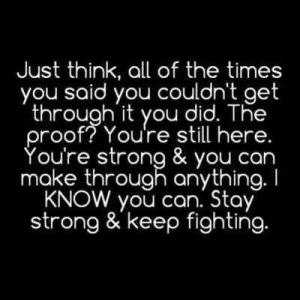



 Substance abuse is an issue that I’ve been discussing with friends and visitors here


 The painful question in the title of this post is one that worried parents ask each day in thousands, if not millions, of homes across all continents. This timely article is was written by Mr. Robert Hunt, a youth recovery coach and wellness advocate, re-posted from
 About the author – Robert Hunt is a recovering addict of 20 years. He has devoted his life to helping others suffering from chemical addictions as well as mental health challenges. Robert maintains many blogs on drug addiction, eating disorders and depression. He is a sober coach and wellness advocate and a prominent figure in the recovery community.