
by anesamiller_wuhi6k | Nov 16, 2015 | Blog, Writing & Publishing
Many thanks to friend and fellow writer Ellen Harger for including my thoughts on book clubs at her lovely blog! The following post was first published there on July 27 of this year. Here, I’ll suggest some answers to the perennial question, “What makes a great read?” I’m always looking for a book that people will love to discuss as a group.
 I’ve attended book clubs in Washington state, Ohio, Idaho, and elsewhere. For the most part, it’s been a wonderful experience with dedicated people discussing contemporary literature. When a group sacrifices their usual weeknight duties to gather and share ideas, I always like to see socializing kept to its own timeframe (before or after discussion). And it’s great when everyone makes an effort to stay on-topic! ;-D
Looking back on the best club meetings I’ve attended, I notice two factors, either of which makes for lively conversation:
- Controversy! It’s no surprise that people get passionate about sharing their opinions. In the book-club context, controversy tends to come in two varieties: social or personal. By social, I mean related to societal issues, and by personal, I mean our interpretations of a book’s characters and events. More on these below.
- Subject matter that enjoys a buzz around the time your club meets. This is hard to plan for, but buzz certainly inspires active discussion. What’s less obvious is that older books, including classics, may work as well as new releases, by serendipity.
- When these two factors coincide, as they did in the first example below, you’re in for an especially dynamic evening!
Book-clubbers tend to take considerable interest in current events and issues. That’s often why they join the group. And books can provide a unique avenue for engaging with controversial subjects. Hopefully, a degree of detachment—since we’re talking literature rather than politics or religion—will allow for airing all sides in a receptive atmosphere.
Sometimes it’s helpful to remind people of that!
My group in Moscow, Idaho, scheduled a meeting on Meg Wolitzer’s novel, The Interestings (2013). It’s a popular book about a group of high school friends that remain close into middle age and pass many milestones together. Who knew this would become an excellent vehicle for discussing the American health care system?
 In The Interestings, the main character’s husband suffers from treatment-resistant depression. His illness periodically becomes severe, requiring hospitalization. Although medical insurance is not a key topic of the book, it had recently been all over the news with portions of the Affordable Care Act being hotly debated. At the time the novel takes place, major depression was a pre-existing medical condition that could lead to skyrocketing insurance costs or even denial of coverage.
While the fictional couple deals with this problem over the years, they struggle to maintain a middle-class lifestyle. The cost of living in the New York metropolitan area becomes prohibitive. Their friendship with other characters from younger days turns awkward as the latter attain astronomical financial success.
One reader in our group shared a strong opinion: “How could the poor guy not get depressed when that other couple flaunts their wealth? Vacation homes, trips, servants – and he’s supposed to grin and bear it on 65K per year.”
Others raised the issue of lost productivity due to illness. Some focused on the privileges of inherited wealth. Still others saw a tendency for the rich characters to exploit the struggling couple’s loyalty. With the novel’s many relationships as touchstone, we managed to talk about “Obamacare” without straying too far from our book.
And without losing any friends in the process!
 Another terrific discussion took flight around a more personal controversy: members’ interpretations of a key character in Anita Shreve’s The Weight of Water (1997). This is a historical fiction/mystery novel that’s tough to summarize without spoilers. Suffice it to say that I’m a big fan of the book and found myself drawn into the plight of a Norwegian immigrant’s bleak existence. Shreve’s interweaving of this tale from the 1870s with a modern woman’s discovery of a wrongly punished crime is nothing short of masterful.
Some of our club members found Maren, the Norwegian heroine, believable and highly sympathetic. By contrast, an equal number felt that she was the worst kind of sociopath: always seeking pity for herself while dismissing the humanity of others. A few took the position that Shreve’s portrayal of Maren was flat and implausible: a mere pawn of the plot who inspired little confidence and less compassion.
But even those who disliked Maren and her role in the story enjoyed this gripping book and our intense discussion!
As mentioned above, The Interestings was a lucky case of controversy and topical subject matter dovetailing in a contemporary book. Another excellent discussion that played off news reports sprang up when we read a book published nearly 90 years earlier: Virginia Woolf’s Mrs. Dalloway (1925).
 Mrs. Dalloway enjoyed a rediscovery at the turn of this century thanks to Michael Cunningham’s acclaimed novel, The Hours (1998) and the Oscar-winning film based upon it (2002). My club happened to schedule Woolf’s modernist classic in 2012. Our discussion was memorable, although not one of our happiest.
The meeting was held several weeks after the New York Times ran an article revealing that deaths from suicide among soldiers returning from Iraq and Afghanistan had surpassed those dying in battle. Two of our members had read the article and wound up taking the discussion in that direction. They emphasized that Woolf’s fiction hinges on the death of a WWI veteran suffering from what was then termed “battle fatigue.”
See the NYT report here.
It was a challenging but enlightening discussion that touched on current events as well as history. We all felt that we learned from each other’s views. One friend was even inspired to share her feelings about the suicide of a family member several years before. This proved cathartic for her and deeply moving for the rest of our group.
These memorable evenings go to show the power of literature to shine a light on matters that deserve thought and attention. Conversation plays an essential role in building our understanding of events and people – even those we thought we already knew.
by anesamiller_wuhi6k | Aug 3, 2015 | Blog, Writing & Publishing

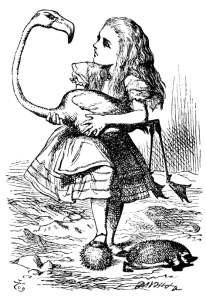
Illustration from AAIW by John Tenniel
I’m grateful to friend and author Marnie Cate for inspiring this post and hosting it on her lovely website a few weeks ago. When I first visited Marnie’s site, I noticed that her work concerns magic and the paranormal. I had to admit off the bat that, by contrast, I am primarily drawn to realism. However, I do NOT claim to have any better grasp of “reality” than writers of other genres. To me, realism in fiction basically means that, “Things may get weird, but no supernatural forces will be blamed.”
I’m not sure when the realist bug bit me so hard. Earlier in life, my favorite books were The Chronicles of Narnia, The Fellowship of the Ring, and Alice in Wonderland. A long detour through Russian literature may have done it (which is why I call myself a “recovering academic”). The 19th-century Russian novels of Tolstoy, Turgenev, and Dostoevsky are often classed as a “golden age of realism.”
Nonetheless, I love flashbacks, dream sequences, and the mysteries of nature—these can all be excellent elements in fiction, in my opinion. In fact, there is one key element in my new novel, Our Orbit, that doesn’t fit the realist mold.
One of the main characters in my novel is a young girl named Miriam, who has the misfortune of witnessing her father’s arrest by a SWAT team. Terrified, she hides under her parents’ bed, expecting US Marshals to come for her next. Of course, she does not understand that they will take her not to jail but to a foster home. Nonetheless, while she trembles in hiding, something strange takes place —
…the light switch clicked by the door of Daddy’s bedroom. Miriam tried to sink into the floor. Light reached for her under the edge of the sheet. …she saw dark boots in the doorway.
“Hey,” said the man’s voice. “You playing hide-and-seek in here? You can come out now, okay?”
He sounded young. Not so mean as the others. Miriam snuffled, wiped her face on her sleeve. She knew it would tell him she was under the bed.
His knees crackled when he bent down. “Come on,” he said, almost beside her now. “Don’t be so scared. We’re not here to hurt you.”
The miracle wasn’t that his voice sounded kind. The miracle was that his voice called up another, a voice Miriam had been the last person on earth to hear. Her daddy had said many times, “Miriam was with her when she died.” And Isaac said, “You know, Miriam, you were the last person to talk to Momma alive.” So now she heard her mother again, almost like the breath of someone sleeping beside you in a warm bed on a winter night—
Now is a time to be very brave. This man is not going to harm a child, I promise you that much. And no more bad things will happen tonight. You will go to a good and safe place.
Things may get weird, but no supernatural forces will be blamed…
Throughout the conflicts that develop in the story, Miriam continues to hear the voice of her deceased mother. I think it becomes clear that this is a source of comfort and guidance for her, almost as if her mother were still there. When my beta readers considered these episodes, a few said that I should explicitly clarify whether Miriam’s own psychology was causing this voice, or if it was intended to be a paranormal phenomenon.

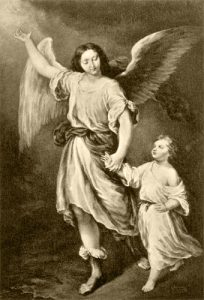
Guardian angel….
Like most writers, I think, I was reluctant to ‘cut and dry’ the mystery. The question of whether the spirit of Miriam’s mother literally speaks to her in times of trouble remains open. In my opinion, the story lends itself a bit more to one interpretation than the other, but I hope readers will find the meaning that speaks to them.
~ ~ ~ ~

Visit author Marnie Cate and connect with her on Facebook, on Twitter, and Goodreads. Find her book, Remember, Protectors of the Elemental Magic on Amazon.
~ ~ ~ ~
Thank you for visiting my blog today! Please check out the rest of the website and let me know if you like what you see, or if you have suggestions. You can reach me by leaving a comment in the box below or by clicking the Contact link at upper right (or just click here). Consider subscribing to my blog or newsletter. And stop by again soon!
by anesamiller_wuhi6k | Jul 27, 2015 | Blog, Writing & Publishing
Many thanks to Dawn Brazil, an author and all-round great person, who not only provided the inspiration for this post but also shared it first on her blog, Dawn Brazil’s Brilliant Babbles about Books —

When I first visited Dawn’s website several weeks ago, I was impressed with her use of music: music video clips, playlists, and more. It made me realize what a special source of inspiration music offers for all the arts and for life, overall. We can turn to it any time to refresh our mood or energize our creativity. Songs that we love and melodies we remember from long ago yield rich imagery for many writers.
I took a look back at my novel, Our Orbit, and noticed that music plays an important part in the story.
The first instance comes in the opening scene. It’s just a small point, but I think it helps to reveal the main character. Miriam Winslow is a girl of nine, the youngest child of a close-knit working-class family. Before the plot takes off with Miriam’s forced removal from her home and placement in foster care, I wanted to give a glimpse of how her intimate family members knew her. Rather than spend a lot of space of this, I tried to choose a telling detail. Miriam’s feeling for music helped me out—
(As Miriam’s mother, Emaline, drives through a snowstorm to pick up an older daughter, they bypass the turn for their home at Friendly Village Mobile Home Park.)
Emaline suppressed a sigh. Instead of slowing for the turn, she tapped the horn and called out, “Hold the fort, Friendly!”
“Friendly, holding steady—” sang little Miriam from the back seat, quick to answer the cue in this family routine of forgotten origin, homage to the home where Emaline arrived as a bride half her life ago.
In this short passage, my aim was to show that Miriam is a happy child who enjoys melody and is not shy about sharing her voice. She expresses loyalty to her family by singing a “ditty” they invented for fun before she was born. As the story goes on, readers will learn that Miriam’s older brothers and sister have largely given up such family rituals as they began to deal with mainstream culture at school and among their peers. Miriam is the one who keeps family traditions alive, and she will bring them to her new foster family.
As a motif in our writing, music can play a wonderful role in revealing cultural differences between groups of people. Our Orbit explores these differences on a small, local scale: Miriam’s birth family and her foster family have a great deal in common, and yet they belong to separate groups with limited contact. Both families have lived in the same Ohio county for generations. They are of the same race and similar heritage from northern Europe. And both families are Protestant Christians of weekly church-going habits. Even so, the barriers between them are economic class and educational background.

When Miriam first attends church with her foster family, she is awed by the large building, bright chandeliers, and long hallways for Sunday school classes and meeting rooms. People are more dressed up than she is accustomed to, and all their clothes are new and brightly colored. But it is Miriam’s reaction to the music at this big, new church that makes clear to readers: She grew up on the other side of the tracks.
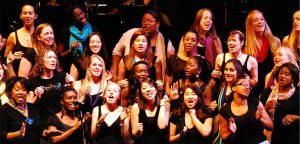
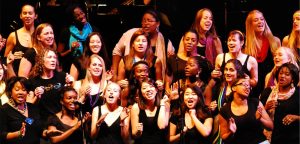
While Miriam ran up the church steps…she heard a choir strike up a song inside. Sounded like a hundred people! Across the bright lobby…you could see the flash of white-and-gold robes as the singers stepped left, right, back, front, clapping their hands on each move. A rock band with guitars and drums was playing along. Tambourines rattled…
This must be the hugest church in town, Miriam thought, All we have back at Holy Redeemer is one little piano. And even with every person singing, there were only a few dozen voices…
Miriam’s home church was a small, “backwoods” congregation without paid professionals to direct a choir or play instruments. Although she soon comes to appreciate the music at her foster family’s prosperous church, her first impression is mixed. Based on her experience, the “loud, peppy music” seems more like a performance than a call to worship. More like a “dance party” than an occasion to repent one’s sins.
 (When Miriam’s foster father, Rick, takes her back to visit her home church, Holy Redeemer Tabernacle, we see the tradition through his eyes.)
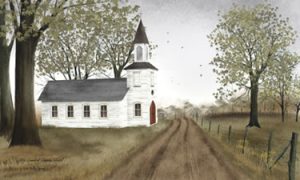
[It was] a tiny white-washed church on Key Ridge, south of town… The piano’s tinny chords rang out… There was no choir director and no hymnals, but harmony swelled from two to four parts. The voices were strong for such an elderly crowd—
To Canaan’s land I’m on my way,
Where the soul of man never dies,
And my darkest nights will turn to day,
Where the soul of man never dies…
People embraced. Some laughed, others wiped away tears…
Here is a list of a few songs that played in my head as I worked on Our Orbit. I’ve hunted up those I could find on YouTube to give an impression of how they sound. Some of the hymns are quoted in the book (as in the scene above), while others served more to set a mood for my writing.
“The Soul of Man Never Dies” performed by Tony Rice and Ricky Skaggs. From the DVD “Legends of Flatpicking Guitar.”
“There is a Balm in Gilead” performed by Mahalia Jackson.
“The Stable Song” performed by Gregory Alan Isakov.
And to close on a happy note, here is “Dreams” performed by the Cranberries. This is the favorite song of Miriam’s teenage sister Rachelle. It becomes embarrassing to Rachelle when her friends make fun of the band because they are Irish and “talk funny.” So we see that Rachelle’s musical taste is a bit more open-minded than some of the people around her!
~ ~ ~ ~

Visit Dawn Brazil at her blog, Brilliant Babbles About Books.
Connect with Dawn on Facebook, on Twitter, on Goodreads, Pinterest, and on Amazon.
~ ~ ~ ~
Thank you for visiting my blog today! Please check out the rest of the website and let me know if you like what you see, or if you have suggestions. You can reach me by leaving a comment in the box below or by clicking the Contact link at upper right (or just click here). Consider subscribing to my blog or newsletter. And stop by again soon!
by anesamiller_wuhi6k | Jul 23, 2015 | Blog, Series: Drawer no more!, Writing & Publishing
This post by friend and author Anne Leigh Parrish first appeared on Women Writers, Women’s Books on December 15, 2014. Thanks for sharing, Anne!
 As the fiction editor for Eclectica Magazine, it’s been both a privilege and pleasure to read story submissions. Finding the handful of pieces that take my breath away is what it’s all about. The good ones shine through, those that are brilliant positively sparkle.
That said, it’s too bad that so many stories that come my way miss the mark. These are usually decently written, no obvious grammatical errors, no huge prose clunkers. What they fail to do is hold my interest and make me care about the outcome. I see the same mistakes over and over. I thought I’d make a list of these, as a sort of guide to aspiring authors.
~ Not telling a story.
So many writers don’t seem to know what a story is, and isn’t. A story is not a nice description of how things are. It’s not a sensibility, or a mood. While those elements surely contribute to a story, a story itself is a narrative where there must be a change in the reader’s understanding of the events, or in the protagonist’s understanding. You leave a story seeing something you didn’t see at the outset, something that makes sense of what’s come before.
~ Trying to tell too many stories at once. In a short story, you need to figure out what the core is – the central theme, event, action, upheaval etc. All other story lines wrap around that central core, supporting it, or opposing it as a way to further illustrate what you’re driving at. Keep it simple. Don’t have too many characters, or an overly complicated plot. As you write, it’s very tempting to bring in an element that seems really interesting or colorful, but unless it fits with the whole, leave it out.
~ Characters with no inner life. A lot of stories that come through my queue feature people I couldn’t care less about, because I don’t know what makes them tick. I see what they do and where they live. I hear their conversations. But what do they feel? What do they care about? What are they most afraid of losing, or willing to fight for? If I don’t know what a character has at stake, I stop reading. So, make me care. Show me your character in a moment of crisis. She doesn’t have to act bravely or wisely, but in a way I recognize as a fellow human being.
~ Dialog that’s stiff or unnatural. Think about how people really talk to each other. They often don’t use complete sentences. Sometimes they swear. Are they cynical, sarcastic? Are they barely holding themselves together under an emotional strain? Make note of funny, strange, or colorful things you overhear people say, and find a way to work them into your fictional exchanges. One of my stories has my protagonist overhearing two strangers talking, and one says, “She’s as crazy as a box of hair.”
~ Bad pacing. Nothing kills a story faster for me than bad pacing. I give any piece about five pages, and if the action hasn’t gotten off the ground, I bail out. Equally bad is pacing that races along, skimming crucial scenes. Figure out what’s most important in your story, and spend enough time on it, but don’t drag it out. You have to keep moving.
~ Keeping the reader at arm’s length. Beginning writers tend to over-explain, as if they’re afraid that their readers won’t “get it.” Readers are asked to trust authors and suspend their disbelief; and writers must trust readers to be smart enough to fill in a few gaps for themselves. If you think you have to spell everything out, you may be assuming that your reader is pretty dumb. You need to show, not tell. Draw the reader in; let her experience what’s going on right up front, not from some cozy seat up in the balcony.
~ An ending that’s too neat. When I come to the end of a story, I like something left to my imagination. Maybe the protagonist will get the boy back, after all. Maybe she’ll get to a point where she can really move on with her life. Maybe she’ll meet someone even better. I want to decide for myself what happens. At this point, the author no longer gets to call the shots. It’s okay to leave some ambiguity and room for interpretation. You don’t need to tie everything up and have your characters live happily ever after, and in fact, it’s a lot better if you don’t.
I close with what someone once told me about the goal of fiction: “To lift us off from reality, and startle us into recognition.” Avoid mistakes, write the story only you can write, and do it brilliantly!
~ ~ ~ ~
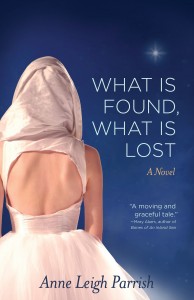
 Anne Leigh Parrish’s debut novel, What Is Found, What Is Lost, came out in October 2014 from She Writes Press. Her second story collection, Our Love Could Light The World (She Writes Press, 2013) was a finalist in both the International Book Awards and the Best Book Awards. Her first collection, All The Roads That Lead From Home (Press 53, 2011) won a silver medal in the 2012 Independent Publisher Book Awards. She is the fiction editor for the online literary magazine, Eclectica. She lives in Seattle.
Check out Anne’s debut novel What Is Found, What Is Lost.
Visit Anne’s blog and connect with her on Facebook.
Follow Anne on Twitter.
On Goodreads.
And on Pinterest.
~ ~ ~ ~
Many thanks for visiting my blog today! Please browse the website and let me know if you like what you see, or if you have suggestions. You can reach me by leaving a comment in the box below or by clicking the Contact link at upper right (or just click here). Consider subscribing to my blog or newsletter. And stop by again soon!
by anesamiller_wuhi6k | Jul 20, 2015 | Blog, Series: Drawer no more!, Writing & Publishing

Wild dreams….
A long-awaited milestone, such as the publication of a novel, brings both joy and reflection. Mine, Our Orbit, was published last month by Booktrope of Seattle after years of work and (often frustrated) hope. Questions come to mind, some my own and others posed by friends or fellow writers: What do we accomplish by writing books in the digital age? Why crank out hundreds of pages in the days of 140-character tweets? And is the “game worth the candle” in terms of rewards, whether tangible or otherwise—to borrow a phrase from an era when reading had less competition as a form of entertainment and enlightenment?
My favorite uncle, a student of art history in his youth, always affirmed the adage that, “Truth is beauty and beauty, truth.” With a smirk, he would add, “That’s all you need to know!” My truth in writing a novel of social conflict set in the notorious swing state of Ohio involves such controversial matters as abortion and prejudice based on class, race, and sexual orientation. The effort to treat these issues with a fictional type of truth earns me no love from certain quarters, including a few branches of my own family.
Was it worth it? Does publishing a book justify losing friends and alienating people? I don’t expect fame or life-altering royalty checks. So the question leads me to ponder the notion of a “writing career.” Actually, that’s been on my mind for 50 years as the highest achievement I could possibly attain! Social media reveals that this goal is shared by tens of thousands of people in the English-speaking world. But I’m not sure how most would define the term “career.”

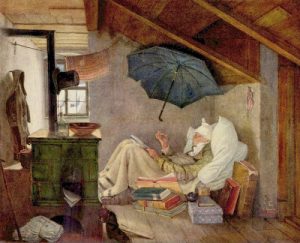
“The Poor Poet” by Carl Spitzweg
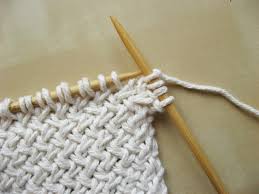
One obvious question is whether a career must produce monetary income. Things we do, no matter how we love them, tend to be called a “hobby” if they fail to bring in at least as much money as required for ongoing practice. No doubt hobbies get an unfairly negative rap. Still, the word has a connotation of triviality or light amusement. Distraction for dilettantes: knitting today, decoupage tomorrow.
 This is nothing like the attitude of most writers toward their craft. The inner voice that guides the pen (or fingers on keyboard) is an intimate part of our selfhood. Writing expresses a quality of the author’s mind that seems to embody a higher personality. Even a soul. Until we frame experience in words, we hardly know what happened or what to think. At the same time, writing is a way of reaching out to people we could never meet in our physical lives, a point of contact with humanity. Or at least a hope for contact if we succeed in finding readers.
Eventually, we couldn’t switch to another “career,” or even another “creative outlet,” if we wanted to. As writers are known to declare in moments of despond, “I’m entirely unfit to do anything else!” (Although some have done quite well, after all. Bless their hearts.)

From The TELEGRAPH, Watercolor believed to portray the Brontë sisters
Throughout history, writers have failed to earn enough money to shake a quill at. Yet many of these wound up contributing to the canon of world literature and belatedly entered the hearts of more readers than they dreamed of finding while they wrote and struggled. Among the members of this special club are Thoreau, Dickinson, Poe, Kafka, at least two of the Brontës, and John Kennedy Toole (the posthumous Pulitzer Prizewinner for A Confederacy of Dunces).
And it should never be forgotten that others have paid the ultimate price for stubbornly practicing their craft under totalitarian regimes. Not merely denied a living wage, these writers were hounded and killed for the truth of their words: Osip Mandelstam, Nikolai Gumilyov, and Víctor Jara. Still more were marginalized and persecuted: Anna Akhmatova, Theodor Kramer, Boris Pasternak, Alexander Solzhenitsyn.

Solzhenitsyn: Gulag mug shot
The PEN International Writers in Prison Committee reminds us that persecution continues around the world today. American writers may have little more to fear than being ignored and unsupported, but we share the dedication to a practice that often resembles a calling more than a career. We feel an inner drive to seek perfect self-expression despite the lack of material reward. Or reward of any kind: Praise, recognition, a place in society, even self-respect. When our work is such a profound reflection of our minds, affirmation is a persistent craving, but all may be withheld by the cruel muse. Not to mention a society with “other priorities.”
But writers persevere.
Having known a good number of aspiring authors, I feel qualified to insist that few are hoping for lifetime poverty followed by posthumous fame. In fact, few appear to give any thought to what might become the “great works” of the future. Most would like to realize a small profit on book sales, or at minimum, break close to even on their investment in materials and services such as editing, proofing, and design. Our wildest dreams may involve the sale of film rights, which might at least begin to pay down an English major’s student loans. Only those who mimic the style or genre of popular authors like Stephen King or Danielle Steel seriously imagine that their work will bring riches or renown.
Samuel Johnson would say that the world has grown crowded with blockheads. (He of the famous quote, “No man but a blockhead ever wrote except for money.”) True, Mr. Johnson lived in an illiterate age, when the slightest skill with letters carried a premium. It’s far easier today to go broke amid a crowd of scriveners than it was in the 18th century. Nonetheless, this deters few from trying to distinguish themselves. Ourselves. So again, I ponder, why do we do it? How do we go on?
It’s hard to turn away from a true calling. What’s often termed “the writing life,” in which daily practice takes precedence, requires an almost spiritual discipline. When it may take years to “finish” a book and longer to perfect it, deferred gratification is the order of the day. But for a writer striving to publish, it’s even more essential to “sit with” your ego, in the Buddhist sense: to tolerate its flights of arrogance without succumbing to them. To use that energy while resisting its delusions of grandeur.
Why do we do it? How do we go on?
You must believe in your skills enough to keep applying words to page, but not so much as to allow specific hopes—This agent will take me! That magazine will feature me!—to outgrow the proverbial, tiny mustard seed. Disappointment is always around the corner…though fresh efforts are available as well.
And so, many of us content ourselves with a monkish satisfaction and careful management of our own expectations. A life of self-denial? To keep faith with one’s artistry, always striving in uncertainty to bring forth greater truth, is a type of loyalty to one’s humanity. To all of humanity.
Then comes the occasional word of thanks from a reader: your story touched a chord, raised a memory, sparked new ideas! Or a reviewer demonstrates a deep engagement with the work—”Yes! That’s what I was trying to say all along.” For a moment, drudgery vanishes, and the calling becomes a blessing we cannot fail to answer. The effort was worth every word: all the words on the page and the thousands more crossed out like submerged stones that let you walk on water.
~ ~ ~ ~
Many thanks to Anne Leigh Parrish for hosting this original post on her blog on 6/30/15. Anne is the author of the acclaimed novel What Is Found, What Is Lost. Visit Anne today!
Connect with Anne on Facebook.
Follow Anne on Twitter.
On Goodreads.
And on Pinterest.
~ ~ ~ ~
And thanks for visiting my blog today! Please browse the website and let me know if you like what you see, or if you have suggestions. You can reach me by leaving a comment in the box below or by clicking the Contact link at upper right (or just click here). Consider subscribing to my blog or newsletter. And stop by again soon!
by anesamiller_wuhi6k | Jul 13, 2015 | Blog, Writing & Publishing

As you would expect, I believe literary fiction is still vibrant and important because those are the books I like to read. Still less surprising in light of my convictions: it’s the type of book I do my best to write. My new novel, Our Orbit, may not be philosophical, contains no elaborate symbols, and little poetic language. Nonetheless, it aspires to such literary values as psychological depth and social relevance. Popularly termed “lit fic,” this category is tricky to pin down with a definition. With your indulgence, I’ll share some preliminary thoughts.
I like to imagine literary fiction as a coquettish college-aged human (of any gender you like) attending a costume party dressed as Mark Twain. S/he twirls one end of an old-fashioned string tie, and eyes twinkle under that mop-like wig. A lilting voice reminds us that, “Reports of my death are an exaggeration.”
 It’s good to keep in mind that literary fiction is a sweet young thing. Its detractors often point out that, “Shakespeare [or Tolstoy or other greats of the past] never wrote #litfic! He just wrote what he wanted!” Leaving aside the fact that Shakespeare wrote drama and poetry, this claim makes no point at all. The concept of “literariness” is one we grapple with in relation to contemporary fiction. It is always a fresh quality for its own time. Anything else, however highbrow and elaborate, would be formulaic.
Moreover, anything of Shakespeare’s era or Tolstoy’s, which is still being read today, should be called a “classic,” or “canonical work,” rather than literary fiction. Confusing these categories lands us in hot water. The most well-written, intellectual novels of today, whether they climb a best-seller list or not, may be forgotten ten or twenty years from now. Once forgotten—regardless of how literary these books were once considered—they will never become classics for future generations (barring the increasingly unlikely event of a new vogue or rediscovery).

Instant classic, or crackpot?
Virginia Woolf by Roger Fry
Allow me to evade the issue of a cut-off date. Even so, “literary,” in the sense I mean here, is an adjective properly applied to fiction of one’s own time. Books earlier than—say, arbitrarily—the cultural shift of the 1960s, came to the publishing market contending with such a different set of tastes and expectations that we can no longer perceive them on their original terms. We cannot read them with the same mentality that prevailed when they were created (although I’m sure this varies for individual readers).
What this implies is that we may find older works interesting for reasons other than those that draw us to contemporary literary fiction. Indeed, our reasons may have nothing to do with literary quality: historical interest, curiosity about an author’s life or death, the comforts of a bygone world, etc. Whether these older books were deemed literary when published or not, they may yet become classics or enter a canon of some sort, if their appeal persists over time.
I find this distinction important because resentment among writers of different genres is running especially high these days. True, such feelings tend to be perennial but are especially unfortunate at a time when all writers are lucky if the public chooses any book over Facebook. But, I understand how authors of popular genres (the name Jennifer Weiner springs to mind) may well resent those who embrace the term “literary” IF we claim it means our work is closer to the classics that millions have loved for years or centuries. There is no necessary connection.
Let me emphasize the obvious: Contemporary literary novels ≠ classic works of literature!
Of course, resentment rarely seeks a rational cause. AND there is a pregnant similarity between the words “literary” and “Literature.” But attempting to change established terminology in any field is a bigger task than I can advocate in good conscience.
I can feel this topic expanding even as I struggle to address it! So in short (if not too late for that): I believe literary fiction is a meaningful category, one that has existed for some decades, and is likely to remain viable in the future. As a purveyor of #litfic myself, I plan to revisit many of these questions.
~ ~ ~ ~
 Many thanks to Jason Greensides for hosting this original post on his blog on 6/29/15. Jason is the author of the acclaimed novel The Distant Sound of Violence. Visit Jason today!
Connect with Jason on Facebook.
Follow Jason on Twitter.
On Goodreads.
~ ~ ~ ~


 I’ve attended book clubs in Washington state, Ohio, Idaho, and elsewhere. For the most part, it’s been a wonderful experience with dedicated people discussing contemporary literature. When a group sacrifices their usual weeknight duties to gather and share ideas, I always like to see socializing kept to its own timeframe (before or after discussion). And it’s great when everyone makes an effort to stay on-topic! ;-D
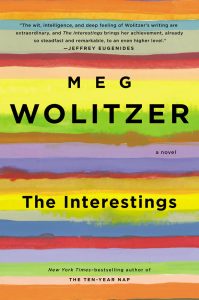 In The Interestings, the main character’s husband suffers from treatment-resistant depression. His illness periodically becomes severe, requiring hospitalization. Although medical insurance is not a key topic of the book, it had recently been all over the news with portions of the Affordable Care Act being hotly debated. At the time the novel takes place, major depression was a pre-existing medical condition that could lead to skyrocketing insurance costs or even denial of coverage.
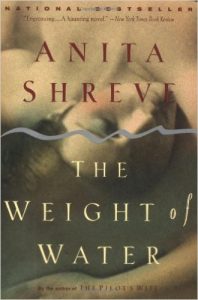 Another terrific discussion took flight around a more personal controversy: members’ interpretations of a key character in Anita Shreve’s The Weight of Water (1997). This is a historical fiction/mystery novel that’s tough to summarize without spoilers. Suffice it to say that I’m a big fan of the book and found myself drawn into the plight of a Norwegian immigrant’s bleak existence. Shreve’s interweaving of this tale from the 1870s with a modern woman’s discovery of a wrongly punished crime is nothing short of masterful.
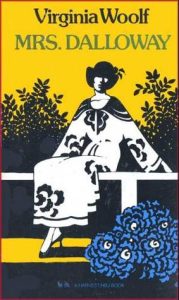 Mrs. Dalloway enjoyed a rediscovery at the turn of this century thanks to Michael Cunningham’s acclaimed novel, The Hours (1998) and the Oscar-winning film based upon it (2002). My club happened to schedule Woolf’s modernist classic in 2012. Our discussion was memorable, although not one of our happiest.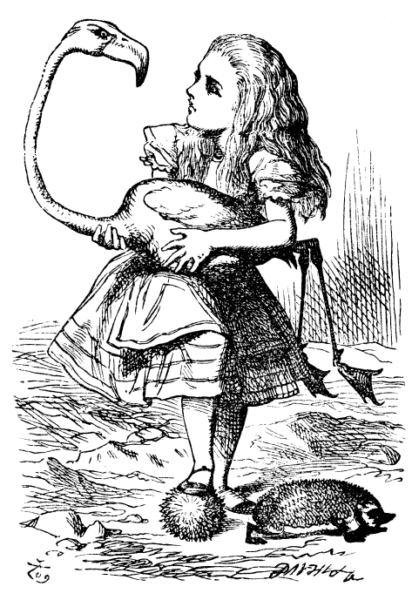

 (When Miriam’s foster father, Rick, takes her back to visit her home church, Holy Redeemer Tabernacle, we see the tradition through his eyes.)




 This is nothing like the attitude of most writers toward their craft. The inner voice that guides the pen (or fingers on keyboard) is an intimate part of our selfhood. Writing expresses a quality of the author’s mind that seems to embody a higher personality. Even a soul. Until we frame experience in words, we hardly know what happened or what to think. At the same time, writing is a way of reaching out to people we could never meet in our physical lives, a point of contact with humanity. Or at least a hope for contact if we succeed in finding readers.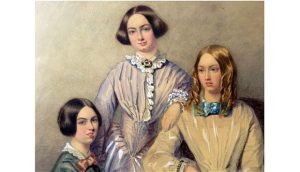




 Many thanks to Jason Greensides for hosting this original post on his blog on 6/29/15. Jason is the author of the acclaimed novel The Distant Sound of Violence.