by anesamiller_wuhi6k | Jul 31, 2015 | Blog, Issues in Our Orbit -- Substance Abuse & Recovery
Today I’m honored to present information in the series Issues in OUR ORBIT: Substance Abuse & Recovery. I am grateful to romance and fantasy writer C.D. Taylor for sharing this post, which appeared on her blog on June 29, 2015. Kudos to her for coming through a challenging year —
 In life we find so many instances to celebrate. Birthdays, anniversaries, graduations. We turn baked goods into balls of flaming death and wait for someone to blow saliva all over the treats so we can devour them and cheer on the recipient of our congratulations. I for one have celebrated many things. Birthdays of course are the number one on my list but this year I have something new to celebrate. Something that I never thought I’d be cheering myself on about. Sobriety. Yes, you heard me. I’m coming up on one solid year of being clean from narcotic pain killers. Some may say that isn’t something to celebrate, that I should be ashamed that I was ever in that sort of situation. Truth be told, I was ashamed. I didn’t want anyone knowing I had a problem. What would they think of me? Would they turn away from me because of my past?
The fallout I envisioned was comparable to nuclear meltdown in my life. I didn’t want or need for any of those things to happen. What changed my mind?
Secrets can only be hidden for so long. Eventually they rear their ugly head and somehow you are exposed in a negative light without being able to tell your side of the story or defend yourself. The best way to combat that was to come clean (no pun intended). You’ll notice that recently I did come clean about my problem (there’s a blog post about it).
Somehow I found healing…
Somehow I found healing in that post, like it was something I needed to do in order to close the wounds that were so ferociously ripped open by my addiction. Clicking the ‘publish’ button on that blog was one of the most nerve racking things I’ve ever done in my life. But after it was over, I sat back and thought ‘this is it. This is where I begin the new leg of my journey.’ And it was. It was a day when I put the old me into a little box and told her to behave. Believe it or not, she’s been behaving like a dream!
 One year. A lot can happen in a year. Births, deaths. In a way I was reborn and I killed off the person I was before. It feels great not having to depend on something that was literally killing me from the inside out. I wake up with a clear head and I’m always ready to face things with positivity. Life is pretty damn good.
After a whole year of being clean, I began to ponder some things about addiction. The foremost of them was the ease of actually getting pills. I never bought them off the street, but I did doctor shop and lie about something happening to the bottle I already had. Yeah, I was a shitty person. It’s okay, you’re more than welcome to call me that, it doesn’t hurt.
I found myself visiting with my regular physician today though and fired up a conversation about this topic. She was more than happy to discuss this with me, knowing my history with pills. I wanted to hear her opinion as a professional about how she toes the line in issuing narcotic pain killers. First of all, doctors are primarily compassionate people. They went into their field of study because they care about people and want to heal them. So in my mind, I would think it would be hard to turn someone down if they walked in saying they were in pain. She confirmed my suspicion.
“It is hard. There’s a line drawn between professionalism and what’s legal, compared to what I feel personally for a human being. It’s difficult to look at someone who claims they’re in pain and say ‘I’m sorry, I can’t give you this’”. “We are here to help people feel better, but in the back of your mind you have to think of the worst case scenario.” I have to agree with her on this. I am a fairly compassionate person myself. It would kill me to say no to someone who claims to be in horrible pain. I went on to ask her how she deals with something like this.
“Honestly, I don’t deal a lot in pain management. If I think they are being truthful about their pain, I refer them to a pain management specialist.” I know from firsthand experience that a pain management specialist isn’t like a regular physician. In order for you to get drugs from them, you are required to take a psych evaluation. They make you jump through so many hoops that by the time you’re done, you’ve already found a sucker doctor to give you more pills. So kudos to her for making the right call when it comes to people in pain. Point blank, if someone is in real pain, they will do what they have to in order to heal from that pain.
 Another topic that my doctor and I discussed was about my future. No, not my career or anything like that. It was a discussion about “what happens if you need another surgery, or even do something like break your leg?” It was a valid question. “Sure you could try to tough it out and suffer through it, but I don’t recommend that.”
No, I don’t really think I’d like to ‘suffer through’ my femur being snapped in half, if this unfortunate event ever came about. I’d want something to dull the pain for sure, who wouldn’t? I’m no martyr that’s for damn sure. To her question, though, I already had an answer ready. See, when you go through something as epic as addiction and come out alive on the other side, you always need a contingency plan. A plan B, if you will. I’ve had my plan B ready since the day I decided to give up my addiction.
If I ever meet with an unfortunate accident or require surgery, I have let my husband know he will be my ‘dealer’ for all intents and purposes. He will give me the prescribed dosage of medicine when I need it. Now, it won’t be one of those things where I’m allowed 6 pills a day and he hands them to me each morning…no, that would be stupid. Giving a recovering addict 6 pills is like giving a small child 6 Snickers Bars and expecting them to not eat every single one in 30 seconds. It’s hard to practice self-control when you have a past of addiction.
The brain of an addict will always try to revert back to past behavior.
Ask any former addict, they will tell you the same thing. Medicine will have to be dosed out individually. And I’m okay with that. I’ll need help, and I’ll ask for help. I’m not too proud to ask for help in keeping myself clean. It’s all part of the game. A game that I am winning and will continue to win.
Retraining your brain isn’t an easy task. It takes more determination than you can possibly imagine. But what’s the old saying? “Anything worth having, is worth fighting for”? Something like that I suppose. Yeah, I did this for me. Making the decision to be clean was one of the most selfish choices I’ve ever made. But instead of feeling bad about it, I feel empowered. Like I’ve slayed the dragon and I now hold its head in my fist as a trophy, a reminder of sorts.

Maybe this has opened your eyes to other types of celebrations that people do. Maybe you will read this and be judgmental about my past. But here’s the thing…I’ve spent the past year judging myself. I have beat myself up more times than I can count. Did it do any good? No. I was still the same person after my lashings. I am still standing strong and learning from my mistakes. The great thing is that I can recognize them now. I can look at things with a fresh perspective and smile because I was given a second chance. I was given the opportunity to make amends with myself and say ‘it’s okay, I messed up. But I will do better’.
Don’t be so hard on yourself for your shortcomings. Most of them are only stepping stones to get to a brighter future. The less time you spend hating yourself, the more time you have to enjoy the life you’ve been given.
Peace, Love and Pages
C.D. Taylor/Taylor Dawn
Visit C.D. Taylor on Facebook, on Twitter, and on Amazon.
~ ~ ~ ~
The links below provide information on addiction and recovery.
Visit the Harvard Help Guide
Visit SoberNation
Visit Parent Treatment Advocates
And here’s a recent article from the New York Times on teenagers discussing what might have stopped them from using drugs.
~ ~ ~ ~
Thank you for visiting my blog today! Please check out the rest of the website and let me know if you like what you see, or if you have suggestions. You can reach me by leaving a comment in the box below or by clicking the Contact link at upper right (or just click here). Consider subscribing to my blog or newsletter. And stop by again soon!
by anesamiller_wuhi6k | Jul 11, 2015 | Blog, Issues in Our Orbit -- Substance Abuse & Recovery, Substance Abuse & Recovery
Today I’m honored to present more thoughtful information in the series Issues in OUR ORBIT: Substance Abuse & Recovery. This guest post is by Gregory K. from his website Suchness: A Mental & Spiritual Health Blog. Gregory K. holds a Masters of Divinity degree and is working toward a graduate degree in counseling. His goal is to help Christians and others who struggle in “finding some measure of peace living in our own skins.”
At my request, Gregory K. was kind enough to address the very problems that arise in fictional form in my novel Our Orbit. Part 1 of his discussion is here. Many thanks to him—
In Part 1 of this set of posts we considered a teenager who uses alcohol to find relief from her troubled feelings. Some rudimentary ideas were laid out for how a mental health worker, pastor, or caretaker might approach this problem. For this second half we will instead consider the spiritual components of her suffering and healing.
 These posts are responses to a pair of questions given to me by Anesa Miller, an author who has considered these same themes in her most current book Our Orbit. Anesa asked for input on a spiritual approach in helping a teenager who has suffered spiritual alienation in her family. Religion in the West has become more polarized even as politics have become more polarized. This can certainly create a more caustic environment in some families when it comes to the way religion is approached. During my years at both the seminaries I attended I heard many stories from other students about how they were mistreated by spiritual people or how they had difficult breaks with family members over all kinds of religious stuff. This topic has become more important every day, even as it has become more difficult and dangerous to try and talk about it.
I wish that I could begin this discussion being very serious and spiritual, dispensing words of wisdom and matching Scripture. But when it comes to religious alienation in a family, at least according to my experience with it, the spiritual component is actually secondary to what is really upsetting things. Of course every family is different, but much of the turmoil surrounding religion in a family may connect with a certain lack of emotional honesty or emotional vocabulary.
I wish that I could begin this discussion being very serious and spiritual, dispensing words of wisdom and matching Scripture…
Let me break it down further by considering our hypothetical teenager and her family. Let us say that she has a father who has a very conservative Christian bent and she has been struggling with him and his religious ideologies for much of her life. In this case there are two parties. There is the teenager and there is her father. The teenager yells at her father, she throws things, she slams doors, sometimes she even leaves home without saying where she is going for hours or even days.
 The father also yells, also slams doors, and he is constantly reminding her of his rules and beliefs and of how she has disappointed him. The fact that he is disappointed seems to throw her into a deeper rage and this elicits a new volley of ultimatums from the father. Around and around it all goes. As you can see by my description spirituality and religion are not actually what is driving this whirlwind of father and daughter. They may shout about God or sermons or morals, but those are not the deepest truths of what father and daughter are experiencing in those explosive moments. Getting to the deeper truths becomes the real work.
Perhaps in working with the teenager we discover that what she really wants is to feel heard by her father. She doesn’t want her words and deeds to bounce right off of him unacknowledged. She doesn’t want to feel that she has no say in the way she interacts with her family, as if she were only a servant or even a pet. At the bottom of it she really just wants a taste of that unconditional love we all crave. She wants her father to love her no matter what, without her always having to compete with his religious views. So she shouts to be heard, she breaks things to make noise, and she runs away hoping he will chase her and hoping that he won’t. This is certainly one possible scenario for the teenager in this position.
Perhaps in working with the father we discover a sense of betrayal and the grief of loss. Having the same views on religion and morals is one of the ways that families can feel connected to one another in simple straight-forward ways. So when his daughter seems to reject the family’s religious views it looks like she is rejecting the family. That is a betrayal that can really hurt. So he strikes back in the bitterness of that hurt, and he strikes back with a wild hope that maybe this time she will finally listen and join the family again. Because deep down he just wants her to be his little girl again, to be a part of his family like he always imagined it, and each word she screams at him is like a rock thrown through the walls of his glass house. This is certainly one possible scenario for the father in this position.
We discover a sense of betrayal and the grief of loss… Ideally we would be working to bring the family to a place of emotional honesty.
Ideally we would be working to bring the family to a place of emotional honesty, where father and daughter become able to express their feelings in ways that actually penetrate through the guardedness of the other. This is not easy work. It takes some tact and skill, and will only be accomplished after many mistakes and much backpedaling. But, as far as I can see it, this is the heart of the matter. A spiritual approach can work for this teenager if that spiritual approach honors her frustration and helps her to feel truly heard. There are certainly many seeds of inspiration in all the world religions that can help us along this path. On the other hand Scriptures tossed at the teenager like hand-grenades will just make her angrier or drive her to despair. Morals for the sake of morality (that is, without being grounded in anything solid or pragmatic) becomes just another smokescreen preventing the intimacy that this teenager craves.
At last we get to the actual nuts-and-bolts of doing this work. But describing all the actual techniques and approaches out there is beyond the scope of this post. There are just so many paths. For example, much of my approach in this post is informed by my study of Emotion Focused Therapy (EFT) which was created to help couples better communicate but which has since been generalized for use in other kinds of therapy work. What is important for us then is that we have a path in the first place. There is a temptation to help others relying only on our instincts and our empathy, but such an approach lacks any real goals and any real methods that can be tested and shaped by experience. A person can play a videogame and receive some inkling of what it is like to fly an airplane, but they would be utterly lost in the cockpit of a real fighter jet. So for some this may mean developing a spiritual approach, studying the pastoral skills of many successful spiritual teachers that have lived all through history. For others this may mean studying things like EFT or other therapy models, even if they are not mental health workers specifically. Whatever way you decide to go it is essential to have some real honesty with yourself about this path, and to spend real conscious energy on preparation.
The opposite of love is the making of assumptions. When we give up the process of pursuing and discovering we have closed off all the real channels of communication…
Perhaps I have gotten a little away from the original question given to me. So before I finish I want to consider how a person who has a more spiritual approach to helping others might help someone like this teenager who has received some form of religious injury. At the start it appears to be a daunting problem, trying to use spirituality to heal spiritual alienation. I personally believe that what I have described about emotional honesty already in this post is essential if we are going to try and accomplish this. That emotional honesty begins with us as the spiritual helpers.
Consider our hypothetical father from earlier in this post. He is not yet able to fully understand why his daughter’s attitude hurts him so. He does not yet understand that he feels betrayed by her. As a result he throws his religion at her like a weapon trying to subdue her without being fully aware of why he is even so furious.
Can spirituality help heal spiritual alienation?
Are we similarly ignorant of the beginnings of our own spiritual work? What is it that put us on this path of being spiritual helpers in the first place? Of course many will answer that they were “ordained by God,” and this is certainly true, but it is not the whole answer. It is not enough. I have become a counselor interested in emotional honesty myself because emotional honesty was difficult to come by in my family growing up. I could say that God turned that difficulty into a calling in my life, but sticking too closely to that perspective can lead me to easily gloss over the painful details of my own history. And just like that I can find myself furious at dishonest clients, not knowing why, not caring why, using my counseling skills to hammer instead of heal. So I ask again, what has brought you to this path and to your particular spiritual perspective?
Next this emotional honesty must be extended to the teenager we are working with, but let us not get ahead of ourselves. This emotional honesty is not just about the teenager but is between us as helpers and the teenager herself. We must become aware of where the teenager is at in her life. We must learn her way of thinking and feeling, her way of understanding the world and her place in the world, as well as her history. We must exercise our spiritual love. A thing cannot be loved if it is not known, and love naturally drives us to learn all we can about the beloved. In this case then it is useful to remember that the opposite of love is not hatred. The opposite of love is the making of assumptions. When we give up the process of pursuing and discovering we have closed off all the real channels of communication between us and the teenager. She will feel this and respond in kind.
I wish I had all the time in the world to fully explore all of these topics and ideas, but I must cut it off at this point. As always I encourage you to take what is good in what I have written here and leave the rest. Also, feel free to tell me your own thoughts on all of this. I am always interested in hearing about the experiences and perspectives of others, especially since I am just starting off with all of this myself.
Thank you again Anesa for your great questions. I hope this at least a good start to finding the answers. For those of you interested in reading a more narrative exploration of these themes feel free to purchase Anesa’s latest book Our Orbit now available on Amazon.
~ ~ ~ ~
The links below provide helpful information on addiction and recovery.
Visit the Harvard Help Guide
Visit SoberNation
Visit Parent Treatment Advocates
Visit Gabbertsite from mental health counselor Gail Gabbert
And here’s a recent article from the New York Times on teenagers discussing what might have stopped them from using drugs.
~ ~ ~ ~
Thank you so much for visiting my blog today! Feel free to nose about the website and let me know if you like what you see, or if you have suggestions. You can reach me by leaving a comment in the box below or by clicking the Contact link at upper right (or just click here). Consider subscribing to my blog or newsletter. And stop by again soon!
by anesamiller_wuhi6k | Jul 5, 2015 | Blog, Issues in Our Orbit -- Substance Abuse & Recovery
 Several topics drive the story of my novel Our Orbit. Discrimination and religious issues play a major role in the plot. To open the way for conversation on these matters, I offer the following guest post from the blog of John Pavlovitz, Stuff That Needs to Be Said, first published on March 28, 2015. John wrote this piece in response to Governor Mike Pence’s signing of Indiana’s “Freedom to Discriminate” Bill. Although much has changed in the months since, notably the recent Supreme Court decision on same-sex marriage, John’s essay reminds me that we humans have a ways to go in terms of accepting ourselves, our common interests, and one another.
John Pavlovitz writes—
Dear Christians In Indiana (and those elsewhere, who might read this),
I’ve seen what’s been going on there lately. Actually, I’ve been watching you all along and I really need to let you know something, just in case you misunderstand:
This isn’t what I had planned.
This wasn’t the Church I set the table for.
It wasn’t the dream I had for you, when I spoke in those parables about the Kingdom; about my Kingdom.
It was all supposed to be so very different.
It was supposed to be a pervasive, beautiful, relentless “yeast in the dough” that permeated the planet; an unstoppable virus of compassion and mercy spread person-to-person, not needing government or law or force.
It was supposed to be that smallest, seemingly most insignificant of seeds, exploding steadily and gloriously with the realized potential of my sacred presence, becoming a place of safety and shelter for all people.
It was supposed to be something so very precious, such an obvious, invaluable treasure, that it would make all those who discovered and experienced it, feel like it was worth selling everything they had to hold onto it.
It was supposed my very body, here in your very flesh.
You were designed to do this, to be this.
My kindness, my goodness, my forgiveness; you were created to be the method of transportation for all of it.
You were made to deliver the greatest good news to a world so desperate for it.
This wild, extravagant, world-altering love I have for my people, was intended to travel from my aching heart, through your trembling hands, to my hurting people.
This has always been your calling. It has always been your purpose.
It still is. This very second it is.
I have placed you here at this exact place and time in the history of creation, not to defend me, as I need no defense; not to protect me, since I have already willingly laid my life down; not to judge others on my behalf, as this is far beyond your capacity and my instruction.
My beloved, I placed you here, not to defend or protect or replace me, but simply toreflect me.
That has always been my most critical commandment and your most pressing obligation; loving God and loving others. I thought that I was clear on that, when I was asked this before.
I showed you how to move in this world.
I kept company with priests and with prostitutes. I touched lepers and washed feet and dined with sinners, both notorious and covert. I served miraculous free meals to starving masses, and I allowed myself to be touched and kissed and betrayed and slandered and beaten and murdered… and I never protested.
All that is happening these days, all the posturing and the debating and the complaining; does this really look like love to you?
Do you really think that the grandstanding and the insult-slinging and the side-choosing, that it feels like me?
Do you truly believe that the result of your labors here in these days, is a Church that clearly perpetuates my character in the world?
Is this the Gospel I entrusted you with?
To be honest with you, I simply don’t see it.
How did you drift so far from the mission?
How did you become so angry, so combative, so petty, so arrogant, so entitled?
When did you begin writing your own script for this story?
When did you turn it into your story?
My children, here’s what you may not realize, being as close as you are to all of this. You may not be able to see it clearly anymore.
You certainly don’t have the perspective that I do, and here from my vantage point, this is what I do see:
You are driving people from me.
You have become an unbreachable barrier between myself and those who most need me.
You are leaving a legacy of damage and pain and isolation in your path.
You are testifying loudly, not to my love, but to your preference.
You are winning these little violent battles, and you are losing people; not to Hell or to Sin, but to all of the places outside of you, where they go to receive the kindness and decency and goodness that you should be showing them.
This life is not about your right to refuse anyone. If I wanted to avoid serving those I found moral faults with, I would have skipped the planet altogether.
I came to serve.
Your faith in me, cannot be an escape clause to avoid imitating me.
Asserting your rights, was never greater than following my example.
Your religious freedom, never more important than loving the least.
Your central cause, should be relentlessly conforming to my likeness, despite the inconvenience and discomfort that it brings.
When I commanded you to deny yourself, I was speaking about the times when it is most difficult to do so, because that is when “self” is the most distracting, the most dangerous, the most like an idol.
Obedience to me, usually comes with sacrifice to you.
I can’t force you to reflect upon these words, and I can’t make you live as I lived or love as I love. This was never the way I worked or will ever work.
I can only tell you that you have surely drifted from the course I started you on, and as often is the case in long journeys, it is a divergence that unfolds by the smallest of degrees, almost imperceptible while it’s happening.
That is why what feels like victory to you, is really another slight but definite movement away from me, and from the reason you are really here at all.
Not long after I walked the planet, as my Church was just beginning to blossom and my Kingdom was truly breaking out, a Greek writer named Aristides, wrote these words about those who bore my name then:
“It is the Christians, O Emperor, who have sought and found the truth, for they acknowledge God. They do not keep for themselves the goods entrusted to them. They do not covet what belongs to others. They show love to their neighbours. They do not do to another what they would not wish to have done to themselves. They speak gently to those who oppress them, and in this way they make them their friends. It has become their passion to do good to their enemies.
They live in the awareness of their smallness.
Every one of them who has anything gives ungrudgingly to the one who has nothing. If they see a travelling stranger, they bring him under their roof. They rejoice over him as over a real brother, for they do not call one another brothers after the flesh, but they know they are brothers in the Spirit and in God. If they hear that one of them is imprisoned or oppressed for the sake of Christ, they take care of all his needs. If possible they set him free. If anyone among them is poor or comes into want while they themselves have nothing to spare, they fast two or three days for him. In this way they can supply any poor man with the food he needs. This, O Emperor, is the rule of life of the Christians, and this is their manner of life.” *
– Aristides, 137 AD
* taken from Jesus For President, By Shane Claiborne and Chris Haw
To the Christians in Indiana, and those beyond who are still listening today; you would do well to hold these words up daily as a mirror to your individual lives, and to the expression of me that you make together in this place.
Is this what you see when you look at yourself?
Is this what the world sees when it looks at you?
In your words and in your ways, Church; do they see me?
If not, then regardless of how it seems to you, you haven’t won anything.
May this be truth, that truly sets you free.
~ ~ ~ ~

Visit the blog of John Pavlovitz — Stuff That Needs to Be Said.
~ ~ ~ ~
Many thanks for visiting my blog today! Please browse the website and let me know if you like what you see, or if you have suggestions. You can reach me by leaving a comment in the box below or by clicking the Contact link at upper right (or just click here). Consider subscribing to my blog or newsletter. And stop by again soon!
by anesamiller_wuhi6k | Jun 21, 2015 | Blog, Issues in Our Orbit -- Substance Abuse & Recovery, Substance Abuse & Recovery
Today I’m honored to present much thoughtful information in the series Issues in OUR ORBIT: Substance Abuse & Recovery. This guest post is by Gregory K. from his website Suchness: A Mental & Spiritual Health Blog. Gregory K. holds a Masters of Divinity degree and is working toward a graduate degree in counseling. His goal is to help Christians and others who struggle in “finding some measure of peace living in our own skins.”
At my request, Gregory K. was kind enough to address the very problems that arise in fictional form in my novel Our Orbit. Many thanks to him—
Adolescents, Alcohol, and Alienation – Part 1

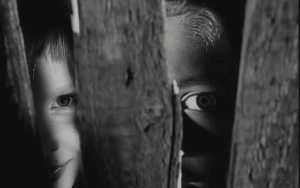
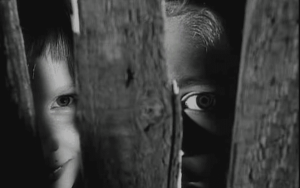
Photo by Margaret Sang – children peek through the gaps
To see a teenager drink or use drugs is startling. For those of us who have no experience along these lines to see a child using such a grown-up way of coping can really upset our view of the world.
It is just like sexual crimes. They are that much worse when they are committed against children, those who do not even fully understand what is happening to them. There is a terrible crashing together of cold reality and the innocence of childhood that we so prize in our culture. Therefore before we can help a child who has begun to use alcohol to find emotional relief we must first come to terms with this kind of fear and dark confusion that exists in ourselves.
Our fear, if it is not acknowledged, can taint our attempts to help.
In fear we may find ourselves trying to force such children to stop drinking, screaming and stomping our feet. We may find ourselves lecturing, shaming, and calling attention to all the ways that child has gone wrong morally. We may resort to threats and punishment, forced isolation and indoctrination, anything we can do to grind this problem out of our children.
But where does our desperation come from?
Fear is at the root of such approaches, fear of loss or of pain, for ourselves or for our children. While we may never be able to fully exorcise that fear, if we give into it and allow it to lead us tumbling forward at a frantic pace then we will rush right past the small gate and narrow road that we must travel with our children to find any real peace.

“…I found myself in a dark wood.” – Dante
With these thoughts in mind let us consider the emotionally troubled teenager who is using alcohol to find some sense of relief. One of the first things that need to be done is for the child to stop using alcohol. This is not because of some moral reason and it is not to lessen our own fears. Instead it is simply a matter of fact that when a person is using chemicals to alter their minds and escape reality they are not fully present with us as we begin our work.
There is a chemical barrier between us and them, and no surgery can be performed through a brick wall. This need for abstinence and sobriety on the part of the teenager though does not give us an excuse to start using force, punishments, and sermons to get them to stop. With teenagers, as with all people, true abstinence along these lines can only be achieved if they are themselves invested in the process.
Motivational interviewing is a technique that is used to help addicted people to start pursuing recovery for themselves.
Motivational interviewing is done by connecting the goal of sobriety with what they value most in their lives. If they are proud of their career, let us link sobriety and that career. If they are very involved with their families, let us link happy family life with sobriety. We are trying to make the rewards of such effort worth the hard work it will take to get there. Similar approaches can also work with the teenagers we are trying to help. This is especially true for the teenagers who have not yet become physiologically dependent, but who are only using alcohol to numb themselves.
It may help to openly and honestly explore with them this concept that alcohol only numbs the pain and does not remove it, and if they are willing to work with us a way may be found to real and lasting wholeness. Such honesty, and such straightforward explanations of the work we hope to do, will certainly work better than preaching, cajoling, and manipulating. If nothing else they will see where we are coming from and begin to develop some level of trust for our work and our intentions.
Now we move forward into the real work that must be done with such teenagers. Rather than present a comprehensive method for such work (which would be beyond my experience anyway) I will present a few concepts that may be helpful to keep in mind.
Honesty
When working with people who use things like alcohol to numb their pain we may be tempted to try and trick or manipulate them. “If you masturbate, you will go blind!” We may also want to shield those we are working with from the truth in some way hoping to protect them (or to protect ourselves). Certainly we need to have some sense of tact in this work since too much truth in the wrong way or at the wrong time can be just as destructive as a lie.
At the same time though the people we work with can be startlingly good at figuring out when we are being genuine or when we are just putting on a show for their benefit. Sometimes they may call us out, or sometimes they will remain darkly silent as they are continually bothered by our pat-answers and fake smiles. Either way, the trust they have for us is damaged each time this happens. And without trust there can be no real forward momentum.
Trust
Adolescents are at the developmental stage where social connections are the most important things they have. Who they are friends with, how they are connected to their families and loved ones, these things are more important than the “hard facts” we may try and throw at them. So before we can expect our words to carry any real weight in the lives of those teenagers we are working with we must first earn their trust by forging a social connection.
This does not mean we are trying to be “friends” with them. If we do try to go about it that way we may be surprised with how easily we become manipulated by the very teenagers we are trying to connect with. Instead it is about the teenagers coming to the realization that when they deal with us they will be treated honestly, fairly, and well. In the life of a troubled teenager these traits in the adults in their lives are more precious than anything else, even if they are too angry or hurt or confused to say so.
Structure
 Perhaps one of the more difficult ideas to understand when working with children is this idea of creating structure. We are there to help these children and rules only seem to limit and frustrate them. Also we may find we dislike the work of enforcing those rules, especially with children who are suffering in our care. Rules for the sake of rules can indeed be damaging. But rules made with purpose can have lasting benefits.
Rules can teach teenagers the essential lesson of cause and effect. We are not trying to “discipline” the children, but connect them with the fact that what they choose to do will have certain consequences that must be considered. If they are late for a counseling session that means there will be less time to be together. If they shout they will not be heard as clearly as when they sit and speak. If they strike out they will not receive the care and attention they want. Here are a few guiding points about structure and consequences:
Explaining the rules, and the practical reasons why those rules exist, is an essential part of building a good relationship from adult to child. If a rule cannot be explained along these lines then it is not necessary.
Consistently enforcing those rules reduces the confusion that the teenager may feel when otherwise they may have been screamed at or beaten with no real cause.
Punishments only teach children that the stronger person can hurt the weaker person as she sees fit. All repercussions of breaking a rule then must be intrinsically connected to the practical purpose of the rule.
Allowing the teenagers to have a say in the making of the rules provides an excellent space for the child to learn to input and to feel heard. She becomes part of the process, a part of a relationship as opposed to a prisoner or victim.
The rules must be agreed upon by the child herself. Otherwise these rules simply become blunt instruments used by the adults to impose their will onto the child which creates a situation where social violence may accidentally be done.
~ ~ ~ ~
Gregory K‘s discussion of adolescents and alienation will continue in the near future. Meanwhile, the links below provide helpful information on addiction and recovery.
Visit the Harvard Help Guide
Visit SoberNation
Visit Parent Treatment Advocates
Visit Gabbertsite from mental health counselor Gail Gabbert
And here’s a recent article from the New York Times on teenagers discussing what might have stopped them from using drugs.
Thank you so much for visiting my blog today! Feel free to nose about the website and let me know if you like what you see, or if you have suggestions. You can reach me by leaving a comment in the box below or by clicking the Contact link at upper right (or just click here). Consider subscribing to my blog or newsletter. And stop by again soon!
by anesamiller_wuhi6k | Apr 29, 2015 | Blog, Issues in Our Orbit -- Substance Abuse & Recovery

Learning to care for others
Substance abuse is an issue that I’ve been discussing with friends and visitors here on the blog lately. I have confronted this problem in my own life and wouldn’t wish the harm that drug abuse brings in its wake on anyone. But in the spirit of making lemonade when lemons come along, I have called upon those difficult experiences in my creative writing.
Today, a person close to me (who will remain anonymous) shares the conclusion of her story about how drugs affected her family. The first portion of her story is posted here. Scroll down for several links to resources that can be useful to those facing a similar challenge.
A Mother’s Struggle —
Frustrated by her teenage daughter’s denials and drug abuse, this mother was driven to distraction. In last week’s post, she describes “one of my most awful memories”—
…I confronted my daughter. As usual she snowed me with lies. I slapped her in the face. 3 times I slapped her. I demanded she admit what she’d done. I was that desperate. She called me abusive and ran out of the house…
So things dragged on longer than you can imagine, now a little better, now a lot worse.
One tricky thing in the situation is that my kids were in joint custody. Their father is basically a good man, he lived a few blocks away from me. The children could walk to his my house, which seemed like a great arrangement at first. But when my older girl started high school, the gap between Mom and Dad turned into something for her to slip through. She would claim she’d left a favorite sweater or outfit at Dad’s house. Had to have it today! No problem—she could walk right over and get it. But then she didn’t come back for hours. No one knew where she went.
Also her dad insisted she attend his church every Sunday, even when she was with me on the weekend. Okay—I dropped her off at church. But you guessed it, she promptly slipped out another door and ran off to meet the friends she smoked and drank with, instead of meeting her father to join the service.
When we wised up to that, I told her dad I wouldn’t force her to attend church anymore. She was not interested in religion at that time and wanted to stop attending. I thought I could show her some support and let her sleep in on Sunday when she was finally at home and quietly in bed! But the upshot: her dad showed up at my house insisting I get her up so he could drive her to church. This led to all sorts of argument and trouble.
 Probably our daughter wanted drugs in order to escape. But lack of a united front between parents is a dangerous thing. Some kids suffer in silence; others learn to use the arguments to a bad advantage.
When all this got started, it was alcohol and marijuana. Soon she added Ritalin, Adderall, and Xanax, which were sold in the halls of her school. I’m sure she tried cocaine and crack at some point. Thank God—those didn’t hold her, but at community college, she got into meth. She stuck with meth until she discovered Oxycontin. From there, it was on to heroin, which is where the progression stopped because she was addicted. Like many addicts, she tried the “geographical cure,” trying to get clean by moving away from her source of supply. She moved in and out of my house several times, but did not know how to really make a change.
She stole money and valuables from both of her parents and other relatives. Supposedly she had “financial” problems: most of the family actually believed she had run up debts due to a “shopping addiction.” Nothing worse than that! I did not believe this but could find no support and didn’t know what to do.
My daughter had become like the magical gingerbread man—
I ran away from a little old woman,
and I ran away from a little old man.
You can’t catch me—I’m the gingerbread man!
She could elude any attempt to pin her down and make her admit that help was needed.
One sunny Saturday morning, I called our local police. My daughter had left our house earlier that week, and now my husband had discovered several hundred dollars missing from his dresser. A kind and soft-spoken policeman sat on our porch and heard our sad story. He told me about something called “treatment in lieu of conviction,” available in our county. It sounded like a legal process that could spare me from setting my girl up for criminal charges while still teaching her that she was facing real consequences.
There was no guarantee that my daughter would qualify for “treatment in lieu of conviction.” It would depend on the circumstances of her apprehension, items that might be in her possession at the time, how she bahaved, and other crimes that might come to light. But it could also work as a way for setting up court-ordered rehab. I agreed to charge my daughter with theft. The policeman filed a warrant for her arrest.
Of course, my daughter’s experience of all this was much different from mine. Once she found out that we had filed a criminal complaint, she went into hiding. She stayed at a hotel with other users and lived on the streets. I talked to many people who knew her, and some of them helped me put up flyers begging for information.
Late one night, a drug addict called my home phone. My daughter had given him the number long before, when she was living with me. This man sounded much older than my daughter. He flat-out told me that he wanted to find her so they could meet up and run some scam together for money, obviously for drugs. It was disgusting, but I heard him out. When I started crying, he said, Never mind: if he saw my daughter again, he would tell her to go home and get clean. To forget about scamming ever again.
I know that was just words of the moment that an addict may laugh about the next day. That man may be scamming still, for all I know. But I was touched and found a grain of hope in his effort to comfort me.
For me, bringing in the law was a turning point where things shifted for the better. At least we were beginning to admit the real problem. I realize that law enforcement is not always helpful to families like us. I’ve heard a few of the horror stories about young people forced to name names in some big police action and winding up in worse trouble than ever. I do believe we’re lucky that our county steers clear of those practices to a certain extent.
There were many more low points along the way. As my daughter would say later, her life was hanging by a thread. That phase went on for many months. But I refused to evade the root of the problem any longer, and I reached out for whatever help I might find. Soon enough, my ex-husband came around to my way of thinking. We used the A-word: it’s an addiction. We were still worried, more worried than ever. But waiting and hoping for our daughter to get arrested was actually a relief after all the lies and spinning wheels. For years we didn’t think our girl would ever shape up. We were afraid she wouldn’t finish high school, wouldn’t go to college or then finish college, wouldn’t stay alive long enough to mature into a real adult. But finally we found cause for hope.
~ ~ ~ ~
Anesa adds— My friend’s daughter evaded arrest for half a year. When she was finally brought to court, she was so intoxicated that her head kept dropping to her shoulder. The judge admonished her, but then he looked up and asked, “Does the defendant have family in the courtroom?”
Her two parents and one stepparent stood up. Persuaded that these elders in her life could offer enough support to give the young woman a chance, the judge ordered her into a county-run program of “treatment in lieu of conviction.” There was a condition that she must not fail a single drug test for two years of probation. After that time, although she was no longer a minor, she would have no criminal record.
Defiant at first, she went through the motions, and ran away from the treatment program twice. Then, over three months of residential rehabilitation, a true desire for recovery emerged. She spent another 15 months at a halfway house, worked a diligent program, and has now been clean and sober for seven years.

~ ~ ~ ~
Links below provide information on addiction and recovery. If you need to do additional reading, I’m offering a chance to receive $50 in free books through the month of April 2015. Click here for details.
Visit the Harvard Help Guide
Visit Parent Treatment Advocates
Visit Gabbertsite from mental health counselor Gail Gabbert
And here’s a recent article from the New York Times on teenagers discussing what might have stopped them from using drugs.
by anesamiller_wuhi6k | Apr 24, 2015 | Blog, Issues in Our Orbit -- Substance Abuse & Recovery
Substance abuse is an issue that I’ve been discussing with friends and visitors here on the blog lately. I have confronted this problem in my own life and wouldn’t wish the harm that drug abuse brings in its wake on anyone. But in the spirit of making lemonade when lemons come along, I have called upon those difficult experiences in my creative writing.
Today, a person close to me (who will remain anonymous) has agreed to tell her story of how drugs affected her family. As you would imagine, it was a painful journey for everyone. Scroll down, below the testimonial, for several links to resources that can be useful to those facing a similar challenge.
A Mother’s Struggle —
About 12 years ago a member of our family got into using drugs. At first, it was just experimenting. It probably started her first day of high school: out of the house, on her own more or less, because we sent her to a church school half an hour from our home (not to our local school). That space between home and school turned into a big enough crack for her to slip through.
Okay, I will say that this person was my own beloved daughter—the eldest of my three children. I won’t say more than that.
Over time when I became suspicious of what she was getting up to, I started searching her room and reading her notebooks. I did feel it was wrong to snoop through her personal things. At first I felt bad about that. You can imagine how a 14-year-old would scream about her privacy being invaded. Lucky for me, she never found out. Unlucky that I never found anything clear enough to bust her and try to put a stop to it. Not that I would have succeeded.
The trouble was that my daughter became a good liar. She could spin convincing tales of where she’d been after school, who she went with, etc., until I became desperate for any grain of truth. Of course, I could tell things were not right. Her personality was changing. In middle school, she had often been irritable, but now she would blow up over any tiny thing. She refused to help around the house, like she always did before, and her grades fell from excellent to okay to fair, and then poor.
It’s hard for me to think about those times. I feel guilty that I failed to nip problems in the bud. I knew she was getting up to something, even though her denials were always believable. But even when I KNEW her clothes smelled of pot or her words got slurred, she could put a good face on it. She would claim that she just tried a bit of beer or marijuana because other people she knew were trying them. Not her real friends—Oh, no! Her friends were not “like that,” they never would use nasty stuff. “Nasty” because she hated it when she tried it, and now that she knows what it’s like, she will never touch it again. YUCK!
Like, What’s wrong with people, Mom? Why do they do that?
She was much too clever to leave anything in her room or backpack or even a pocket. Never so much as one rolling paper or a bottle buried in the trash. Nothing definite, that’s what I’m saying.
I know that some parents have seen deceit like this, based on half-truths that pull you in. Other parents have not, because their kids are still reachable. My daughter had an instinct for what I would believe and what I would want to believe. It broke my heart to think that I could not get through to her, could not convince her to fess up and start fixing the problem. We used to be close. Couldn’t I still be her friend, somehow make her realize that I was on her side, even if she wasn’t a little girl anymore?
Before I wised up, it was like she had already come to believe that getting high was on her side. Drugs were on her side, her real friends. Not mom or family or people, at all.
 One time I slapped her in the face. She was bragging to a friend on the phone, using slang that I didn’t understand, but it was obvious she was bragging about something she had bought: What she had bought was expensive and important and a big secret. It sounded like she pooled money with a few others from her school. They would be selling it off in smaller bits to cover the cost. In other words, dealing. I was not in the room at the time, but her little sister was there and was overhearing the whole story. As I passed by the door, I caught on.
I saw that my older girl knew her sister could hear it all. She was bragging about this very bad thing in front of her sister, and she knew it.
That’s what hit me so hard.
I confronted my daughter. As usual she snowed me with lies. I slapped her in the face. 3 times I slapped her. I demanded she admit what she’d done. It was that desperate. She called me abusive and ran out of the house. It’s one of my most awful memories. I hate to think of it.
By the end of that day, I managed to get her set up in counseling. Sounds good, right? But this was at least the third time, over her junior high and high school years, that I got her into professional counseling. Something always came up to block any progress. For one thing, I know she tried to snow the counselor: She would talk about how unfair everyone was to her, and slip-slide over the heart of the matter. Or else she decided she hated the counselor (of which we had little to choose from), or my kids’ father refused to take part in the process.
This testimonial continues here. Links below provide helpful information on addiction and recovery. If you need to do additional reading, I’m offering a chance to receive $50 in free books through the month of April 2015. Click here for details.
Visit the Harvard Help Guide
Visit SoberNation
Visit Parent Treatment Advocates
Visit Gabbertsite from mental health counselor Gail Gabbert
And here’s a recent article from the New York Times on teenagers discussing what might have stopped them from using drugs.


 In life we find so many instances to celebrate. Birthdays, anniversaries, graduations. We turn baked goods into balls of flaming death and wait for someone to blow saliva all over the treats so we can devour them and cheer on the recipient of our congratulations. I for one have celebrated many things. Birthdays of course are the number one on my list but this year I have something new to celebrate. Something that I never thought I’d be cheering myself on about. Sobriety. Yes, you heard me. I’m coming up on one solid year of being clean from narcotic pain killers. Some may say that isn’t something to celebrate, that I should be ashamed that I was ever in that sort of situation. Truth be told, I was ashamed. I didn’t want anyone knowing I had a problem. What would they think of me? Would they turn away from me because of my past?
  One year. A lot can happen in a year. Births, deaths. In a way I was reborn and I killed off the person I was before. It feels great not having to depend on something that was literally killing me from the inside out. I wake up with a clear head and I’m always ready to face things with positivity. Life is pretty damn good.
 Another topic that my doctor and I discussed was about my future. No, not my career or anything like that. It was a discussion about “what happens if you need another surgery, or even do something like break your leg?” It was a valid question. “Sure you could try to tough it out and suffer through it, but I don’t recommend that.”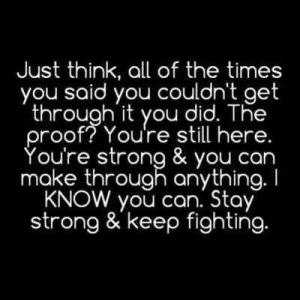

 These posts are responses to a pair of questions given to me by Anesa Miller, an author who has considered these same themes in her most current book
  The father also yells, also slams doors, and he is constantly reminding her of his rules and beliefs and of how she has disappointed him. The fact that he is disappointed seems to throw her into a deeper rage and this elicits a new volley of ultimatums from the father. Around and around it all goes. As you can see by my description spirituality and religion are not actually what is driving this whirlwind of father and daughter. They may shout about God or sermons or morals, but those are not the deepest truths of what father and daughter are experiencing in those explosive moments. Getting to the deeper truths becomes the real work.



 Perhaps one of the more difficult ideas to understand when working with children is this idea of creating structure. We are there to help these children and rules only seem to limit and frustrate them. Also we may find we dislike the work of enforcing those rules, especially with children who are suffering in our care. Rules for the sake of rules can indeed be damaging. But rules made with purpose can have lasting benefits.




 Substance abuse is an issue that I’ve been discussing with friends and visitors here