Author interview with Kim Barnes
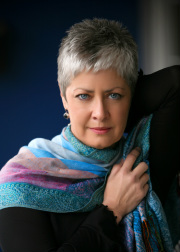
Kim Barnes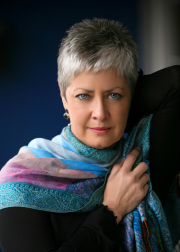 is a much-loved and critically acclaimed author. She has published major work in both fiction and non-fiction. Her memoir, In the Wilderness: Coming of Age in Unknown Country, received a PEN/Jerard Fund Award and was nominated for the Pulitzer Prize. Her most recent novel, In the Kingdom of Men, was listed among the Best Books of 2012 by several major newspapers. Kim teaches in the graduate program in creative writing at the University of Idaho, where she was my thesis advisor. —Anesa Miller
AM: Thanks so much, Kim, for agreeing to talk about literary matters with me today.
KB: Happy to take part!
AM: I’ve been struggling with issues related to publishing and changes in the industry. One aspect that troubles me is how books get slotted into marketing categories. Misconceptions can crop up when back-cover copy or front illustrations don’t really match the content. This is nothing new, but recently I’ve encountered reviews by bloggers who felt so misled by a book description that their expectations were dashed, and their overall impression was not what it might have been otherwise.
One example is Allison Hiltz’s review on her blog The Book Wheel of your novel, In the Kingdom of Men. Allison felt she’d been set up for a murder mystery—a genre with its own specific conventions. She was miffed to find that Nadia’s death did not fill the central role it might have played in a plot-driven story.
Allison writes:
In the Kingdom of Men was both fantastic and disappointing all at the same time. It was fantastic because the story was great, the characters (mostly) real, and the premise wonderful. It was disappointing because the advertised portion of the book was such a minute detail that I felt a little bit shafted…the whole reason I picked up the book was because of a murder, and it was such a small piece of the book that it was almost inconsequential. >> Read more of Allison’s review of The Kingdom of Men.
I was intrigued by these remarks because I had a similar reaction to the publisher’s description of The Woman Upstairs by Claire Messud. (More on that later.) Granted, a bit of hyperbolic language may be needed to grab readers’ attention in this era of so many entertainment options. But surely it’s a mistake for marketing to set up false expectations that lead to reader disappointment.
Any thoughts on this? Is it a pitfall of literary fiction to use cover copy that disguises our books as some other genre? (And I realize most authors don’t control their cover copy.)
KB: I think that each reader brings different expectations to every book. If you look back at various editions of Hemingway, Fitzgerald, and other literary authors of past decades, you find covers and copy that look and read like Hollywood movie posters.
Perhaps today’s readers have, in their way, become more aware of what differentiates writing that is character driven from action-oriented writing that is plot driven. But the more realistic aspect of this is one you point out: most authors who work with large publishing companies have very little say about what cover and copy are used for their books. We are asked our opinion, but it has always seemed to me a kind of courtesy. It’s marketing, sales, promotion, and publicity people who make the final determinations.
More often than not, I’m surprised to see the images and language that are used to promote my novels. They are seldom in keeping with my sense of the story. Publishers are always seeking a book that will “cross over” and engage the reader of “literary” fiction as well as book clubs and a more popular audience. Many decisions are based on trying to accomplish that.
Another aspect that must be taken into consideration is gender. Novels by women are marketed quite differently than are novels by men–a fact that has gotten a great deal of attention lately, as it should. The ongoing debate between Jennifer Weiner and Jonathan Franzen is an informative and entertaining example.
For background on this debate, check out these articles on The New Yorker, Salon.com and The Huffington Post.
AM: Correct me if I’m wrong, but I seem to remember that during the process of writing ITKOM, you considered different trajectories for the plot. Would Gin’s relationship to Mason and the evolution of the marriage be central, or would Gin’s personal growth overshadow the men in her life entirely? Did you entertain a scenario in which the events surrounding Nadia’s death might have been a more central factor? How did you eventually focus on the plot you chose?
KB: My sense of the story is that Nadia’s death IS a central factor in the novel. It defines everything that comes before and after. The book isn’t, however, a “who done it.” If anything, it’s a tragedy in the classical sense, which is what I was after.
Aristotle declared that women can’t be tragic figures because they do not possess sufficient nobility and complexity. What I see in our culture and society is an unwillingness to allow our female characters–daughters, wives, mothers, sisters–to become complex, to make terrible errors in judgment and then have to pay the price for those errors. As Andre Dubus has written, we cannot bear their “passion.” One of my goals as a writer is to present female characters who might prove Aristotle wrong.
AM: That must make it a hard row to hoe! I was told by an agent who read my whole novel and loved it that it was just “too tragic” to sell.
KB: I’m sure that happens a lot. What I’ve come up against is that many readers expect women writers to offer stories that aren’t “too dark” and that have happy “takeaways.” This is not at all what we demand of our male authors. If a male protagonist acts with hubris and creates chaos before coming to recognition of his blindness and doing penance—who is surprised? If a female protagonist embarks upon this course of action, we deem her not tragic but selfish and ignorant.
But to reply to your earlier question, I did experiment with various plot movements in ITKOM at the behest of my agent. The final story is the one I had first imagined and follows the trajectory of Gin’s hubris, errors, recognition, and penance. It is a voice-driven character study, a kind of fictional memoir defined by the lament that defines the tragic sequence.
AM: I love the black-and-white photos on your website of your aunt’s time as a young bride in Arabia, back in the early days of international development over there. Seeing them reminded me that ITKOM contains many elements of family story for you, a factual story that you studied and researched. Does plot become a means to inject intrigue into an interesting—but perhaps uneventful–true story, converting it to fiction?
KB: Although I used many of the descriptions and details that my aunt and uncle shared with me, the interior plot is completely fictional. (The larger plot elements that involve the country and the company are things I gleaned via years of research.) The truth is that, if I had written the story of my aunt’s life as nonfiction, it would have been teeming with conflict, tension, and catastrophe. If you’re writing nonfiction well, it doesn’t need to be “injected” with fiction because the details of any single life are endlessly complex and fascinating. What is more dramatic than “quiet desperation”?
AM: Would you care to tell us a bit about your current project(s)? Fiction or non-fiction?
KB: I have two projects I’m working on right now: pulling together my collected essays that span three decades, and a new novel that I began this past year. The novel is contemporary—a first for me.
AM: I can hardly wait to read it! Thanks so much, Kim, for sharing your thoughts.