by anesamiller_wuhi6k | Jun 27, 2015 | Blog, Foster Care
The topic of child welfare looms large in my novel Our Orbit, which tells the story of an Appalachian girl who crosses the tracks to become foster daughter to an educated family. Love and conflict ensue as many social issues of our time raise their sometimes ugly heads. In gratitude to those who helped me learn about the many demands and great rewards of foster care, I continue to share information on this topic.
Many thanks to today’s guest poster, Teresa Devroe Brown, a foster, adoptive, and bio mom as well as an active blogger. The following is an edited version of her blog post dated 1/10/11—
Our family entered the world of foster care in the Fall of 2003. Since that time, we have had 17 children placed in our home and provided short term respite for around 20 other children.
So much has changed in our lives since that first placement.
 We have seen scared children dropped off at our home, owning only the clothes on their backs.
We have attended more medical appointments and evaluations than I can count (one child alone had over 250 such appointments while in our care!).
We have helped establish IEP goals for the children in school.
We have cared for two very medically fragile children.
We have worked with numerous counties, caseworkers, CASA’s and biological parents.
 We have cared for children with more labels than we knew existed: ADD, ADHD, OCD, ODD,eating disorders, “crack baby,” PTSD, attachment disorders, fetal alcohol syndrome, poly-drug exposure, MRSA, skin problems, breathing problems, severe visual problems and cognitive delays, to name a few.
We dropped children off at numerous visits with their biological families, some welcomed and some “kicking and screaming” (literally) on the way there.
We have brought countless children to a scheduled visit with their families, only to have them sent back to us after waiting in a lobby for 30 minutes, telling us, “Mom (or Dad) couldn’t make it today!”
We have endured countless hours of logging the daily activities of these children to turn into the foster care agency.
We have agonized as children have had to live in two worlds, “our world” and “their world” at home. Living with us under our parenting principles and guidelines, yet “visiting” their parents under their worldviews, all the while trying to sort out and reconcile some of the comforts and security of living with us, yet their fierce and understandable loyalty to their own family.
 We have sat through court hearings where decisions were clearly made “in the best interest of the biological parent,” not “the best interest of the child,” which is why the child was removed from the home in the first place.
We have watched little girls take their first dance lessons, young boys hit their first ball in Little League, teen boys get ready for their first football practice, teen girls make the basketball team and little ones memorize Bible verses for AWANA.
We have been there when a little child woke up from surgery.
We have spent countless hours creating “LifeBooks” for each child, a forever memory and keepsake of pictures to record their time with our family
We have watched two siblings leave our home after living with us for two years. Their new “forever family” snapped them into their van with a little U-Haul attached to bring all their belongings to their new home.
 We have watched four kids successfully reunite with their biological parents and four others who were able to live with a relative. We have seen three children get adopted into great Christian homes, ready to start their new lives with their “Forever Family.”
And we sat through a court hearing where one of these children became our legal son.
We have seen our biological children learn firsthand about the many injustices in this world and that “family” is not always a safe and loving place or feeling. They have learned to share their space, their things, their parents and their hearts with the many children who have come and gone from our lives.
They watched a young teen Mom as she tried to manage school and an infant son while they went to the movies with their friends. They have seen the impact of raising children with no boundaries and no consequences. They have seen the hardships of being cared for by a mentally ill Mom.
And our oldest, Lauren, just graduated with her degree in Social Work and now works for Children’s Services in her county. She has seen firsthand both the benefits and the problems with our child welfare system. And she wants to remain committed to caring for the abused and the neglected.
Several years ago, in one of her college application essays, she responded to the often asked questions of, “How do you guys do it? I could never do foster care. I would get too attached to the kids. I could never give them up.” Her heartfelt response? “It is not about how we feel. It is about the kids!”
Our children have developed a real heart for the hurting in this world.
And they have thoroughly embraced, Jameson, their adopted brother.
But with all the many joys and victories we have experienced, there has also been much heartache.
Heartache over children leaving our home only to “age out” of the foster care system and be forever “on their own” and without a family to call their own.
We have personally experienced the scrutiny of county caseworkers who think we should silently “do what we are told” by “the system,” oftentimes to the detriment of the very children we are caring for.
Even when we disagree with the details of the case plan, we try to care for and love these children for as long as they are in our home. We help bathe these children. And read to them. And help them with their homework. And take them to appointments. And pack their lunches. And love them.
So today, I will trust in the One Who has called me to this life. I will choose to remain steadfast in Him. I will ask Him to help me lovingly care for these children. And to graciously forgive their families who have inflicted so much pain on them.
 Today, I will braid the hair of a child who is not my own. I will take her to dance class. And cheerleading practice. I will eagerly wait for another one to come home from her basketball game. I will listen to whatever she is willing to tell me about her day and the game (she won’t say much).
Today, I will pay extra attention to my adopted son. I will pause and remember what a great responsibility it has been to parent him. I will revel in how far he has come. I will count it a privilege to be his Mom.
And I will grieve for his Birth Mother and wonder how she is doing. Does she think of him? Did her heart feel a little empty on Mother’s Day? Would she be so proud to see him now?
And when there are hard days in our foster and adoptive world, I will heed the words of my wise-beyond-her-years daughter, “It is not about how I feel. It is about the kids.”
James 1:27 “Religion that God our Father accepts as pure and faultless is this: to look after orphans and widows in their distress and to keep oneself from being polluted by the world.”
Lord, may my faith be pure and faultless today!
~ ~ ~ ~
Thank you for learning about issues involved in foster care! For additional information—
Visit the official site of National Foster Care Month 2015.
Visit the National Foster Parent Association.
Many thanks for visiting my blog today! Please browse the website and let me know if you like what you see, or if you have suggestions. You can reach me by leaving a comment in the box below or by clicking the Contact link at upper right (or just click here). Consider subscribing to my blog or newsletter. And stop by again soon!
by anesamiller_wuhi6k | Jun 25, 2015 | Blog, Series: Drawer no more!
What an Honor!

Historic Logo of Wichita, Kansas, courtesy KS Historical Society
It was an honor to chat with published author Leta Hawk at her blog Hawk Happenings! She kindly let me rattle on about Our Orbit, Ohio heritage, growing up in the “Air Capital of the World” during the Cold War, and many other topics! Visit Leta’s site and find out what comic-book spies were really up to back then!
A selection from the interview—
Anesa Miller says: My novel, Our Orbit, embodies a lot of my own heritage in fictional form. My parents came of age in the Depression and went through some very hard times. …Over the years, I came to understand that my mother’s family moved “from pillar to post” and finally lost their home altogether.

The Midwest Warnocks in the 1930s
Learning about my background was an enlightening experience. It inspired me to look deeper into genealogy and history. One of the things I discovered is that a tiny village in southeastern Ohio still bears the name of my mother’s family: Warnock village. My ancestors had a dairy farm in that region. I have since visited and found the site of their farm and the church some of them attended, not to mention a beautiful countryside! So understanding our Appalachian roots became an important part of creating the story of Our Orbit. . . .
Read the full interview at Hawk Happenings.
Thank you, Leta!
Many thanks for visiting my blog today! Please browse the website and let me know if you like what you see, or if you have suggestions. You can reach me by leaving a comment in the box below or by clicking the Contact link at upper right (or just click here). Consider subscribing to my blog or newsletter. And stop by again soon!
by anesamiller_wuhi6k | Jun 22, 2015 | Blog, Series: Drawer no more!
The following does not fit with any topics I usually discuss here, except maybe “writing in general”: As a writer, it’s my duty to use words to make sense of the senseless. So for my peace of mind and for anyone else who happens by—
Please don’t misread: I am NOT saying that one crime is worse than another. Families shot at a block party, women shot in a gym, and, certainly, children shot while they attend school—all are heinous and heartbreaking crimes. But honesty compels me to admit that, regarding some of them, I’ve learned to take refuge in comforting excuses. Only a sicko would fire upon children! Only fanatics would shoot a doctor at prayer, or dozens of teens at summer camp, or peaceful citizens at a Unitarian Church.
Something is blatantly wrong with those people. Their attitudes are certifiably outside the norm of human behavior. Psychological science might even develop a test to find and treat this illness…
These comforting excuses allow me to distance myself from such crimes. To shield myself from the pain forced upon victims’ families and witnesses. Yes, bona fide mental illness is often involved. Still, the idea of illness as a cause for crime becomes a refuge, even a delusion, that grants me a false sense of personal safety.
Avoid crazy people, and all will be fine. Sickos aren’t that hard to spot. They can be locked away.
Those comforts fail me when I hear about the attack at the Mother Emanuel Church in Charleston, South Carolina. It is tempting to call the blatant racism behind this crime “sick.” It might bring some comfort to deem the killer another lunatic, outside the norms of society.
But by all accounts, Dylann Roof made rational choices, acted methodically, considered NOT going through with his plan…and yet elected to kill. He embraced the beliefs of many older (supposedly wiser) people across the nation who’ve shown fear and disgust with the first non-white President of these United States. Never mind that this President was elected twice by large majorities of fellow citizens. Dylann Roof chose hate, and it led him to take the lives of people who, he admitted, had been kind to him.
I find no refuge from this.
True, Roof appears to be a fanatic, not unlike the murderer of Dr. George Tiller in a church in my hometown of Wichita, Kansas, back in 2009. Apparently, Roof convinced himself that black people are “taking over” America. That is strong evidence of delusional thinking, in light of recently publicized police killings of black persons, often unarmed. Not to mention disproportionate incarceration. So indeed, Roof may be mentally unstable.
But for a young person to choose such a warped view of the world, and such a pointed, intentional way to act out his hatred on innocent people…
This one breaks my heart even worse than the others.
 The only possible comfort at this moment comes with the news that services went forward at Mother Emanuel yesterday. That thousands turned out on Sunday to march across the Ravenel Bridge, to show support for the victims and families. That survivors have declared, “Hate will not win,” amid their choice of forgiveness. These responses bring a glimmer of hope that outrage at this crime may strengthen the quest to overcome the gaping wounds of racism and gun violence in America.
Hope—your name is one with these good Christians who lost their lives: Tywanza Sanders, Ethel Lance, Cynthia Hurd, Rev. Sharonda Singleton, Myra Thompson, Susie Jackson, Rev. DePayne Middleton-Doctor, Rev. Clementa Pinckney and Rev. Daniel L. Simmons Sr.
Broken or not, my heart goes out to their friends and families.
by anesamiller_wuhi6k | Jun 21, 2015 | Blog, Issues in Our Orbit -- Substance Abuse & Recovery, Substance Abuse & Recovery
Today I’m honored to present much thoughtful information in the series Issues in OUR ORBIT: Substance Abuse & Recovery. This guest post is by Gregory K. from his website Suchness: A Mental & Spiritual Health Blog. Gregory K. holds a Masters of Divinity degree and is working toward a graduate degree in counseling. His goal is to help Christians and others who struggle in “finding some measure of peace living in our own skins.”
At my request, Gregory K. was kind enough to address the very problems that arise in fictional form in my novel Our Orbit. Many thanks to him—
Adolescents, Alcohol, and Alienation – Part 1

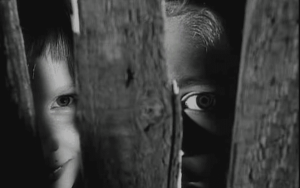
Photo by Margaret Sang – children peek through the gaps
To see a teenager drink or use drugs is startling. For those of us who have no experience along these lines to see a child using such a grown-up way of coping can really upset our view of the world.
It is just like sexual crimes. They are that much worse when they are committed against children, those who do not even fully understand what is happening to them. There is a terrible crashing together of cold reality and the innocence of childhood that we so prize in our culture. Therefore before we can help a child who has begun to use alcohol to find emotional relief we must first come to terms with this kind of fear and dark confusion that exists in ourselves.
Our fear, if it is not acknowledged, can taint our attempts to help.
In fear we may find ourselves trying to force such children to stop drinking, screaming and stomping our feet. We may find ourselves lecturing, shaming, and calling attention to all the ways that child has gone wrong morally. We may resort to threats and punishment, forced isolation and indoctrination, anything we can do to grind this problem out of our children.
But where does our desperation come from?
Fear is at the root of such approaches, fear of loss or of pain, for ourselves or for our children. While we may never be able to fully exorcise that fear, if we give into it and allow it to lead us tumbling forward at a frantic pace then we will rush right past the small gate and narrow road that we must travel with our children to find any real peace.

“…I found myself in a dark wood.” – Dante
With these thoughts in mind let us consider the emotionally troubled teenager who is using alcohol to find some sense of relief. One of the first things that need to be done is for the child to stop using alcohol. This is not because of some moral reason and it is not to lessen our own fears. Instead it is simply a matter of fact that when a person is using chemicals to alter their minds and escape reality they are not fully present with us as we begin our work.
There is a chemical barrier between us and them, and no surgery can be performed through a brick wall. This need for abstinence and sobriety on the part of the teenager though does not give us an excuse to start using force, punishments, and sermons to get them to stop. With teenagers, as with all people, true abstinence along these lines can only be achieved if they are themselves invested in the process.
Motivational interviewing is a technique that is used to help addicted people to start pursuing recovery for themselves.
Motivational interviewing is done by connecting the goal of sobriety with what they value most in their lives. If they are proud of their career, let us link sobriety and that career. If they are very involved with their families, let us link happy family life with sobriety. We are trying to make the rewards of such effort worth the hard work it will take to get there. Similar approaches can also work with the teenagers we are trying to help. This is especially true for the teenagers who have not yet become physiologically dependent, but who are only using alcohol to numb themselves.
It may help to openly and honestly explore with them this concept that alcohol only numbs the pain and does not remove it, and if they are willing to work with us a way may be found to real and lasting wholeness. Such honesty, and such straightforward explanations of the work we hope to do, will certainly work better than preaching, cajoling, and manipulating. If nothing else they will see where we are coming from and begin to develop some level of trust for our work and our intentions.
Now we move forward into the real work that must be done with such teenagers. Rather than present a comprehensive method for such work (which would be beyond my experience anyway) I will present a few concepts that may be helpful to keep in mind.
Honesty
When working with people who use things like alcohol to numb their pain we may be tempted to try and trick or manipulate them. “If you masturbate, you will go blind!” We may also want to shield those we are working with from the truth in some way hoping to protect them (or to protect ourselves). Certainly we need to have some sense of tact in this work since too much truth in the wrong way or at the wrong time can be just as destructive as a lie.
At the same time though the people we work with can be startlingly good at figuring out when we are being genuine or when we are just putting on a show for their benefit. Sometimes they may call us out, or sometimes they will remain darkly silent as they are continually bothered by our pat-answers and fake smiles. Either way, the trust they have for us is damaged each time this happens. And without trust there can be no real forward momentum.
Trust
Adolescents are at the developmental stage where social connections are the most important things they have. Who they are friends with, how they are connected to their families and loved ones, these things are more important than the “hard facts” we may try and throw at them. So before we can expect our words to carry any real weight in the lives of those teenagers we are working with we must first earn their trust by forging a social connection.
This does not mean we are trying to be “friends” with them. If we do try to go about it that way we may be surprised with how easily we become manipulated by the very teenagers we are trying to connect with. Instead it is about the teenagers coming to the realization that when they deal with us they will be treated honestly, fairly, and well. In the life of a troubled teenager these traits in the adults in their lives are more precious than anything else, even if they are too angry or hurt or confused to say so.
Structure
 Perhaps one of the more difficult ideas to understand when working with children is this idea of creating structure. We are there to help these children and rules only seem to limit and frustrate them. Also we may find we dislike the work of enforcing those rules, especially with children who are suffering in our care. Rules for the sake of rules can indeed be damaging. But rules made with purpose can have lasting benefits.
Rules can teach teenagers the essential lesson of cause and effect. We are not trying to “discipline” the children, but connect them with the fact that what they choose to do will have certain consequences that must be considered. If they are late for a counseling session that means there will be less time to be together. If they shout they will not be heard as clearly as when they sit and speak. If they strike out they will not receive the care and attention they want. Here are a few guiding points about structure and consequences:
Explaining the rules, and the practical reasons why those rules exist, is an essential part of building a good relationship from adult to child. If a rule cannot be explained along these lines then it is not necessary.
Consistently enforcing those rules reduces the confusion that the teenager may feel when otherwise they may have been screamed at or beaten with no real cause.
Punishments only teach children that the stronger person can hurt the weaker person as she sees fit. All repercussions of breaking a rule then must be intrinsically connected to the practical purpose of the rule.
Allowing the teenagers to have a say in the making of the rules provides an excellent space for the child to learn to input and to feel heard. She becomes part of the process, a part of a relationship as opposed to a prisoner or victim.
The rules must be agreed upon by the child herself. Otherwise these rules simply become blunt instruments used by the adults to impose their will onto the child which creates a situation where social violence may accidentally be done.
~ ~ ~ ~
Gregory K‘s discussion of adolescents and alienation will continue in the near future. Meanwhile, the links below provide helpful information on addiction and recovery.
Visit the Harvard Help Guide
Visit SoberNation
Visit Parent Treatment Advocates
Visit Gabbertsite from mental health counselor Gail Gabbert
And here’s a recent article from the New York Times on teenagers discussing what might have stopped them from using drugs.
Thank you so much for visiting my blog today! Feel free to nose about the website and let me know if you like what you see, or if you have suggestions. You can reach me by leaving a comment in the box below or by clicking the Contact link at upper right (or just click here). Consider subscribing to my blog or newsletter. And stop by again soon!
by anesamiller_wuhi6k | Jun 8, 2015 | Blog, Series: Drawer no more!

The fiction bug bit hard, back when I was employed as a foreign-language teacher and should have been working on my dissertation on Tolstoy. Call it procrastination, but nothing brought me so much delight as a couple of stolen hours with a legal pad and row of needle-sharp pencils.
The short stories and novellas I produced in those early years were mostly unreadable. Surely, the way to prove that one is a writer is to use lots of long and difficult words! Or so I opined at the time. Steeped in academic language, I struggled to keep my sentences down to half a dozen dependent clauses, max.

Ah, the days when every word was precious!
Once I finally climbed down from the ivory tower, it was time to improve my style. I read Alice Munro and began to grasp how to shape a sentence, read Carolyn Chute and sensed the chemistry between characters, read Marquez and grappled with the dream that is an enthralling narrative. Small vignettes and short-shorts proved a good place to hone my craft. Several of those found homes in literary magazines—a thrill for the starry-eyed novice.
The short story form remained my nemesis. To this day, I consider it a lofty pinnacle of prose artistry, and have often said I hope to never write another.
But while ideas continued to swarm, and before I worked up the nerve to tackle a larger project, I labored in the fields of short fiction. I longed make readers pause and see fellow humans in a new way. Don’t people drive us crazy with anger, love, hysteria, amazement, and every possible emotion! I struggled to present characters that would help readers recognize their fellows—our fellows—with a bit more compassion than before.
One of my short stories at this time went by the cumbersome name “Gravitation of the Spheres.” Please be kind and consider it a throwback to my academic career. Other titles came and went, all equally bad. Despite the abstractly philosophical name, the tale was a simple one: a nine-year-old girl loses her parents and is thrust into foster care. A kind family takes her into their home. Connection ensues along with various conflicts. Crisis, resolution, THE END.
But this story gave me no rest. In one draft, I expanded the plot with new episodes. Then cut every expendable word to tighten things up. “Leaner and meaner” was supposed to be better and better, or so minimalists would have us believe. I revised that story so many times, my head began to spin. I had no idea which version might be better than another.
Realizing I needed professional help, I applied to The Kenyon Review Writer’s Workshop for my first class in creative writing.
Kenyon College had the advantage of being within a 3-hour drive of my town. More importantly, this is the home of the prestigious literary magazine that launched work by such luminaries as Alan Tate, Robert Penn Warren, Robert Lowell, and many others. If Ohio has a literary Mecca, I reasoned, this must be it!
All a-tremble with excitement, I joined a group of 12 acolytes studying with Nancy Zafris, a winner of the Flannery O’Connor Award for short fiction and a formidable presence. She forced us to realize the power of each word while becoming attached to none (Kill those darlin’s). Awed by Nancy’s skill with tone and structure, I felt no one could better advise me how to transform my troublesome story into the brilliant narrative it was meant to be.

But are they “Gravitating”?
Nancy graciously agreed to read “Gravitation of the Spheres.” She convinced me to reconsider the title and gave some pointers on focusing the plot. But it was her parting remark that helped me keep faith with the story for years to come: “Brush it up and send it out.”
So my strange little tale was in the ballpark of publishable material!
This 4800-word opus acquired the name “Our Orbit.” Not sure why I was determined to stick with cosmic imagery when this theme is not essential to the plot. I’ve gotten a bit of criticism despite the great improvement over previous titles. One widely published author told me that first person (“Our…”) was inappropriate, given that the story is written in third. And a couple of readers said they were misled to expect a sci-fi tale.
I hoped my eventual readers would accept the metaphorical sense of an “orbit.” Then I stumbled upon this same small phrase in Harper Lee’s To Kill a Mockingbird. There it’s used to describe Scout and Jem’s daily routine of play and exploration. This is not a major passage in the classic book, but it seemed so resonant with my story, I wasn’t about to give up the title from then on.
As for sending it out—first, I tried journals at the top of my wish list: Pleiades, Five Points, Prairie Schooner, Agni. Guess what happened! Soon moved on to a slightly humbler tier: Ascent, Spindrift, The Green Hills Literary Lantern. Eventually, I was scraping the bottom of the litmag barrel: Dodohebdo, DoTell Motel, Tales from the Hip, and FicLines. (Not their real names!) As discouragement set in, it was back to the legal pad many times over. For the next eight years, I sent the story to at least 50 different magazines, several of them more than once.
“No surprise for the writer, no surprise for the reader.” —a favorite saying from Kim Barnes, author of In the Kingdom of Men and professor in the University of Idaho creative writing program
Luckily for my flagging spirits, I succeeded in publishing other stories during this time—even one at The Kenyon Review. So what was the problem with “Our Orbit”?
No other story of mine garnered so many comments from editors scribbled at the bottom of rejection slips. One apologized for keeping “Our Orbit” on his desk for 8 months. He felt it wasn’t “ripe for acceptance” but couldn’t quite bear to reject it either. He found his mind “cycling back to it.”
At least half a dozen editors wrote that the story needed further development. Independently, several agreed that it could—even should—be expanded.
It had the makings of a fine novel.
This was not something I wanted to hear. Already at work on a novel, I had gained insight on the time and effort required for such a project. “Our Orbit,” by contrast, was just a practice piece. Not bad, but no major opus. Something to get off my desk and onto my publication list—not a sinkhole for endless tinkering, a baby bird demanding food to grow.
But art is like a higher power. Not unlike God, it “disposes,” regardless of what we humans propose.
Soon enough, I had finished two other novels. With no agent or publisher in sight, discouragement set in hard this time. Fiction was a cruel master. I tried writing essays and poetry: anything to keep up my skill with words. Then, my husband was invited to apply for a job in the Pacific Northwest, 2000 miles from our home. This opened an opportunity for me to enter an MFA program in creative writing.
One more way to keep working, to stop myself from giving up.
So in August 2005, we were preparing to relocate across country. In our Ohio backyard one warm night, I wondered how I would get along without my garden. I looked up at the sky, but didn’t focus on the stars until I realized that they were falling. It was the Perseiad meteor shower that comes every year in late summer.

What are they, really?
Beautiful lines of light streaked the sky. And with them, a thought popped into my head. A perfect scene for “Our Orbit”: My fictional family hurries outside to see the meteors. The children ask questions…parents try to explain so the little ones can understand.
So many falling stars—is it an omen, or a mere fact of nature?
This unfolded into a scene for Our Orbit the novel. Same plot as the story, but with more people, more fully fleshed characters interacting in more complex ways. It became my thesis in the MFA program at the University of Idaho. It took 5 years to create a complete draft. I was convinced it would become my first mainstream, publishable novel. For 2 more years, I would search for an agent—would give up, try again, and give up again.
“Now, Our Orbit will be re-issued by Sibylline Press in 2025.”
Now, Our Orbit will be re-issued by Booktrope Publishing on June 23, 2015.
~ ~ ~ ~
Thank you so much for visiting my blog today! Feel free to nose about the website and let me know if you like what you see, or if you have suggestions. You can reach me by leaving a comment in the box below or by clicking the Contact link at upper right (or just click here). Consider subscribing to my blog or newsletter. Stop by again soon!


 We have seen scared children dropped off at our home, owning only the clothes on their backs.
 We have cared for children with more labels than we knew existed: ADD, ADHD, OCD, ODD,eating disorders, “crack baby,” PTSD, attachment disorders, fetal alcohol syndrome, poly-drug exposure, MRSA, skin problems, breathing problems, severe visual problems and cognitive delays, to name a few.
 We have sat through court hearings where decisions were clearly made “in the best interest of the biological parent,” not “the best interest of the child,” which is why the child was removed from the home in the first place.
 We have watched four kids successfully reunite with their biological parents and four others who were able to live with a relative. We have seen three children get adopted into great Christian homes, ready to start their new lives with their “Forever Family.”
 Today, I will braid the hair of a child who is not my own. I will take her to dance class. And cheerleading practice. I will eagerly wait for another one to come home from her basketball game. I will listen to whatever she is willing to tell me about her day and the game (she won’t say much).




 The only possible comfort at this moment comes with the news that services went forward at Mother Emanuel yesterday. That thousands turned out on Sunday to march across the Ravenel Bridge, to show support for the victims and families. That survivors have declared, “Hate will not win,” amid their choice of forgiveness. These responses bring a glimmer of hope that outrage at this crime may strengthen the quest to overcome the gaping wounds of racism and gun violence in America.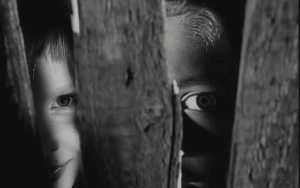

 Perhaps one of the more difficult ideas to understand when working with children is this idea of creating structure. We are there to help these children and rules only seem to limit and frustrate them. Also we may find we dislike the work of enforcing those rules, especially with children who are suffering in our care. Rules for the sake of rules can indeed be damaging. But rules made with purpose can have lasting benefits.