
As you can easily figure, through all the years of submissions and rejections, publishing a book was my ultimate goal. Or my pipe dream, as it seemed. I produced two full-length manuscripts of poetry, one of short stories and one of essays. I attended writers’ groups and book clubs. I wrote three novels, appealed to agents and editors, researched small presses (which always seemed to cut off submissions the week before I discovered them), and I paid tidy sums for critiques of my work and my query letters.
All to no avail.
One bright morning, sometime after my collection of rej slips topped 2000, I opened the manuscript drawer and started shoveling. All those pulped trees and heartfelt phrases that no one cared about (except me, who didn’t seem to count) weighed like an albatross around my neck. A ton of stuff that didn’t deserve to see the light of day went straight to recycling.
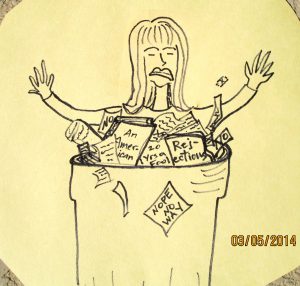
But as I wheeled the last bits—the best of my rejected work—down to the curb, a fresh thought dawned in my sorrowful brain.
Why not publish some of it myself?
Please bear in mind: self-publishing is not what I had ever wanted. Well, okay, here’s a true confession: for one minute, almost 20 years earlier, I did want to self-publish a book. My fervent desire to NEVER do so again is a direct result of that ill-fated experiment. I have spent nearly every day of the subsequent decades yearning for the other kind of publication: the knight-in-shining-armor kind, where my work, on its own stellar merits, attracts a caring agent who finds an intelligent editor at a major publishing house just dying to produce my work and promote it to all the world, which of course comes flocking to buy and read!
Oh, God—Farrar, Strauss & Giroux! Yes, yes—W. W. Norton! Don’t stop—Knopf, Penguin, Random House! Such was my fantasy life, year after year after year. (Dare I imply that these Great Houses f*ck their writers? Do writers delude themselves into believing traditional publishers offer the best arrangement since wine started coming in bottles?)
In short, after all that unrequited lust, you can imagine how hard it was to accept the new idea dawning upon me. I resisted furiously, drummed up excuses why self-publishing was wrong for me—even if other writers were embracing the process left and right. For example—
I hate e-books.
I don’t speak mobi and don’t intend to learn.
Arcane formatting makes me break out in a rash.
Don’t trust the term “creative team.” Don’t work well with others after years in that lonely garret.
Can’t find a competent copyeditor, proofreader, designer, illustrator, or other members of that team I don’t trust.
Can’t tell a shyster from a legit author’s services company.
POD what?
And on and on.
But more compelling than any excuses, all the while I wallowed in my stalling tactics, the characters in my latest novel kept speaking in my ears. Their babble of voices told me, “You owe it to us to try! We want out to see the sunlight! You know people will love us if they only get the chance. We don’t care if it’s not Knopf—just publish us. We’ll do the rest.”
What could I possibly say to that?
Tell me what you think: Does corporate publishing make off with too much of the pie while writers starve in their garrets? Is it fair for the house to take the major cut even on low-overhead e-books? Please feel free to comment on these and related matters.