
by anesamiller_wuhi6k | Jul 13, 2015 | Blog, Writing & Publishing

As you would expect, I believe literary fiction is still vibrant and important because those are the books I like to read. Still less surprising in light of my convictions: it’s the type of book I do my best to write. My new novel, Our Orbit, may not be philosophical, contains no elaborate symbols, and little poetic language. Nonetheless, it aspires to such literary values as psychological depth and social relevance. Popularly termed “lit fic,” this category is tricky to pin down with a definition. With your indulgence, I’ll share some preliminary thoughts.
I like to imagine literary fiction as a coquettish college-aged human (of any gender you like) attending a costume party dressed as Mark Twain. S/he twirls one end of an old-fashioned string tie, and eyes twinkle under that mop-like wig. A lilting voice reminds us that, “Reports of my death are an exaggeration.”
 It’s good to keep in mind that literary fiction is a sweet young thing. Its detractors often point out that, “Shakespeare [or Tolstoy or other greats of the past] never wrote #litfic! He just wrote what he wanted!” Leaving aside the fact that Shakespeare wrote drama and poetry, this claim makes no point at all. The concept of “literariness” is one we grapple with in relation to contemporary fiction. It is always a fresh quality for its own time. Anything else, however highbrow and elaborate, would be formulaic.
Moreover, anything of Shakespeare’s era or Tolstoy’s, which is still being read today, should be called a “classic,” or “canonical work,” rather than literary fiction. Confusing these categories lands us in hot water. The most well-written, intellectual novels of today, whether they climb a best-seller list or not, may be forgotten ten or twenty years from now. Once forgotten—regardless of how literary these books were once considered—they will never become classics for future generations (barring the increasingly unlikely event of a new vogue or rediscovery).

Instant classic, or crackpot?
Virginia Woolf by Roger Fry
Allow me to evade the issue of a cut-off date. Even so, “literary,” in the sense I mean here, is an adjective properly applied to fiction of one’s own time. Books earlier than—say, arbitrarily—the cultural shift of the 1960s, came to the publishing market contending with such a different set of tastes and expectations that we can no longer perceive them on their original terms. We cannot read them with the same mentality that prevailed when they were created (although I’m sure this varies for individual readers).
What this implies is that we may find older works interesting for reasons other than those that draw us to contemporary literary fiction. Indeed, our reasons may have nothing to do with literary quality: historical interest, curiosity about an author’s life or death, the comforts of a bygone world, etc. Whether these older books were deemed literary when published or not, they may yet become classics or enter a canon of some sort, if their appeal persists over time.
I find this distinction important because resentment among writers of different genres is running especially high these days. True, such feelings tend to be perennial but are especially unfortunate at a time when all writers are lucky if the public chooses any book over Facebook. But, I understand how authors of popular genres (the name Jennifer Weiner springs to mind) may well resent those who embrace the term “literary” IF we claim it means our work is closer to the classics that millions have loved for years or centuries. There is no necessary connection.
Let me emphasize the obvious: Contemporary literary novels ≠ classic works of literature!
Of course, resentment rarely seeks a rational cause. AND there is a pregnant similarity between the words “literary” and “Literature.” But attempting to change established terminology in any field is a bigger task than I can advocate in good conscience.
I can feel this topic expanding even as I struggle to address it! So in short (if not too late for that): I believe literary fiction is a meaningful category, one that has existed for some decades, and is likely to remain viable in the future. As a purveyor of #litfic myself, I plan to revisit many of these questions.
~ ~ ~ ~
 Many thanks to Jason Greensides for hosting this original post on his blog on 6/29/15. Jason is the author of the acclaimed novel The Distant Sound of Violence. Visit Jason today!
Connect with Jason on Facebook.
Follow Jason on Twitter.
On Goodreads.
~ ~ ~ ~
by anesamiller_wuhi6k | Jun 21, 2015 | Blog, Issues in Our Orbit -- Substance Abuse & Recovery, Substance Abuse & Recovery
Today I’m honored to present much thoughtful information in the series Issues in OUR ORBIT: Substance Abuse & Recovery. This guest post is by Gregory K. from his website Suchness: A Mental & Spiritual Health Blog. Gregory K. holds a Masters of Divinity degree and is working toward a graduate degree in counseling. His goal is to help Christians and others who struggle in “finding some measure of peace living in our own skins.”
At my request, Gregory K. was kind enough to address the very problems that arise in fictional form in my novel Our Orbit. Many thanks to him—
Adolescents, Alcohol, and Alienation – Part 1

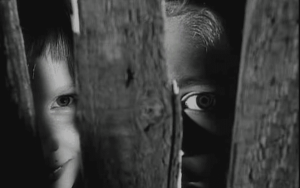
Photo by Margaret Sang – children peek through the gaps
To see a teenager drink or use drugs is startling. For those of us who have no experience along these lines to see a child using such a grown-up way of coping can really upset our view of the world.
It is just like sexual crimes. They are that much worse when they are committed against children, those who do not even fully understand what is happening to them. There is a terrible crashing together of cold reality and the innocence of childhood that we so prize in our culture. Therefore before we can help a child who has begun to use alcohol to find emotional relief we must first come to terms with this kind of fear and dark confusion that exists in ourselves.
Our fear, if it is not acknowledged, can taint our attempts to help.
In fear we may find ourselves trying to force such children to stop drinking, screaming and stomping our feet. We may find ourselves lecturing, shaming, and calling attention to all the ways that child has gone wrong morally. We may resort to threats and punishment, forced isolation and indoctrination, anything we can do to grind this problem out of our children.
But where does our desperation come from?
Fear is at the root of such approaches, fear of loss or of pain, for ourselves or for our children. While we may never be able to fully exorcise that fear, if we give into it and allow it to lead us tumbling forward at a frantic pace then we will rush right past the small gate and narrow road that we must travel with our children to find any real peace.

“…I found myself in a dark wood.” – Dante
With these thoughts in mind let us consider the emotionally troubled teenager who is using alcohol to find some sense of relief. One of the first things that need to be done is for the child to stop using alcohol. This is not because of some moral reason and it is not to lessen our own fears. Instead it is simply a matter of fact that when a person is using chemicals to alter their minds and escape reality they are not fully present with us as we begin our work.
There is a chemical barrier between us and them, and no surgery can be performed through a brick wall. This need for abstinence and sobriety on the part of the teenager though does not give us an excuse to start using force, punishments, and sermons to get them to stop. With teenagers, as with all people, true abstinence along these lines can only be achieved if they are themselves invested in the process.
Motivational interviewing is a technique that is used to help addicted people to start pursuing recovery for themselves.
Motivational interviewing is done by connecting the goal of sobriety with what they value most in their lives. If they are proud of their career, let us link sobriety and that career. If they are very involved with their families, let us link happy family life with sobriety. We are trying to make the rewards of such effort worth the hard work it will take to get there. Similar approaches can also work with the teenagers we are trying to help. This is especially true for the teenagers who have not yet become physiologically dependent, but who are only using alcohol to numb themselves.
It may help to openly and honestly explore with them this concept that alcohol only numbs the pain and does not remove it, and if they are willing to work with us a way may be found to real and lasting wholeness. Such honesty, and such straightforward explanations of the work we hope to do, will certainly work better than preaching, cajoling, and manipulating. If nothing else they will see where we are coming from and begin to develop some level of trust for our work and our intentions.
Now we move forward into the real work that must be done with such teenagers. Rather than present a comprehensive method for such work (which would be beyond my experience anyway) I will present a few concepts that may be helpful to keep in mind.
Honesty
When working with people who use things like alcohol to numb their pain we may be tempted to try and trick or manipulate them. “If you masturbate, you will go blind!” We may also want to shield those we are working with from the truth in some way hoping to protect them (or to protect ourselves). Certainly we need to have some sense of tact in this work since too much truth in the wrong way or at the wrong time can be just as destructive as a lie.
At the same time though the people we work with can be startlingly good at figuring out when we are being genuine or when we are just putting on a show for their benefit. Sometimes they may call us out, or sometimes they will remain darkly silent as they are continually bothered by our pat-answers and fake smiles. Either way, the trust they have for us is damaged each time this happens. And without trust there can be no real forward momentum.
Trust
Adolescents are at the developmental stage where social connections are the most important things they have. Who they are friends with, how they are connected to their families and loved ones, these things are more important than the “hard facts” we may try and throw at them. So before we can expect our words to carry any real weight in the lives of those teenagers we are working with we must first earn their trust by forging a social connection.
This does not mean we are trying to be “friends” with them. If we do try to go about it that way we may be surprised with how easily we become manipulated by the very teenagers we are trying to connect with. Instead it is about the teenagers coming to the realization that when they deal with us they will be treated honestly, fairly, and well. In the life of a troubled teenager these traits in the adults in their lives are more precious than anything else, even if they are too angry or hurt or confused to say so.
Structure
 Perhaps one of the more difficult ideas to understand when working with children is this idea of creating structure. We are there to help these children and rules only seem to limit and frustrate them. Also we may find we dislike the work of enforcing those rules, especially with children who are suffering in our care. Rules for the sake of rules can indeed be damaging. But rules made with purpose can have lasting benefits.
Rules can teach teenagers the essential lesson of cause and effect. We are not trying to “discipline” the children, but connect them with the fact that what they choose to do will have certain consequences that must be considered. If they are late for a counseling session that means there will be less time to be together. If they shout they will not be heard as clearly as when they sit and speak. If they strike out they will not receive the care and attention they want. Here are a few guiding points about structure and consequences:
Explaining the rules, and the practical reasons why those rules exist, is an essential part of building a good relationship from adult to child. If a rule cannot be explained along these lines then it is not necessary.
Consistently enforcing those rules reduces the confusion that the teenager may feel when otherwise they may have been screamed at or beaten with no real cause.
Punishments only teach children that the stronger person can hurt the weaker person as she sees fit. All repercussions of breaking a rule then must be intrinsically connected to the practical purpose of the rule.
Allowing the teenagers to have a say in the making of the rules provides an excellent space for the child to learn to input and to feel heard. She becomes part of the process, a part of a relationship as opposed to a prisoner or victim.
The rules must be agreed upon by the child herself. Otherwise these rules simply become blunt instruments used by the adults to impose their will onto the child which creates a situation where social violence may accidentally be done.
~ ~ ~ ~
Gregory K‘s discussion of adolescents and alienation will continue in the near future. Meanwhile, the links below provide helpful information on addiction and recovery.
Visit the Harvard Help Guide
Visit SoberNation
Visit Parent Treatment Advocates
Visit Gabbertsite from mental health counselor Gail Gabbert
And here’s a recent article from the New York Times on teenagers discussing what might have stopped them from using drugs.
Thank you so much for visiting my blog today! Feel free to nose about the website and let me know if you like what you see, or if you have suggestions. You can reach me by leaving a comment in the box below or by clicking the Contact link at upper right (or just click here). Consider subscribing to my blog or newsletter. And stop by again soon!
by anesamiller_wuhi6k | Apr 27, 2015 | Blog, Foster Care, National Foster Care Month, OMG—It's CELEBRITIES!

Can you ever have too much star power?
Readers of Our Orbit know that the topic of foster care plays a major role in the plot and the lives of all the characters. To honor everyone who helped me learn and write about this system of neighborly care, I will be posting on this topic for the next several weeks.
We start on a light note, with this addition to the series OMG – It’s CELEBRITIES! Rick and Deanne Fletcher, the young couple who become foster mom and dad to 9-year-old Miriam Winslow after her father’s arrest —
Rick & Deanne: “Ideal foster parents”
Not the meatiest roles?
As you may know, Our Orbit features a number of meaty roles that actors are sure to enjoy: an alcoholic 14-year-old, closeted aunts and uncles, men whose masculinity is dangerously entangled with religious devotion and resistance to authority. So at first glance, the parts of Rick and Deanne Fletcher may not seem like the best in the book.
Born and raised in small-town Ohio, Rick and Deanne meet at the local liberal arts college. They get married as soon as he graduates and finds work teaching chemistry at a rural high school. Deanne teaches kindergarten, then works as a substitute when the babies begin to arrive. Rick’s family boasts a small claim to urban sophistication, coming from the regional hub of Cincinnati, while Deanne grew up on a farm that her family has proudly held for over a century.

A kindly face of authority
By their mid-20s, the couple has a mortgage and two children. Already eager for a third baby, they decide to look into foster care as a way to grow their family while limiting the financial strain. (Maybe not the best reason to do a good thing? You be the judge.) In short, Rick and Deanne are both traditionalists with slightly left-of-center political views. Oh—! and Rick has now been promoted to Assistant Principal of the high school, so he is an official member of the local establishment.
Not necessarily the sexiest roles, these are, nonetheless, central characters that in movie parlance (Watch me pretend I speak it!) must be considered the male and female leads. I need consummate talent to render their authenticity without letting too many hints of stuffiness, much less irony, slip in.
My first thought was the brilliant German-Irish actor Michael Fassbender as Rick, and undisputed genius Jessica Chastain as Deanne. Both come laden with enough awards and nominations to daunt a stout mule.

Since his bone-chilling portrayals of a diehard Confederate racist in Twelve Years a Slave and an amoral lawyer casually consorting with drug kingpins in The Counselor, no one could doubt that Fassbender has talent to burn. His action and fantasy experience attest to range, while Shakespearean roles demonstrate the respect he has earned.
 Quite aside from her austere, award-winning role in Zero Dark Thirty, Chastain has shown that she can breathe convincing nuance into maternal roles in Tree of Life and The Color of Time. Even her portrayal of the ditsy Celia Foote in The Help redounds to Deanne’s credit—both are country girls who confront the often constricting demands of rural society. (As a recovering Russian Studies instructor, I’m especially thrilled that Chastain appeared in a festival production of Chekhov’s The Cherry Orchard—more small-town chops.)
Any idea how I can get these folks to show up for a casting call?
Actually, although Fassbender and Chastain are clearly big-screen magic, maybe I don’t need quite so much star power. Actors a bit less blinding with renown could find a way to shine in these modest-seeming roles.
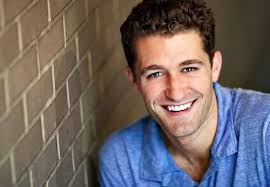
So then, like a real-life Casting Director, I browsed some headshots and experienced an epiphany when I saw Matthew Morrison posing by an institutional-looking brick wall! Who knows more about playing a high school teacher confronted with mega-challenges than the star of the hit TV show Glee?

Homeboy!
True, Mr. Schuester slips in and out of conventional character with ease amid Glee’s meta commentaries and fantastical elements. Not much of that in OO, I’m afraid. But with several awards to his credit, there’s no question that Morrison possesses the skill to head up a dramatic cast, hands tied behind his back. (Which we might need to do: Sorry, Matt—no singing or dancing.)
And as Deanne? How about the irresistible Michelle Williams?

Sweetheart Next-Door
She did motherhood in her multiple award-winning role in Blue Valentine (though, admittedly, that is a tortured and hence perhaps less challenging take on maternity than the unruffled Deanne Fletcher). And as Norma Jean turned Marilyn Monroe, Michelle embodies the sweetheart next-door with endearing ease.
So hey, kids— It’s a definite maybe! I’ll call you as soon as the funding comes together. And even though we now take a pause on the CELEBRITY trail, a few biggies remain to come, later this summer: patriarch Levi Winslow, his wife Emaline, and sister-in-law Aunt Melanie.
Thanks for joining my fantasy. I’ve had good fun. And I think it’s proof that I can dream—can’t I?
~ ~ ~ ~
Kudos for visiting my blog today! Check out the website and let me know if you like what you see, or if you have suggestions. You can reach me by leaving a comment in the box below or by clicking the Contact link at upper right (or just click here). Please consider subscribing to my blog or newsletter. And stop by again soon!
by anesamiller_wuhi6k | Apr 20, 2015 | Blog, OMG—It's CELEBRITIES!
This post is part of an ongoing series, OMG—It’s CELEBRITIES!, presenting well-known actors to play parts in (a fantasy) movie version of the novel Our Orbit. Click here for other items in the series.
Feisty?
Maybe I have mentioned that Our Orbit has a good-sized cast. In fact, I’ve been accused of featuring an ensemble at the expense of any one main character. That may be a discussion for a highbrow coffee klatch, but frankly, I fail to see the problem. There is no dead wood among the dramatis personae, by which I mean there are no characters who stand about like posts for the plot to race past, no so-called supporting figures who merely play straight man to the stars.
At least, that’s what I was aiming for. As to the outcome, you be the judge—please!
More to the point, the character I’d like to introduce today is one who plays a crucial role in several key scenes of the novel. She reveals a major secret, struggles to protect her loved ones, and stays true to herself as a nonconformist amid the staunch traditions of small-town Ohio. Her name is Claire Winslow, the only living first cousin of lead characters Miriam and Rachelle.

Cover design by Renee Garcia
Our Orbit has a new cover, fully re-designed for the Booktrope edition!
My difficulty in casting the part of Claire for the imaginary film of Our Orbit lies in a notorious Hollywood tendency that one of our commenters noted a couple of weeks ago: Women are expected to please the eye and avoid expressing too much personality. This doesn’t suit Claire one bit! She tends to flaunt her inability to quite fit into social expectations: a fashion maven who wears a little too much gold jewelry but doesn’t boast a pretty face or sexy figure in the customary sense.
In short, women who might be a shoe-in for the part have largely been kept out of the American film industry, or have at least been kept off-screen! Even so, I considered the “available” talent, and here’s what I came up with—
Star of Orlando, The Chronicles of Narnia, and The Grand Budapest Hotel, the amazing Tilda Swinton has an unconventional face, angular form, and spiritual quality that would fit Cousin Claire to a T. Ms Swinton (pictured above) manages to convey inner strength even in scenes of remarkable vulnerability. I would LOVE to see her bring Claire Winslow to life…except for the inconvenient fact that she is simply too gorgeous! And maybe not feisty enough.
No doubt a more obvious choice would be Taryn Manning who portrays the colorful meth addict Pennsatucky in Netflix’ hit series Orange is the New Black—

A definite maybe
Taryn’s got the Appalachian chops, no question, and she has done dramatic work in Hustle & Flow and other films. I’m just not sure those big plusses are enough to outweigh the fact that, while she can certainly do feisty, she’s quite a tiny woman. Claire needs to be an imperious figure, certainly taller that her 14-year-old cousin Rachelle. So the creator of my favorite ONB player might not fit in the movie, after all.
Which brings me to that 2nd-youngest-ever Oscar winner (for The Piano, 1994), as well as most intrepid X-Woman and vampire, Anna Paquin. Talk about range of acting ability! I think Ms Paquin has surprised us all by her skill in appearing lovely and graceful while sporting such unconventional features (in Hollywood, at any rate) as gap teeth. These are promising qualities for the woman to portray Claire. Definitely my best candidate!

Chills!
~ ~ ~ ~

I must add a brief tribute to one of the world’s most beautiful actresses, who hid her own dazzling eye-candy for the sake of a challenging role. Kudos to Charlize Theron for revealing the frightening humanity of Aileen Wuornos in the film Monster. I’m sure it was a tough job, but she had the courage to do it. (Sorry, I can’t seem to find a “non-proprietary” photo of the actress as herself. Better google it!)
~ ~ ~ ~
What do you think? Share your thoughts, impressions, complaints, and candidates for these movie roles in the Comments section below. Thanks for visiting my blog today! Feel free to nose about the website and let me know if you like what you see, or if you have suggestions. You can reach me by clicking the Contact link at upper right (or just click here). And please consider subscribing to my blog or newsletter. Stop by again soon!
by anesamiller_wuhi6k | Apr 17, 2015 | Blog, Issues in Our Orbit -- Substance Abuse & Recovery
Imaginative writing is often inspired by the conflicts of everyday life. In our society, where we may find ourselves stressed to a breaking point, conflict can reflect pressures we don’t even understand. In an effort to reach beyond fiction toward the real-world tensions that inspired my novel, Our Orbit, I’m introducing a few new topic categories here on the blog. You’ll continue to find items on the craft of writing, literature, and publishing. But since Our Orbit delves into the challenges of family life, I’m also branching out to parenting, including addiction and recovery among teenagers. Here is an offering on this topic, along with links to sources of help and information.
 The painful question in the title of this post is one that worried parents ask each day in thousands, if not millions, of homes across all continents. This timely article is was written by Mr. Robert Hunt, a youth recovery coach and wellness advocate, re-posted from SoberNation by permission of Mr. Tom Stoddard, founder of that website, which is dedicated to building community by and for people in recovery from addictions and related problems.
From Recovery Coach Robert Hunt —
Adolescent drug addiction treatment can incorporate a number of different approaches, procedures, and timelines, depending on the adolescent. In our experience, the most effective treatment plans are those that are holistic and individualized, meaning they incorporate different approaches and therapeutic processes, all dependent upon the specific adolescent’s individual symptoms, needs, and unique situation. Three of the most important aspects of an adolescent’s experience that should always be incorporated into a treatment plan include Co-Occurring Disorders, academic struggles and support, and family support.

CLICK THE PIC FOR DETAILS.
First of all, it’s extremely common for adolescents who struggle with drug or substance abuse to also suffer from a Mental Health disorder or learning challenge. At times, these symptoms may overlap with those of the drug abuse addiction and effects, thus making it difficult to know which symptoms are attributed to which disorder. Because of this, unfortunately it’s common for teen Co-Occurring disorders to go undiagnosed and consequently untreated. In these cases, teens may recover from their addiction and abuse but still be suffering from the other disorder, which will leave them vulnerable to stress that can trigger relapse. Therefore, the importance of careful evaluation and thorough diagnoses in Adolescent Drug Addiction Treatment can’t be stressed enough, as it’s the foundation upon which recovery is built.
Secondly, adolescents living with addiction and/or abusing drugs often are struggling in school. Because school is such a central part of adolescents’ lives, experiencing such struggles or failure can quickly lead to serious loss of self-esteem, and together with drug use, can add to the adolescents’ withdrawal from others. These academic difficulties will hopefully be realized within talk therapy sessions and careful consideration of possible learning disabilities should be made as well. While in treatment, adolescents should be provided real-life academic support such as tutoring, to help get the students back on track. For adolescents, success at school is pivotal to success in their lives.
Lastly, Adolescent Drug Addiction Treatment plans should include the family members, to help heal what damage and hurt has been done, re-build relationships, and create a healthy environment for everyone to thrive in together, amidst the adolescent’s recovery. In our treatment plans, we always provide parents with individual and group family sessions, in order to provide parents the support necessary to move forward.
Again, because Adolescent Drug Addiction Treatment is different for every adolescent, there is certainly no one right way for it to be done. However, in our experience these three aspects prove consistently important in supporting our adolescents to achieve true and lasting sobriety.
 About the author – Robert Hunt is a recovering addict of 20 years. He has devoted his life to helping others suffering from chemical addictions as well as mental health challenges. Robert maintains many blogs on drug addiction, eating disorders and depression. He is a sober coach and wellness advocate and a prominent figure in the recovery community.
Visit Robert Hunt’s blog | Follow him on Twitter @RecoveryRobert
Visit SoberNation | Follow @SoberNation
Visit Parent Treatment Advocates
♥ Don’t forget to sign on for the great GIVEAWAY through April 2015: Win $50 in free books from Powell’s of Portland! Support indie writer & bookstore.Click here! ♥



 It’s good to keep in mind that literary fiction is a sweet young thing. Its detractors often point out that, “Shakespeare [or Tolstoy or other greats of the past] never wrote #litfic! He just wrote what he wanted!” Leaving aside the fact that Shakespeare wrote drama and poetry, this claim makes no point at all. The concept of “literariness” is one we grapple with in relation to contemporary fiction. It is always a fresh quality for its own time. Anything else, however highbrow and elaborate, would be formulaic.
 Many thanks to Jason Greensides for hosting this original post on his blog on 6/29/15. Jason is the author of the acclaimed novel The Distant Sound of Violence. Visit Jason today!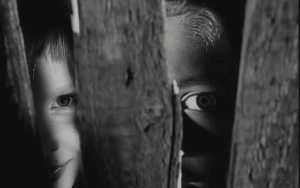

 Perhaps one of the more difficult ideas to understand when working with children is this idea of creating structure. We are there to help these children and rules only seem to limit and frustrate them. Also we may find we dislike the work of enforcing those rules, especially with children who are suffering in our care. Rules for the sake of rules can indeed be damaging. But rules made with purpose can have lasting benefits.











 The painful question in the title of this post is one that worried parents ask each day in thousands, if not millions, of homes across all continents. This timely article is was written by Mr. Robert Hunt, a youth recovery coach and wellness advocate, re-posted from
 About the author – Robert Hunt is a recovering addict of 20 years. He has devoted his life to helping others suffering from chemical addictions as well as mental health challenges. Robert maintains many blogs on drug addiction, eating disorders and depression. He is a sober coach and wellness advocate and a prominent figure in the recovery community.