by anesamiller_wuhi6k | May 29, 2015 | Blog, National Foster Care Month
We cannot all become foster parents, much as we may wish we could. But if you’re on the fence, talking yourself out of taking the plunge, you may get a chuckle from the following—
 On her blog, The Beautiful Opportunity, bio, adoptive, and foster mother “Mama Fox” created this lovely version of Sharon Astyk’s list of 100 types of foster parents.
Mama Fox says, “Read through this list. If you find yourself described any of the types below, then you’re needed!”
1. People who know the kids already. The first choice for any child is someone who already knows and loves them and vice versa. If you are relative, that’s called kinship care. If you are a teacher, neighbor, friend, daycare provider…fictive kinship care. Lots of people become foster parents this way, because someone in their community needs them RIGHT NOW. If kids you care about come into care, you can become a foster parent right away sometimes if you are kin by blood or connection.
2. Bi, Gay and Gay-positive families – Because gay kids come into care too, and your family has a lot to offer.
3. Couples of all kinds – because, well this is hard work and you need someone to vent to and watch the kids when you go to the bathroom.
The topic of child welfare looms large in my novel Our Orbit, which tells the story of an Appalachian girl who crosses the tracks to become foster daughter to an educated family. In gratitude to those who helped me learn about the many demands and great rewards of foster care, I am sharing information on this topic throughout the month of May 2015, National Foster Care Month.
4. Anyone who speaks another language. Because imagine being dropped in a home where you can’t communicate at all, on top of everything else. Plus, how cool is it for kids to learn another language in your home?
 5. Doctors, nurses, paramedics, other medical professionals. Because a lot of kids come into care because of serious medical needs and it helps not to be scared of the equipment, or the tiny premature babies.
6. People with big houses. Sibling groups, y’know.
7. People with tiny apartments. Because even in a studio, you can usually take babies or children under 2 or 3 (based on local regulations).
8. City folks – because urban areas have the greatest need, and staying in your neighborhood means preserving schools and friendships and continuity.
9. Country folks – because rural kids come into care too.
10. Indigenous peoples – because the ICWA (in the US, there are other laws in other countries) means that there is strong preference for keeping kids in tribal homes and communities.
11. Working Parents – Because often kids will come from homes where no one holds a job or works, and they need to see you being something in order to want to grow up to be something themselves.
 12. People who hate babies and would rather die than change a diaper. Seriously, lots of people love babies, but you don’t have to – foster parents are most needed for older kids and teenagers. Want someone who doesn’t need a sitter, handles their own toileting and can go to concerts and basketball games with you? They are out there.
13. Single gender homes. Some kids really need parents and siblings of one gender because of prior experiences.
14. Grandparents. If your kids are grown and gone and you miss the days when there was a baby to rock or someone to take to Little League, your skills and experience and wisdom are needed.
15. People who want to adopt. Because 25% of kids removed my never go home. And if you are willing to take kids with higher needs, they may be legally free already.
16. People who DO NOT want to adopt. Because the other 75% will go to kin or home, and people who want to support birth families and help kids can do more work for more years than the rest of us.
17. Brave people who are willing to learn. Learn to help a kid with braces and crutches in the morning, learn another language, learn to be part of a community that wasn’t yours by birth, to step up and ask a birth parent to help you understand…takes nerve.
 18. Nerds and Geeks. Because you remember what it was to be the kid who didn’t fit in, and you can be there for them. And ’cause legos and Star Trek costumes.
19. People who think spit up is an accessory. Because arms are needed to rock the babies. Addicted and medically fragile babies especially.
20. Young people in their 20s – You’ve got energy, you remember what it was like in school and you already know the words to Uptown Funk.
21. People with no pets. Some kids have allergies.
22. Farm folk. Because there is nothing as healing as critters and dirt and fresh vegetables that kids pick themselves.
23. Parents who already have kids with special needs. Because you know how to get that IEP through and how to manage the G-tube, and you aren’t scared by the diagnosis.
24. People with a Sense of Humor. Because trust me, you will need it.
25. Religious people. Because foster children have a legal right to the support of their religion – and because it can be incredibly meaningful to kids to have ritual and structure in their lives.
 26. Non-religious people and atheists. Because non-religious parents lose their kids too, and they have a right to the support of their culture. Because seeing the world without God can be incredibly meaningful too.
27. Transgender and trans-positive parents. Because kids gender non-conform too.
28. Multi-racial families. Because you already get it.
29. Black, White, Latino, Pacific Islander, Asian families – because kids feel comfortable when someone in their family looks like them.
30. Big families. ‘Cause there’s always something fun to do and hey, what is one or two more?
31. Small families. Some kids really need to be an only child.
32. Families who can care about and recognize the importance of birth families. Because they are always a part of your children. And sometimes you can build something wonderful with birth parents.
33. Grownups. Because it hurts when they go home, but at least YOU are bearing the pain, not them. Kids in care often are there because no one was willing to be the grownup. Here’s your chance.
34. Smart people. Because this is hard, challenging work – getting your kids what they need, working with service providers, getting diagnoses, navigating the legal system…it is hard and being smart and thoughtful helps. But remember, that doesn’t mean “went to college or grad school” it just means willing to figure out the system. There is no minimum level of education.
35. People who get angry about injustice. Because the kids and their families are part of the greatest slow moving tragedy in the world – our lack of caring for the most vulnerable. You can help and make a real difference.
36. Strong folks. Because this will push you to your limits, and past them.
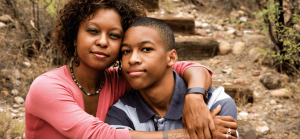
 37. Fathers. Single and married, gay and straight. Many kids have never had a man in their lives who was safe and loving and caring, didn’t even know that they existed.
38. People with pets. Because the love you get from the dog or the cat can be a huge gift.
39. Stay-at-home parents. Because newborns can’t go to daycare and some kids really need a full-time parent.
40. Families that already have kids. Because a brother or sister is a gift, and parents who have been there know how to do the baby dance or help with math homework.
41. Families that have no kids. Because you won’t compare them to anyone and they deserve to be the center of your world.
42. People who really want boys. Because they are harder to place than girls.
 43. Special educators. Because you can look past the diagnosis and see the kid, and you aren’t scared by it.
44. Crunchy folk. Because the kids need good healthy food and fresh air and parents who believe in holding and talking.
45. Scientists and analytical people. Because someone has to sort out what works and what doesn’t for the kids. Plus, home physics experiments.
46. Quiet introverts. Because some kids are like that too, and overstimulation is tough on traumatized kids.
47. Loud, crazy, silly, I’ll do anything parents. Because there’s nothing like a dance party to break up a tantrum or Mom wearing her Elvis costume to set kids to giggling.
 48. People who are willing to work hard in the world and in themselves on anti-racism. Because if you are going to have kids that are not the same color as you, you need to do that work.
49. Gentle people. The kids have experienced so much violence. Be gentle.
50. Curious people. Because the system and the underlying issues in it are fascinating, often in a train-wreck kind of way. If you want to have your eyes opened, this is good for you.
51. Social welfare and legal professionals. Because you understand the system and can work with it.
52. Fierce, protective Moms and Dads. Because you are going to make sure your child’s needs get met.
53. People who love their brothers and sisters. Because you can imagine how wrenching it would be to lose your sibling, and you can make room for kids to stay together.
54. People with a “what the hell, sounds interesting” attitude. Because who else will take a sibling group of six or newborn twins and a 2 year old?
55. Athletic people. Because they will keep you running, and you already know about endurance.
Is it easy to introduce a new foster child to your biological or already adopted children? Advance planning can certainly help. Click here and here for a discussion of this important topic.
56. Warm, soft people. Because all those curves and soft parts are great for cuddling.
57. Aunts and uncles. You love your nieces and nephews and spoil the heck out of them. And you could do it for someone else.
58. People who are scared to foster. Because we all are scared when we open the door – it is a huge, life changing thing. It is ok to be scared.
59. Minorities within minorities. Because sometimes kids are minorities within minorities and you can understand the complex interplays of race, class, disability, gender, etc…
 60. People who were angry, troubled adolescents themselves. Because you’ll get it. When they get their tatoos, you can show them yours.
61. Empty nesters. Because you have done it all before, and can do it again, and let’s be honest, you kinda tear up when the 6th grade band plays the Star Wars theme badly.
62. People who had tough lives. Because you get it. Your experience with getting through abuse or addiction or trauma can help them, if you can deal with your own triggers.
63. People who can let go and trust in God. Because sometimes you have to admit stuff is out of your hands, and sometimes prayer helps.
64. People who can let go and trust in themselves. Because sometimes prayer doesn’t help, or isn’t for you, and you have to keep trying.
65. People who are nervous about becoming parents. Because everyone with a brain is. It is a huge transition and if you are smart enough to be scared, you have a good start on things.
66. Managers, accountants and the super-organized who color-code their socks. Because it makes life a lot easier if you can keep it all together.
67. Hard workers. Because the race doesn’t go to the swift in parenting – it takes the same 18 years for each kid to get to adulthood. It goes to the ones who keep coming back to it and trying their best and trying again and again.
68. Unselfish people. Folks who can love and accept it might be a while, maybe a long while, before they are ready to love you back.
69. People with goats. There’s just something about goats.
70. Mothers. Single and Married, Gay and Straight. Because, well, Mommies.
71. People with good friends. Because you are going to need a lot of support in this journey. Make sure you tell them what you want from them.
 72. Couples who love each other deeply. Because this can be hard, and you will need each other. Plus kids need to see good love to model it in their lives.
73. People with young children. You are already changing diapers, right? So…
74. People with older children. Because that teenager who can barely tolerate you can be a different person when he’s playing with his four year old sister.
75. First and second generation immigrants from everywhere. Because your experience can help others, and your worldview is wide.
76. Disabled people. Because while you may not be able to run as fast as he can, you can give him time and help him navigate a world that wasn’t built for traumatized kids either.
77. Single parents – Because you already have mastered making it all work, and you have amazing skills to share.
78. People part of strong, nurturing communities. Because getting a new placement is like having a baby – and getting a sibling placement is like having four babies. You will need their help.
79. Suburban residents. Because suburbs have kids in care too.
80. Gamers and Game geeks. Because gaming with your kids is awesome. You might have to wait a while on Cards Against Humanity, though.
81. Great Homemakers. If you care about making a beautiful, peaceful, safe home – well, kids need that. Making home a refuge can be incredibly healing.
82. Not-so-Great Homemakers. You can be a slob and a foster parent if you can learn to clean up for the social workers. Trust me on this one.
83. Gardeners and DIYers. You are used to fixing up and making do, preserving and preparing. You’ll find those skills are valuable both in the practical value of feeding the kids and in the metaphorical area of building them up. Moreover, alongside you, the kids learn competence.
84. People who have been or are poor. You do have to be able to feed the kids, but the truth is that you don’t have to have a lot of money or own a home to be a foster parent, and understanding where they came from is good.
85. People with roommates and housemates. As long as everyone passes the background checks and there is room for the kids, households don’t have to be traditional to be loving and wonderful.
86. People who have lost people they loved. Because you know you can live with grief if a child goes home.
 87. People with experience of mental illness. Either personally, in your family or in your work, your knowledge and understanding can help kids from families with mental health issues and kids with mental health issues.
88. Parents who sometimes lose their temper, who don’t always do it right, who wish they were better parents. Because all of us do. You can’t hit the kids, but nobody is perfect, and you don’t have to be to be a foster parent.
89. People who can roll with it. Because expecting the unexpected is the rule in foster care. That call in the night at 11pm. The fact that there’s one more kid than they told you…
90. People with handicapped accessible housing. Because disabled kids need a place they can get around in.
91. Folks that live in diverse communities. Because kids are most comfortable where they don’t stick out.
92. People who love the outdoors. Because a lot of kids have barely been out of their homes and never knew the glory of the natural world.
93. Rabid sports fans. Because helping your kid kick a ball down a field or cheer for your team is a great bonding activity. And that competence thing again.
94. Stubborn, Never-Say-Die people. Would you rather have your eyeballs put out than ask for directions? Do you cheer for your team even though they’ve never won a championship in living memory? Will you stay out in the cold wrestling with the broken thing for 3 hours rather than admit you can’t fix it? Awesome. Because kids who have had trauma need people who will stick it out and keep trying and trying and never give up on them.
95. Mechanical people. If you are interested, rather than freaked out by a breathing monitor or the project of building a better ramp, awesome. And if you can’t think of anything more fun than showing your daughter how to fix her bike, here’s your chance.
96. Foodies. Because a lot of kids have been terribly deprived, and bringing them into the kitchen and making sure they know there will always be dinner is a gift to them – and teaching them how to make it themselves is an even bigger gift.
97. People who like gross out jokes and aren’t squeamish. Lots of pee, poop and vomit in this job. Best you find it funny.
98. People who want to leave the world a better place. A fostering and adopting friend once called it “Earning your breathing air.” You will.
99. People who don’t want biological children or don’t care about biological relationships. Great – one less reason for the kids to worry “You love her more than me because…”
100. Just plain old regular, ordinary people. Someone a lot like you.

~ ~ ~ ~
Thank you for learning about issues involved in foster care! For additional information—
Visit The Beautiful Opportunity.
Visit writer, teacher, blogger, and farmer Sharon Astyk at Resilience.org.
Visit the Wisconsin Coalition for Children, Youth & Families.
Visit the official site of National Foster Care Month 2015. That’s right now!
Visit the National Foster Parent Association.
And feel free to share your insights in the “Comments” section below.
by anesamiller_wuhi6k | May 22, 2015 | Blog, National Foster Care Month

From “Loving Little Arrows”
The topic of child welfare looms large in my novel Our Orbit, which tells the story of an Appalachian girl who crosses the tracks to become foster daughter to an educated family. Love and conflict ensue as all the burning social issues of our time raise their sometimes ugly heads. In gratitude to those who helped me learn about the many demands and great rewards of foster care, I am sharing information on this topic throughout the month of May 2015, National Foster Care Month.
The following guest post is from Loving Little Arrows 3/28/15, the blog of Mackenzie, “a Jesus lover, wife, bio-mom of two, and a foster mom to many more.” Many thanks to Mackenzie for sharing this deeply touching perspective.
The Other Woman He Calls Mommy—
Love bears all things, believes all things, hopes all things, endures all things.
1 Corinthians 13:7
My last post was about how thankful I am that in this moment I am J’s Mommy. I felt it only fitting to share my heart on the other woman he calls Mommy.
Before we ever received a phone call asking us to take a little on into our home, I prayed and prepared myself to speak lovingly over a woman I would likely hate. I was certain that with loving my new child would come anger towards the one who had failed him and caused him so much pain. Never the less, I was determined that I was going to love this woman.
And if I couldn’t, I was at least going to speak lovingly about her to the child who loved her. I truly am a believer that, whenever possible, reunification is the best option. I can only imagine that parenting through CPS can be discouraging, and I wanted to be the encourager. I wanted to keep pushing her forward and assuring her that she could make the changes necessary to bring her child back to a safe and loving home.
This scenario that has played out in my head, where I would grit my teeth and through the grace of God love an unloveable woman.. Well, it didn’t turn out to be our reality.
From the moment J arrived my heart soften toward’s his mom. I was shocked by the amount of belonging that arrived with J, as it’s common for children in foster care to arrive at your home with the clothes they are wearing and possible a small garbage bag. As we signed papers that night, accepting our rolls as his parents, his case worker told us that his mom had been very cooperative and had asked if she would be allowed to meet us during his first visitation with her. She was scared, and wanted to know her baby was safe.
While it hasn’t been without tension, our relationship has only improved since then. I’m shocked at how easily I love the woman I was sure I would hate. I’m shocked by the amount of compassion and forgiveness I feel towards her.
The first letter she wrote to me thanked me for caring for J, she too has a softer heart towards me than she expected, and explaining how much she loves him. The letter had pages full of all the things J likes, many of which i’d already began to figure out – It was reassuring to see how well she knew her son. I’ve watched her walk to visits that were scheduled during a time that her car wasn’t available – this is to an office that is at least 3 miles from her house, and she’s always early. She buys him special chap-stick and hair products, little things that have impacted me. We have had several conversations while we sit in the waiting area waiting for the visitation supervisor to take them back into a room for their time together.
Often, I catch myself wondering when the other shoe will drop… Waiting for things to suddenly go south and to realize this is all just an act. When I catch myself in this place, I quickly bring myself back to where God wants me – that is, trusting Him, and extending unreserved grace and love towards her.
J’s mom is not a secret subject in our home. We have pictures of her framed in J’s room, we talk about and pray over her daily. Please don’t think that I am excusing her part in what J has been through. But neither my physical nor spiritual job title is “judge,” there are those who will examine the case and determine the consequences, but that is not me. What I am doing is believing in the power of God to redeem, and believing in a redemption story for this family. Ultimately I pray that God’s hand will help everyone who is involved in this case to paint the story He has willed for J’s life.
* * * *
For additional information—
Visit the official site of National Foster Care Month 2015. That’s right now!
Visit the National Foster Parent Association.
And feel free to share your insights in the “Comments” section below.
by anesamiller_wuhi6k | May 12, 2015 | Blog, National Foster Care Month

Learning to care for others
The topic of child welfare looms large in my novel Our Orbit. It tells the story of an Appalachian girl who crosses the tracks to become foster daughter to an educated family. Love and conflict ensue as all the burning social issues of our time raise their sometimes ugly heads. In gratitude to those who helped me learn about the many demands and great rewards of foster care, I am sharing information on this topic throughout the month of May 2015, National Foster Care Month.
From the website of the Wisconsin Coalition for Children, Youth & Families—
Wanted: Special families for special kids—take the challenge through foster care.
The ad caught your eye. You have been thinking about doing foster care for a long time. You think you want to commit yourself and your family to fostering a child. But how do you involve your kids in the decision making and prepare them for the addition of a foster youth? Whether your kids live at home with you, or are out on their own, listen to their thoughts and ideas about fostering.
Talk about Foster Care
Depending upon the age and maturity of your children, the first step to making a decision about family foster care is to have a discussion with your kids. Kids may have many questions about the youth that are in foster care.
Eventually, your family will want to discuss what ages, gender, and types of kids fit best for your family. Have a family meeting and talk about the special needs of kids in foster care. What abilities and skills do family members have to help meet these needs? Consider discussing the following topics:
Purpose of foster care. Foster care provides kids the care they need (such as getting medical treatment, counseling, living in a safe home, exposing kids to healthy family life, supporting kids to attend school) for positive changes to happen for the child and their family. Kids in foster care can often be reunited with their family or sometimes adopted.
Types of kids in foster care. Kids come from many different circumstances. Sometimes they have experienced abuse, neglect, truancy from school, special medical and emotional needs, or may have behavior issues. Sometimes kids in foster care have no serious problems.
Situations. Many times, parents of kids in foster care are unable to take care of their children due to their own problems (drugs, alcohol, mental illness, incarceration, limited understanding or interest in being a parent, deceased parents or no family).
Behavior problems. Like all of us, some kids have no issues while some may be aggressive, quiet, hyperactive, withdrawn, immature, or fearful. They may act out sexually, hoard food, have sleeping problems or have drug and alcohol abuse issues.
To continue reading on the website of the Coalition for Children, Youth & Families, click here.
Thank you for learning about issues involved in foster care! For additional information—
Visit the official site of National Foster Care Month 2015. That’s right now!
Visit the National Foster Parent Association.
And feel free to share your insights in the “Comments” section below.



 12. People who hate babies and would rather die than change a diaper. Seriously, lots of people love babies, but you don’t have to – foster parents are most needed for older kids and teenagers. Want someone who doesn’t need a sitter, handles their own toileting and can go to concerts and basketball games with you? They are out there.

 37. Fathers. Single and married, gay and straight. Many kids have never had a man in their lives who was safe and loving and caring, didn’t even know that they existed.


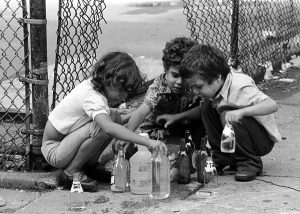



 However, the goal is for their branches to get grafted back on to THEIR tree. They aren’t supposed to attach to our tree forever. So we have to keep the wounds raw. We don’t want the kids’ branches to dry off and die. They do have to attach to us. But they can’t attach permanently. We have to continually keep the end of their branch wet and raw so they can attach back to their Red Delicious tree (or at least to a tree in their orchard) when it’s safe.