I suspect I’m not the only one who has mixed feelings about Kirkus Reviews. Specifically, their practice of charging independent authors $425 for a “book review” of 400 words or less. Many have suggested that such services are not only overpriced but also pointless for the majority of authors whose readership couldn’t care less about endorsements (or lack thereof) from an 80-year-old magazine. But I write literary fiction, which means my readers tend to count themselves among the discerning crowd, rightly or wrongly, and here Kirkus enjoys a good deal of prestige.
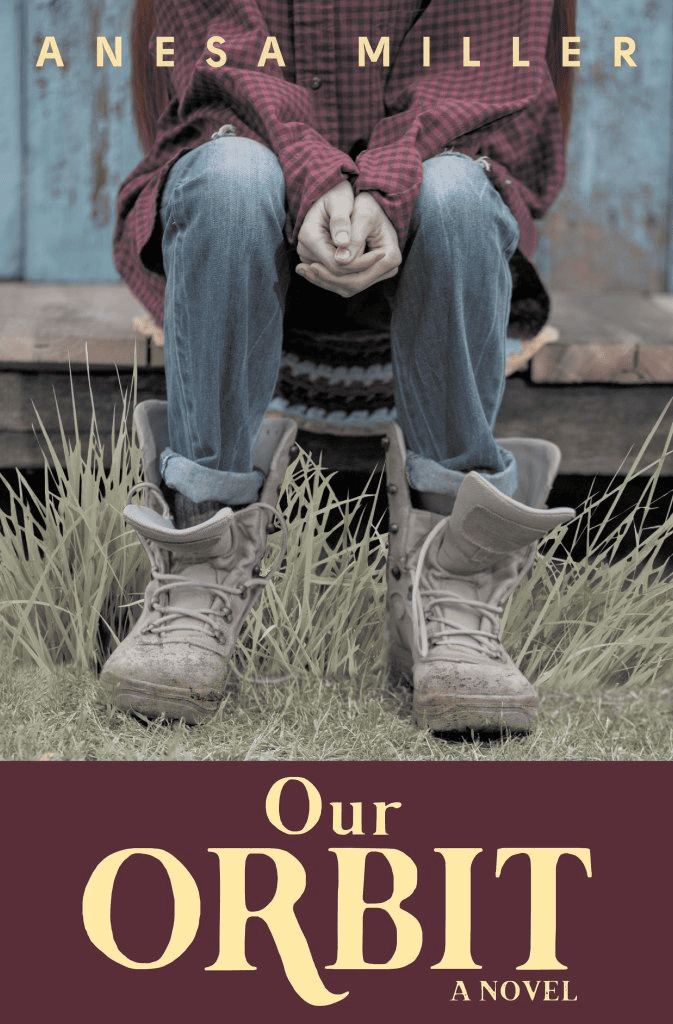
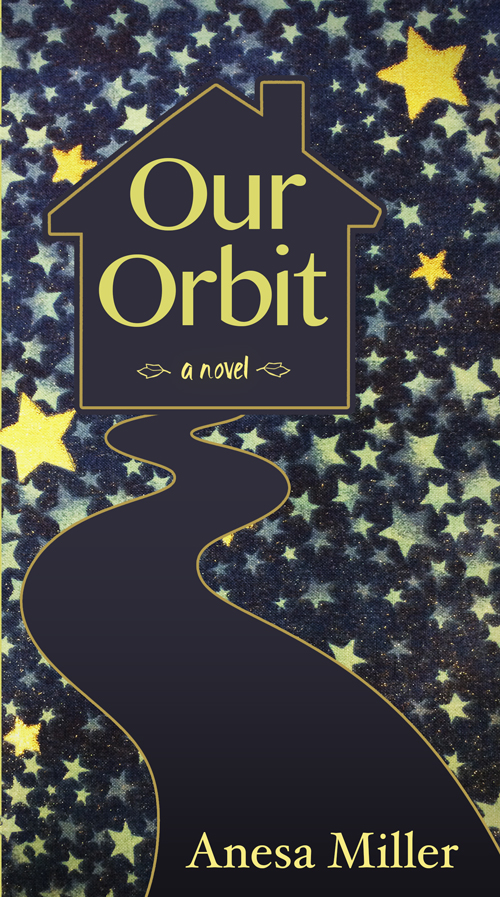
Cover design by Renee Garcia
Besides, I thought,Our Orbit is not only the culmination of many years’ work on my part. It really is a good novel! It deserves the attention of a professional. Kirkus states that their commentaries are thoughtfully penned by “librarians, business executives, journalists from national publications, PhDs in religion and literature…[and] other professional reviewers.”
What’s more, they followed me wherever I went! Not PhDs and professionals (unfortunately) but Kirkus Reviews. Their banner ads pop up at Salon.com, Poets & Writers, The NYT—every bookish site I frequent. You would almost think they were targeting me (lol—I know they were), claiming that they’d consider my book for some major award if only I bought a review. Long story just a bit shorter, I succumbed to seduction. Guess they somehow knew it’s been my lifelong dream to sell books beyond the circle of my personal acquaintance.
And surely a national-level review could only help.
~ ~ ~ ~
Through 4th of July, 2015 – Join a great GIVEAWAY to celebrate my new novel! Many prizes – gift cards, crafts & a signed copy of OUR ORBIT, finalist for “Best Regional Fiction” Click here to join !
~ ~ ~ ~
I knew that Kirkus is notorious for producing harsh reviews. But the “kill clause” put me at ease: If they panned my book, at least they offered the option of keeping it in the dark. So long as I opted not to quote any portion of the review on my website, back cover, or any public place, the review as a whole would remain unpublished forever. Of course, I would be down $425, but my book would not suffer. And since I felt confident that Our Orbit could withstand even a snarky reviewer, I chose to gamble.
So began the proverbial crap-shoot, like so many of the services on offer for writers today, which might or might not help sell a single book.
Some five weeks later, with quaking fingertips, I eagerly downloaded my very own review from Kirkus, the venerable authority. One minute later, dismay set in. That’s how long it took to read the 348 words my reviewer saw fit to devote to my novel. But wait! 89 of those were actually my words, quoted from my own book! Unnecessarily, it seemed to me: Quoted like a freshman English student dutifully includes a citation in a book report. So my review came in at just 263 original words. About a buck-80 per word.
What did they say, those precious bon mots?
Typically, for Kirkus, there was a 2-line plot summation, followed by a paragraph of more detailed plot summary. Perhaps readers look for this, but it wasn’t useful to me since I had, naturally, already created my own synopsis. Next came another brief paragraph, heavy on the above-mentioned quotations, giving yet more details on the characters
The review closed with one brief sentence—9 words—that might be worth quoting on my book cover or elsewhere. But in order to use those few words, I would have to agree for them to publish the entire review on their website, if they chose, as per the Kirkus policy.
And there’s the rub.
Because in that second paragraph detailing my characters, the reviewer decided to drop a major spoiler. If this were part of a serious discussion, I might decide the revelation was worthwhile. But instead, it was tossed off in passing, making no real point. To use any part of the review I paid for, I would have to consent to unknown numbers of potential readers encountering a spoiler that does nothing to enhance the commentary on my book.
Thanks for nothing, Kirkus!
To Kirkus or not to Kikus? Part 2
In fairness to Kirkus Reviews, I’ll readily admit that they have some fine employees. When I wrote to express my disappointment with the review I’d purchased of my novel, Our Orbit, I was surprised to encounter a very helpful young man. I assume he was young since he was working as a first-line responder to email inquiries like mine. I’ll call him Thad.
Among Thad’s helpful reminders was this: “Our reviews are required to meet a minimum word count of 250 words.” So at 348 words, my review was laden with gravy.
Point taken, Thad…although nearly 100 of those words were mine rather than the reviewer’s—quotations from Our Orbit padding the lukewarm remarks.
~ ~ ~ ~
Through 4th of July, 2015 – Join a great GIVEAWAY to celebrate my new novel! Many prizes – gift cards, crafts & a signed copy of OUR ORBIT, finalist for “Best Regional Fiction” Click here to join !
~ ~ ~ ~
Nonetheless, in spite of my jaundiced attitude, I was impressed when Thad stated that he would, “present your concerns to our editors.” After all, my primary complaint was that the review I’d bought so dearly contained a spoiler revealing a major plot point. I felt this made the whole thing unusable due to Kirkus’s policy requiring permission to publish the complete review if the buyer quotes so much as one phrase (which is, of course, the whole purpose in purchasing).
So I pricked up my ears when Thad suggested that senior editors might actually consider the issues I’d raised and offer some solution. Three weeks went by without further word. When I wrote again to ask Thad if I should expect a reply, his answer came the next day:
“The Indie Editors … have decided that we cannot alter the review. It is Kirkus Indie’s policy to only address those matters related to factual inaccuracies …
“Regarding the point about the [spoiler], very often our reviewers are not able to elaborate on each and every plot point found in a given work… However, they must inform a reader of certain points… We do understand your frustration and disappointment, but we have certain editorial guidelines that we follow.”
Do I detect a bit of circular reasoning? Kirkus reviewers cannot elaborate every plot point, but they must inform readers about certain points. And just because I withheld a plot twist until page 191, treating it as an elaborate family secret, that was apparently no reason for them to select some other point to elaborate for those demanding readers.
Hmmm…
…Much ado about very little? Are spoilers such a serious thing?
Okay, okay. As friends have assured me, I’m making much ado about very little. Are spoilers such a serious thing? Goodreads.com accommodates spoiler alerts on reader reviews, but Amazon has discontinued that practice. Even if an author objects to revealing statements in a review, Amazon will do nothing to post an alert. (Guess how I know.)
Moreover, millions of people know how such books as To Kill A Mockingbird and The Great Gatsby turn out. Or Gone Girl or The Secret History or The Hunger Games. And that does nothing to keep new readers away. So, yes—I’m overreacting. I should be so lucky as to have fans clamoring over Our Orbit, discussing the plot twists and characters, accidentally spilling the beans about what happens on page 191.
Maybe I’ll go ahead and put that brief, mildly flattering, quote from my Kirkus review on the back cover of my book. Maybe I’ll even publish it here on my blog.
If Kirkus responds by putting up the full review, complete with spoiler, in some obscure corner of their website—so much the better. If one or two people stumble upon it and find the secret—don’t tell anybody, please?
And thank you, Thad, for making an effort to talk to those scrupulous “Indie Editors” on my behalf.
~ ~ ~ ~
In the end, I decided to both quote and publish my review in full. You can read it here along with a far more gratifying (and unpaid) commentary from The Midwest Book Review.
~ ~ ~ ~
Through 4th of July, 2015 – Join a great GIVEAWAY to celebrate my new novel! Many prizes – gift cards, crafts & a signed copy of OUR ORBIT, finalist for “Best Regional Fiction” ! ! ! Click here to join !
~ ~ ~ ~
Many thanks for visiting my blog today! Please browse the website and let me know if you like what you see, or if you have suggestions. You can reach me by leaving a comment in the box below or by clicking the Contact link at upper right (or just click here). Consider subscribing to my blog or newsletter. And stop by again soon!
Thank you, Anesa, for inviting me here today! I really love this Drawer No More series. When I first read the phrase, “This one’s for the drawer!” on your blog, that Russian saying resonated with me. I have felt that way so many times with my own writing. My first novel is still ‘in the drawer’ where it rightly belongs—it really was that awful. My second novel and its sequel nearly met the same destiny, but not because they deserved it.
I originally wrote Girl Running as a way to amuse myself while my husband was away on a business trip. Writing it was pure bliss—I didn’t know anything about writing a novel, and the only audience I wrote for was my husband who absolutely loved it! (He didn’t have a clue about good writing either, but he could at least detect a good story somewhere in there!) As unrealistic as it was—and I imagine this is typical of most beginner writers—I thought, ‘Wouldn’t it be cool to publish this someday,’ having no idea what was really involved. This was back in 2006 when the internet was relatively new to me—and intimidating. Just the same, I located contact information for a handful of agents (well, more like fifty) and queried them with my unpolished, 150k-word manuscript. Of course, it was rejected—over and over again. In the drawer it went along with my ego. But that was okay because I had this really great idea for a sequel to Girl Running,and I couldn’t wait to get started writing it. I was on a roll!
Around that time, I even learned how to print and hand bind Girl Running, which was great fun. When I was finally brave enough to share the hand-bound volume with a few friends, I could tell by their tentative responses that the story had made them uncomfortable—not with my writing (unpolished as it still was), but the themes of the stories pushed a few boundaries. Portrait of a Girl Running is about two student-teacher relationships—one romantic and one not. With the sequel, Portrait of a Protégé, I took the question of age-appropriateness in a relationship to the next level, hoping I could pull it off, that I could make my reader root for the unconventional. (In fact, even now, readers tend to love or hate Protégé!) All of that made me hesitant about publishing both stories—what if people think these books are in some way semi-autobiographical! I mean, I wrote the main character, Leila, with my husband in mind—that is, I wrote Leila for him and consequently, she looks a lot like I did when I was seventeen, long hair and dimples included, and I didn’t want to change that. And all those words! How was I going to trim at least 50k words? (I didn’t know how to kill little darlings back then—every four-syllable word and run-on sentence was ever so precious!)
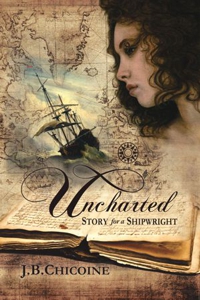
I set those books in the drawer with a promise, and I began another novel, Story for a Shipwright. In 2009, I entered it in the ABNA competition—this was where and when I began to meet other writers online, and when I started my writing blog. With the help of the online writing community, I finally learned simple principles, like ‘show, don’t tell,’ and how to cut unnecessary adverbs and the like. I also read up on self-publishing, which, as a do-it-yourselfer, really appealed to me, but I needed the validation and support of a “real” publisher—I wanted an “Authority” to tell me it was good enough.
Next, I acquired a few beta readers who were also writers, and that’s when my prose significantly improved. I queried again. And again. And again. Between 2009 and 2011, I sent out over 200 queries. From the last round, I received a lot of interest and requests—and subsequent rejections—until I finally landed a contract with a small press publisher. Validation! Finally! And the contract included first refusal of my next novel! Great! Because I already had two novels to polish and submit—I was a shoe in! I never thought much about the fact that my publisher was a rather conservative operation, after all, I consider myself on the conservative side, my fascination with unconventional relationships not withstanding. And to be clear, Girl Running and Protégé are not tawdry romances with any sex. They are psychological, emotionally charged, and character-driven.
I spent the next year sending Girl Running and Protégé to my trusted beta readers and found out what I needed to fix and trim, and I got busy. I will admit that I was very pleased with the results, and they met with approval from my broad-minded betas. I was still a little uncomfortable with the themes, but I was psyched to submit it to my publisher after they released Uncharted: Story for a Shipwright in October 2012. I eagerly awaited good news … but, alas, they rejected both stories. ‘They were sorry,’ they said, ‘both books were beautifully written with some vivid, interesting characters. But unfortunately, they couldn’t publish these manuscripts. The books push too many social boundaries …. They were just too small and new as a company. They didn’t have enough clout in the publishing industry…. ’ Additionally, the editor was so uncomfortable that she wanted to stop reading at a certain point—but, she said, my ‘prose was vivid and breathtaking.’ I took the news professionally, with a kind ‘thanks anyway,’ but I was devastated. I felt like some sort of deviant with a sick mind, writing twisted stories. After weeks passed, I began to consider some of the other feedback they offered, and I tried to look at the stories objectively. I implemented what I felt applied, and then set it aside again as I had another novel in mind to write—Spilled Coffee.
Once I completed and spruced up my first draft of Spilled Coffee, I submitted that to my publisher (knowing it probably needed some work and hoping they might provide some helpful criticism). The story was met without enthusiasm and given only general feedback, but I was welcome to resubmit. I pondered it in my disappointment, but in the back of my mind, I couldn’t let go of the idea of self-publishing and decided that I would not resubmit. I would publish Spilled Coffee on my own. After all, I know how to lay out and format a printed book. I am an artist and proficient with my graphics software. I just needed to learn the rest of how to publish independently. And I did! I loved the process and have never regretted it. Incidentally, shortly after that, my publisher closed shop, I received the rights to Uncharted: Story for a Shipwright, and I published that also.
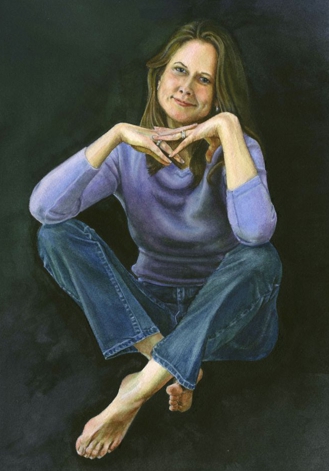
Meanwhile, I cracked the drawer open and remembered my promise to Girl Running and Protégé. But I was still feeling a little queasy about the controversial nature of the books. At one point, I even wrote a ‘shell’ story in which to place Girl Running—Leila submits the story as an English class assignment (no, really, it was clever—at least to begin with!). In reality, it was a sad attempt at somehow distancing myself from it. It was a good exercise, but my adept writing buddies helped me see that it muddied up the story. So, I peeled it off and tidied up both manuscripts. I painted a couple of watercolors to use for the covers, then formatted, and then published them within a week of each other, back in 2013. To date they are my best-selling novels.
It is particularly gratifying that Portrait of a Girl Running placed as a finalist in the General Fiction category of the 2014 Next Generation Indie Book Awards! Meanwhile, I have grown more comfortable about making some people uncomfortable; I love that my stories—my characters—evoke strong feelings. I am so happy that I’ve gone the route of independently publishing. I can honestly say that if an agent or publisher—big or small—approached me, I would say, “No thanks! I’m good!”
Currently, I’m taking a breather after just releasing my fifth novel, Blind Stitches, another psychological drama with a love story, quirky characters, chickens, and an array of mental disorders woven into it.
I may be relatively new to self-publishing, but I’ve been writing for a long time: It was 29 years ago that I started writing fiction, not counting childhood pastimes (or a few embarrassing attempts right after college).
Ah, the days when every word was precious!
The fiction bug bit hard when I was employed as a foreign-language instructor and should have been working on my dissertation on Russian literature. It was pure procrastination, but nothing brought me so much joy as a couple of stolen hours with a legal pad and half a dozen needle-sharp pencils.
The short stories and novellas I produced in those early years were mostly unreadable. Steeped in academic language, I struggled to choose words of less than 4 syllables and keep my sentences down to 5 clauses, max.
So in the early 90s, after leaving the ivory tower once and for all, I concentrated on improving my style. I read Alice Munro and began to grasp how to shape a sentence, read Carolyn Chute and sensed the chemistry between characters, read Marquez and grappled with the dream that is an enthralling narrative. Small vignettes and short-shorts proved a good starting place, several of which I was able to publish—to my terrific gratification.
The short story form remained my nemesis. To this day, I consider it a lofty pinnacle of prose artistry. I have often said I hope to never write another.
But ideas swarmed my mind. I labored to shape them in words. I longed to tell stories that would make readers pause and see fellow humans in a new way, if only for a moment. For most of us, I think, people are the most important thing in our lives. They make us crazy with anger, love, hysteria, amazement, and all the other emotions! I longed to present characters in a way that would help readers recognize their fellows—our fellows—with a bit more compassion than before.
One of my short stories at this time went by the cumbersome name “Gravitation of the Spheres.” No doubt a throwback to the academic career. I tried other titles, all equally bad. In one draft, I expanded the plot with numerous twists. Then I cut every expendable word to shorten things up. This was when “leaner and meaner” was supposed to be better and better, but I wound up revising the story so many times, my head began to spin. I had no idea which version might be better than another.
At some point, my story acquired the name “Our Orbit.” Subconsciously, I was determined to stick with cosmic imagery, although I’ve gotten criticism for misleading readers to expect a sci-fi tale.
Realizing I needed professional help, in the summer of 1997, I applied to the Kenyon Review Writer’s Workshop. It was to be my 1st class in creative writing.
Kenyon College had the advantage of being located within a 2-hour drive of my town. More importantly, this is the home of the prestigious literary magazine that launched work by such luminaries as Alan Tate, Robert Penn Warren, Robert Lowell, and many others. If Ohio has a literary Mecca, I reasoned, this must be it!
I found myself in a group of 12 acolytes studying with Nancy Zafris. Winner of the Flannery O’Connor Award for short fiction, Nancy was a formidable presence. She forced us to realize the power of each word while becoming attached to none (Kill those darlin’s). I was so awed by Nancy’s skill with tone and structure that I felt no one could better advise me how to transform my troublesome story into the brilliant narrative I meant it to be.
Nancy graciously agreed to read “Gravitation of the Spheres.” She convinced me it needed a new title and gave some pointers for focusing the plot. But it was her parting comment that helped me keep faith with this story for years to come: Simply, “Brush it up and send it out.”
So my strange little story was in the ballpark of publishable material!
My 4800-word opus acquired the name “Our Orbit.” Subconsciously, I must’ve been determined to stick with cosmic imagery, although this theme is not central to the plot. I’ve gotten a bit of criticism on this title (even if it is a great improvement on previous ones). A widely published author told me 1st person (“Our…”) is inappropriate, given that the story is written in 3rd. And a couple of readers said they were misled to expect a sci-fi tale.
I hoped my eventual readers would accept the metaphoric sense of an “orbit.” Then I stumbled upon this same small phrase in Harper Lee’s To Kill a Mockingbird, used to describe Scout and Jem going about their daily routine of play and exploration. This is not a major passage in the classic book, but it seemed so resonant with my story, I wasn’t about to give up my title from then on.
As for sending it out—first, I tried journals at the top of my wish list: Pleiades, Five Points, Prairie Schooner, Agni… Then I tried a slightly humbler tier: Ascent, Spindrift, The Green Hills Literary Lantern… When discouragement set in, I would revise again and try again. Over the next nine years, I sent the story to at least 50 different magazines, several of them more than once.
During this time, I succeeded in publishing other stories—even one at the Kenyon Review! So what was the problem with “Our Orbit”?
I had never received as many comments from editors as I did on this story. One apologized for keeping “Our Orbit” on his desk for 8 months; he felt it wasn’t “ripe for acceptance” but couldn’t quite bear to reject it either. He found his mind circling back to it.
At least 3 other editors sent notes in my SASE saying that the story was interesting but needed further development. Independently, all agreed that it could—even should—be expanded.
It had the makings of a fine novel.
This was the last thing I wanted to hear. Already at work on a novel, I had gained insight on the time and effort involved in that project. I wanted “Our Orbit” to be finished already. Something to grace my publication list, not a sinkhole for endless tinkering. Not a baby bird demanding food so it could grow.
But art is like a higher power. It “disposes,” regardless of what we humans propose.
Soon enough, I had finished two other novels. Unable to find either agent or publisher, I became discouraged. Fiction was a hard master. I tried writing essays and poetry: anything to keep up my skill with words. When my husband was invited to apply for a job in the Northwest, an opportunity opened for me to enter an MFA program in creative writing. I saw it as a way to keep working, to stop myself from giving up.
In August 2005, we were preparing to relocate across country. In our Ohio backyard one warm night, I looked up to the sky, hopeful for a new beginning, a new phase of life. I didn’t really focus on the stars until I realized that they were falling. Of course—it was the Perseiad meteor shower that comes every year in late summer.
Beautiful lines of light streaked the sky.
My first thought was, “This is a perfect scene for ‘Our Orbit…'” I saw the family in my story hurry outside to watch meteors. The children ask questions, and parents try to explain so their little ones can understand.
So many falling stars—is it an omen, or a fact of nature? Does anyone know the difference?
Right there, I knew this was a scene for Our Orbit the novel. Same plot as the story, but with more people, more fully fleshed characters, interacting in more complex ways. It became my thesis in the MFA program at the University of Idaho. It would take 5 years to create a complete draft. It would swell to 150K words; get cut back to 115K. I would be convinced it was my first mainstream, publishable novel. For 2 years, I would search for an agent—would give up, try again, and give up again.
All the while, Miriam, Rachelle, and Josh kept speaking in my ears like living people.
Our Orbit will be self-published in the summer of 2014.
As summer prepares its steamy descent on the northern hemisphere, I find I owe my friends an update. You may have noticed that publication of my novel, Our Orbit, which I was drumrolling back in February, has been delayed by several months.
First, there were setbacks with the cover art. Plan A called for a commissioned painting to show a scene from early in the story where the foster family watches a meteor shower on a summer night. That proved harder to arrange than I had imagined. It takes a lot of detail to explain the ambiance of a scene—more detail than even appears in the novel itself!
I soon resorted to Plan B, which called for a simple backdrop of vintage calico with text in hand-lettered calligraphy. But there are a lot of options in fabric, and calligraphers must be recruited and schooled in the assignment. (Or not, as it turned out.) So Plan B also took more time than I’d budgeted.
Eventually, the cover got sorted out. I’m very happy with it.
Next came the editing issues. Our Orbit contains a good deal of dialect, namely, Appalachian English, also known as hill-country twang. The first editor I consulted found this troubling. True, words like ain’t and oncet may be considered incorrect, but try telling that to my characters! Concerned that new errors had entered my manuscript in the process of cleaning up the grammar, I turned to a second editor—this time, one with experience in the region where my story takes place.
Those complications set the schedule back a few more weeks.
But finally, my text was edited and proofed. The book was fully designed from cover to margins to page numbers. Everything looked terrific! Then, on the eve of clicking “Publish” at CreateSpace, I phoned my publishing consultant: a knowledgeable freelancer who advised me on my previous book. I wanted to make sure she’d be ready to assist again this time.
Alas—! Urgent family matters were calling her away from the office for the next three weeks.
What shall I do?
A more confident person than myself would no doubt shrug and go it alone. I tend to be nervous, however. A wee bit hyper-emotional. As I recalled a number of last-minute glitches in the formatting of my earlier book, I saw a nightmare waiting to happen. What if KDP didn’t like my conversion, and I had nowhere to turn for help? I decided I’d rather tolerate one last delay and wait till my consultant was back on the job to help me publish and promote Our Orbit.
That’s when she dropped a bomb on my comfort zone.
“If you’re going to wait a few weeks, anyway,” my consultant said, “you might as well use the time to apply to literary agents. Your type of book still tends to do better with a traditional publisher, rather than as a DIY.”
?!?!
This flipped me around 180 degrees. I had done the agent-search before. I devoted months to that time-consuming process with each of the three novels I’ve written. My first novel was too experimental—the main characters were inanimate objects. Agents nibbled, but none bit. My second, based on the Kosovo conflict, was too tragic. Only the likes of Andre Dubus III (House of Sand and Fog) or Hubert Selby Jr. (Requiem for a Dream) are permitted to pen such things in our “happy” postmodern era.
By the time I finished my third novel, I had learned many lessons: nothing too outlandish or heart-wrenching! So Our Orbit should have been just right. Sadly, even after several complete revisions, my text was too long. I spent a full year querying agents, and most seemed to agree. It was too long by a substantial, and oddly specific, amount: 35K words.
Most of these agents were passing judgment without requesting a sample. Not even a 5-pager to check on my style! Eventually, I figured out the unstated backstory: my novel was not too long for potential readers, at least some of whom pride themselves on soldiering through War and Peace or Memories of Things Past. No, it was only too long for standard publishers’ formulae for marketing a novel by an unproven author. They prefer no more than 90K for a debut.
More of a novella.
I could list examples of longer books by unknown people, such as the wildly popular The Story of Edgar Sawtelle by David Wroblewski. (Also, coincidentally, an acceptable tragedy!) The system seemed rigged against me, but how could I appeal for an exception to the formulae, if no agent would take me on?
I think you get the idea that the suggestion of going back to the drawing board to query agents all over again was not what I wanted to hear. In fact, the prospect of never appealing to agents again had become the most delightful aspect of self-publishing! So it was a testament of respect for my consultant when, after a few days of peeving and moping, I bit down on my knucklebone and sent out a group of query letters to literary agents.
Other than my pride, I figured, it couldn’t really hurt.
Because, regardless of their kindly protests to the contrary, I find myself forced to take agents’ rejections very personally on behalf of my book. They say things like, “Your writing is lovely”—but, obviously, not lovely enough. “Your characters are intriguing,” but what difference does that make if readers don’t meet them? “Your story deserves to be told,” so why won’t anyone help me get it out there?
Fellow writers, have you heard all this before? How do you manage not to take it personally? And how do you keep from feeling that your cherished book just isn’t worth reading, after all?
The upshot is that Our Orbit will be delayed in going to press by another few weeks, minimum, while those rejections roll in. The hard part? Turning back to this drawing board has sapped my enthusiasm for self-publishing. I will no doubt wind up launching Our Orbit on my own, in the end, but where will I get the energy to promote it, now that I’ve admitted to myself I would really rather have a traditional publisher and an agent to help me along?
Like the rest of us mere mortals, I’m waiting to see what the future may bring…
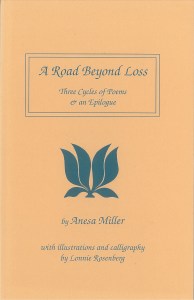
Almost 20 years have passed since I self-published my book of poetry, A Road Beyond Loss, and 24 years since the death of Tiina Panksepp, the lovely young woman in whose memory I wrote many of the poems. My life has certainly changed over that time. I married Tiina’s father and have done my best to give him emotional support while also grappling with the losses in my own life.
Writing has always been central to that process.
Today a new era prevails. For one thing, fewer garages are cluttered with self-published books since the advent of online marketing and electronic distribution. Such innovations have leveled the playing field, at least somewhat, for the average non-famous author. But “The Net,” as we called it, existed back in the 1990s, as well. I surfed it via a program known as Netscape. (Remember the icon of a large N riding something like a tidal wave?)
And how does one sell stuff on The Net? I’ve often been advised to start with a target audience. So in 1995, using a pre-Googlian search engine, I discovered some half-dozen “chat rooms” for grieving families.
One of the largest of these was GriefLog.* The name sounds almost shocking to me now—like off-key gallows humor—but the site represented a serious attempt for bereaved parents and others to find support by sharing with those who could best understand their pain.
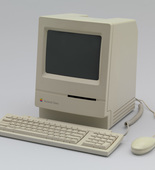
I viewed GriefLog on the 10 x 8″ screen of my Macintosh Color Classic desktop, but the color capacity was superfluous here—like on many user-driven sites at that time, posts appeared as white letters on an even gray background. There were no graphics. No visuals. No diverse fonts. Threads were tricky to disentangle. But a desire to share my poems drove me to try.
A list of rules for GriefLog stated that no commercial activity was permitted on the chat board. I found this reasonable: no one in the midst of sorrow wants to be pestered by salesmen. But then, what exactly was I doing there? I thought of my husband: Every day I tried to help him live with grief: I listened, read him humorous stories, sang, chatted, walked by the river, gave of my time (not to mention cooking and cleaning). This seemed important because my husband wasn’t one to visit chat rooms or join support groups. How could I translate the positive energy I gave him to strangers at GriefLog?
Of course, I wanted to offer my poetry, but it had to be done in a non-commercial way.
I engaged in discussions and mentioned in passing that I had a book available upon request. To anyone who showed interest, I sent off a free copy with the hope (and gentle suggestion) that they urge friends and family to purchase additional copies. My hope was that this approach might gain its own momentum over time through spontaneous recommendations.
One man who’d recently lost his teenage son gave me some very touching feedback. He said he kept my book on his bedside table and read a poem every night. When he finished the book, he started over and, in the process of re-reading, chose a few favorites. These he revisited, over again, always one each night. Months later, he was still reading and still kept the book by his bedside.
There came a day when this man left me a message on the chat board, saying that I should visit some particular group or thread where he believed the folks were interested in my book. But how to find these people? I was still confused about the organization of threads. It’s not as if you could send out a tweet or direct message. You just had to wait for them to turn up at the chat room.
I nosed around the site as best I could but never found the allegedly interested folks. It looked as though this type of “marketing” would yield precious few results.
In fact, I didn’t sell a single book on GriefLog. To keep perspective, I remind myself that many poets, including those more talented than I am, don’t sell lots of books, either. Grief, after all, is a topic people naturally tend to avoid.
But—! Thanks to the wonders of PayPal technology, I am now able to offer my books here, at this website. If desired, I’m happy to sign the title page and provide a dedication (“For Sam on this special day…”) at no cost. I’m also making available Jane Click’s lovely CD with my poems set to music, and a score of the songs arranged for two voices, piano, and flute!
With thanks for all recent messages of encouragement, I’d like to share a poem that was set to music by my dear friend Jane Click. Here is text, as well as audio, for “The Ladder of Words.” It addresses the writing process and the role that process can play in healing.
Looking back, my book of grief poems, A Road Beyond Loss, was an effort to capture the two essential motives that drive my writing overall: self-expression and communication. Maybe that sounds abstract or simplistic, but it makes sense to me. My need for self-expression is strongest when negative emotions overwhelm the mind. In a state of grief, those feelings can become so strong they threaten one’s identity, the foundation of mental health.
But the mind that speaks, or writes, can use language to reassert selfhood by expressing the inner pain. Language is a shared cultural medium, so the possibility of connecting with others is basic to most forms of verbal expression. Connection is only words away. I tried to convey those truths in this poem.
For a recent update, visit “New Cover for OUR ORBIT” with information on a forthcoming novel, Best Regional Fiction
“The Ladder of Words” music by Jane Click, poem by Anesa Miller; performed by Clyde Kunz (vocal) and Jane Click (piano).
The Ladder of Words
When the world came down upon me,
and the sky closed like a door,
sounds filled my ears from far away.
I lay down on the floor.
And no one near could find me,
and nothing near was mine.
I sank into the floorboards
from the voices soft and kind.
It seemed like days, eternity,
that I could not be reached,
from sight and sound withdrawn
like a whale beached out of water
and thrashing like a fish.
Until one thought got through to me,
one image filled my mind:
a pencil and a paper, lying
close to hand, nearby.
Somehow I took them up and traced
one word and then the next,
until they linked together
in a chain that first perplexed
the darkness in my eyes—
Then, rowing on my paper barque,
I soon was far away
and saw the water trail I’d left
rise up into a chain
—a ladder reaching high above
to light and sound and friends.
And that’s how I climbed out
of the grief that has no end.
This poem is in memory of Tiina Shilts-Panksepp who almost became my step-daughter. Many thanks to Jaak Panksepp for giving me the chance to self-publish my poetry collection, A Road Beyond Loss. Special thanks also to Jane Click who heard such beautiful music.
~ ~ ~ ~
Thank you so much for visiting my blog today! Please browse the website and let me know if you like what you see, or if you have suggestions. You can reach me by leaving a comment in the box below or by clicking the Contact link at upper right (or just click here). Consider subscribing to my blog or newsletter. And stop by again soon!



 I set those books in the drawer with a promise, and I began another novel, Story for a Shipwright. In 2009, I entered it in the ABNA competition—this was where and when I began to meet other writers online, and when I started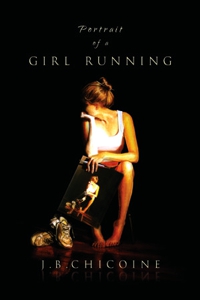


 My 4800-word opus acquired the name “Our Orbit.” Subconsciously, I must’ve been determined to stick with cosmic imagery, although this theme is not central to the plot. I’ve gotten a bit of criticism on this title (even if it is a great improvement on previous ones). A widely published author told me 1st person (“Our…”) is inappropriate, given that the story is written in 3rd. And a couple of readers said they were misled to expect a sci-fi tale.
 I soon resorted to Plan B, which called for a simple backdrop of vintage calico with text in hand-lettered calligraphy. But there are a lot of options in fabric, and calligraphers must be recruited and schooled in the assignment. (Or not, as it turned out.) So Plan B also took more time than I’d budgeted.




 I viewed GriefLog on the 10 x 8″ screen of my Macintosh Color Classic desktop, but the color capacity was superfluous here—like on many user-driven sites at that time, posts appeared as white letters on an even gray background. There were no graphics. No visuals. No diverse fonts. Threads were tricky to disentangle. But a desire to share my poems drove me to try.